Solar power expands quickly on rooftops, farms, deserts, and industrial areas. The International Energy Agency (IEA) notes that global solar PV capacity exceeded 1,400 GW in 2023, and this makes solar the quickest-growing source of electricity around the world. As these setups spread, people often discuss the link between solar panels and birds during project planning sessions.
Do solar panels pose dangers to birds? And do birds harm panels? What steps can reduce risks without hindering clean energy progress? This guide examines the true dangers, the solid data supporting them, and useful fixes. It also covers how efficient modules like the SOONEST MONO A 350W–585W Photovoltaic Solar Power Panel aid thoughtful, space-aware solar projects.
What Are The Risks Of Solar Panels To Birds?
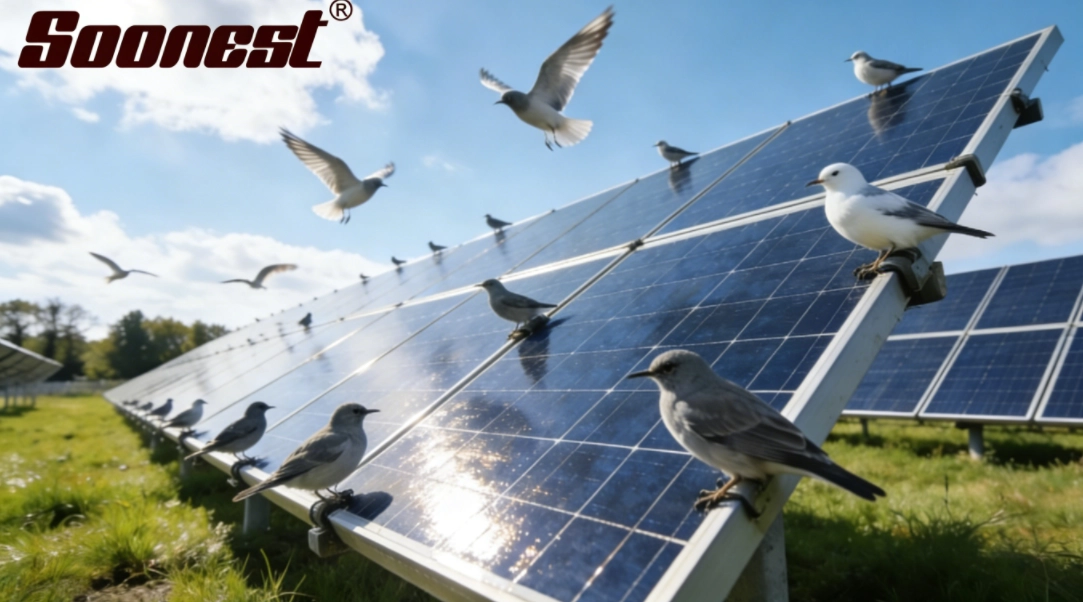
As solar installations grow on open ground and rooftops, birds will interact with them in some way. Yet the level and kind of danger are frequently misjudged. Reviewing confirmed studies clears up guesses from facts.
Collision Risks Around Panels
A frequent worry is that birds might crash into solar panels. Certain large-scale solar plants form broad shiny areas that look like water from the sky, particularly in dry regions. Experts call this the “lake effect” at times.
But when you compare it to other man-made items, solar panels cause only a minor part of bird deaths.
The table below lists rough yearly bird deaths in the United States from various causes:
| Source of Mortality | Estimated Annual Bird Deaths (U.S.) | Source |
| Building Collisions | 365 million – 1 billion | U.S. Fish & Wildlife Service |
| Cats (Domestic & Feral) | 1.3 – 4.0 billion | Smithsonian Conservation Biology Institute |
| Power Lines | 8 – 57 million | U.S. Fish & Wildlife Service |
| Wind Turbines | ~234,000 | U.S. Fish & Wildlife Service (2018 est.) |
| Solar Facilities | Estimated in the tens of thousands | NREL / Various studies |
When set against buildings or cats, bird deaths tied to solar are far fewer. This does not suggest overlooking the problem, but it provides a clearer view of the situation.
Habitat Disturbance And Displacement
Big ground-based solar farms alter nearby scenery. Building work might briefly upset nesting spots. Sometimes, open dry or grassy areas get changed to fit panel arrays and paths for access.
However, numerous current solar efforts now feature land recovery, plants that help pollinators, and paths for wildlife. Through good planning, habitat effects can drop, and in farming zones, shared-use solar can even boost variety in life forms.
Efficient modules assist in this area too. Since panels generate more power per square meter, developers need fewer units and smaller plots for equal results. The SOONEST MONO A series, offered from 350W to 585W, enables setups with greater energy per space. This leads straight to better use of land.
Attraction To Reflective Surfaces
Solar panels aim to take in sunlight rather than bounce it back. Today’s anti-reflective layers cut down shine a great deal. Even so, from some views, a bit of reflection happens.
Studies reveal that specific bird types might get drawn briefly to shiny spots, confusing them for water. But the way panels tilt, coating methods, and plant care near solar spots all lessen this pull.
Top-notch modules with better surface handling, such as the SOONEST MONO A panels, use glass that reflects little and boosts light uptake while cutting extra brightness. This setup aids energy production and fits well with the surroundings.
How Do Bird Interactions With Solar Panels Affect Ecosystems?
To grasp the wider effect on nature, look past single events. The main issue is if solar setups truly harm bird groups on a broad level.
Bird Mortality And Population Impact
Recent studies show that bird deaths at solar spots do happen, yet the totals stay low next to other causes from people.
For example, the U.S. Energy Information Administration stated that solar supplied around 5.6% of all U.S. electricity in 2023. As solar increases, steady checks grow vital. So far, effects on bird numbers tied right to solar spots stay small when measured against city growth or digging for fossil fuels.
In truth, shifts in climate pose a much bigger ongoing risk to bird groups. A 2019 report from the National Audubon Society pointed out that 389 bird types in North America face threats from climate change. Growing clean energy like solar helps cut carbon output and guards habitats over time.
Disruption Of Nesting Patterns
In building stages, nesting areas could face upset if timing lacks care. Careful builders usually run checks on environmental effects before starting work. They often time builds by season and add safe zones in key spots.
Rooftop setups, mainly in business and home settings, tend to affect bird nesting little when fitted right. Secure mounts and fewer open spots under panels cut the odds of birds settling in bad places.
How well panels last counts too. The SOONEST MONO A series gets built for extended use and firm build. Its strong hold against loads keeps setups safe in wind and bad weather, which lowers gaps or shaky parts that might draw nests.
Changes To Local Biodiversity
Solar spots do not always cut down on variety in local life. Sometimes, it rises when ground below panels gets seeds of local grasses or plants that aid pollinators, rather than staying empty.
More and more large solar farms in the U.S. and Europe add plans for plant care. In some places, sheep eat grass under panels, blending farming with power making.
Using panels with higher power lets project sizes shrink. The table below compares rough numbers of panels required for a 1 MW DC system with varied power levels:
| Panel Wattage | Panels Needed for 1 MW (Approx.) |
|---|---|
| 350W | ~2,857 panels |
| 450W | ~2,222 panels |
| 550W | ~1,818 panels |
| 585W | ~1,709 panels |
Smaller panel numbers mean less framing and possibly milder changes to the land. The SOONEST MONO A 550W–585W modules fit well for big business and large projects that want more power per area.
What Can Be Done To Minimize Bird Risks At Solar Sites?
Cutting bird risks focuses more on smart building than halting solar growth. Field standards keep improving, and many fixes see common use now.
Bird-Friendly Site Planning
Checks on the environment before building spot migration routes, nesting areas, and touchy habitats. Picking land already used, old industrial spots, rooftops, and factory zones cuts wildlife effects a lot.
How panels arrange counts as well. Keeping room for plants to grow and animals to move helps keep nature in balance.
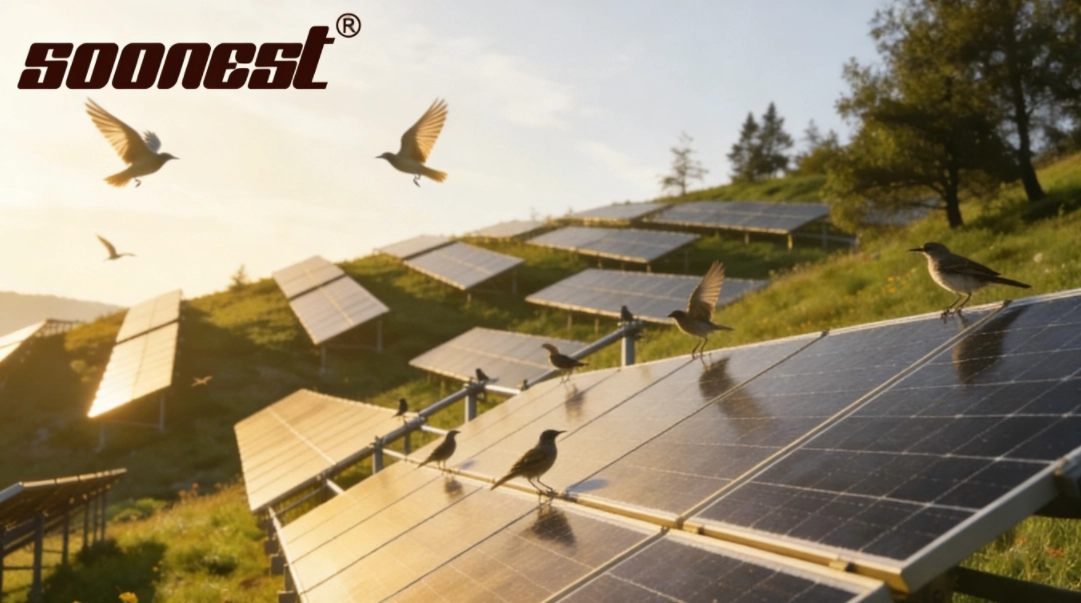
Visual And Physical Deterrents
Safe deterrents like marked panel borders, fence styles around the edge, and habitat buffers can lower bird contacts. In some spots, tiny visual signs help birds spot panel faces clearly.
Mesh or covers below panels often go on rooftops to stop nesting while keeping birds safe.
Monitoring And Adaptive Management
After setup checks let teams watch wildlife ties. If problems show up, they can add fixes. Using data for management keeps solar areas in line with nature rules.
Good parts help here as well. Dependable modules cut down on upkeep needs and build flaws. The SOONEST MONO A series uses high efficiency in turning light to power and tough materials, which backs steady work over long periods in varied weather.
Why Choose High-Quality Solar Panels Like SOONEST MONO A Series To Reduce Negative Impacts?
Solar panels differ in how well they work and last. Better efficiency brings more power from the same spot. This cuts land needs and lessens overall harm to nature.
Efficient Energy Output With Less Land Use
New monocrystalline tech gives solid results even in tight setup spaces. The SOONEST MONO A line includes 350W, 450W, 550W, 575W, and 585W choices, offering options for rooftops, business, and big systems.
Panels with more watts shrink the full setup size for the same power goal. This helps projects close to farm land or delicate nature spots.
Durable Panel Design For Long-Term Performance
Long-lasting build cuts how often replacements happen and cuts waste from materials. Panels that take heavy loads well deal with wind and snow pressure, key for keeping setups firm.
Firm setups lower risks of damage that could make unsafe spots for birds or workers fixing things.
Compatibility With Bird-Friendly Installation Practices
The MONO A series works with usual mount setups and spacing that match safe-for-birds plans. In ground arrays or rooftops, right fitting with quality modules aids both output and care for the environment.
How Can SOONEST MONO A 350W–585W Panels Support Sustainable Solar Projects?
Green solar building goes beyond just making power. It balances needs for energy, use of land, lasting build, and care for nature.
Wide Power Range For Flexible Project Needs
From average business rooftops to major ground efforts, the MONO A series has several power levels. Teams can pick the best output without switching tech bases.
High Conversion Efficiency For Better Space Use
More power per panel lowers the total count needed. As noted before, shifting from 350W to 585W can cut module numbers by over 1,100 in a 1 MW setup. This shift affects land prep, frame materials, and site size overall.
Reliable Performance In Diverse Environments
Steady work in different weather backs long-term clean power making. With solar as a main part of world electricity, dependability matches output in importance.
Soonest Power aims to provide PV answers that mix power, strength, and smart design. Growth in clean energy and care for wildlife need not clash. Through thoughtful plans and better module tech, both aims can advance side by side.
FAQ
Q1: Do solar panels kill a large number of birds?
A: Studies now show that bird deaths from solar spots are way below those from buildings, cats, and power lines. Incidents take place, but totals stay fairly low against other causes from human actions.
Q2: Can birds damage solar panels?
A: Droppings from birds can lower panel work if not washed off, and nests under rooftops may cause small troubles. Good fitting, mesh guards, and regular checks stop most issues.
Q3: How can solar projects reduce impact on wildlife?
A: Picking high-efficiency panels to cut land needs, running environment checks, adding local plants, and using designs safe for birds all lower effects on nature while making clean power.