
More families today use solar power in one way or another. Some only run a fridge or lights on solar, while others go further and use air conditioners or small home systems through a battery setup. When people begin checking their screens or small meters, one number shows up everywhere: battery voltage. It looks simple, but anyone who has seen it move up and down during the day knows it carries more meaning than just a random reading.
And because voltage is tied closely to sunlight, weather, appliance load, and even temperature, home users sometimes feel confused. The good thing is that voltage becomes easier to read once its basic behavior is understood. The following sections use everyday situations and real Soonest products to make the idea more down-to-earth for home users.
What Determines Solar Battery Voltage in a Home Solar System?
Voltage is never totally steady. It shifts through the day in ways that sometimes feel small and sometimes feel sudden. Many factors play a part, and not all of them are technical.
Battery Chemistry and Nominal Voltage
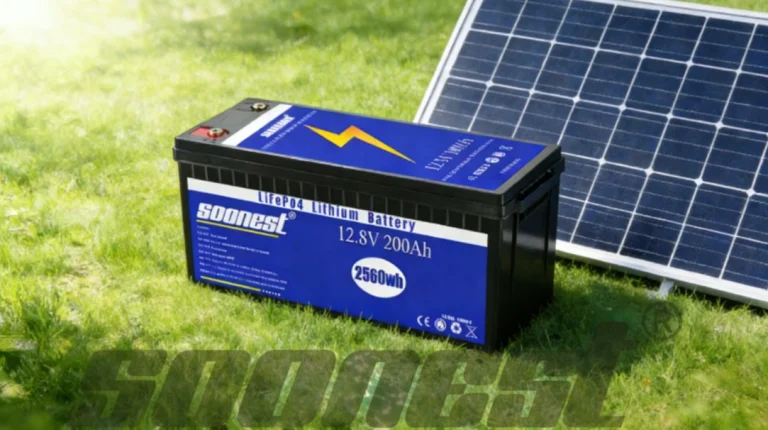
Batteries start with their own “base” or nominal voltage. Lead-acid batteries normally come in 12V, 24V, or 48V. Lithium batteries follow similar labels, but the way they discharge is different. Lithium batteries hold their voltage for a longer time, so the number stays nearly flat until the battery is already halfway down.
Here is a simple real-world comparison that many installers use:
| Battery Type | Nominal Voltage | Full Voltage | Empty Voltage |
|---|---|---|---|
| Lead-Acid (AGM) | 12V | ~12.7–12.9V | ~11.8–12.0V |
| LiFePO4 | 12.8V | ~13.4–13.6V | ~10.0–11.0V |
| Lead-Acid (Flooded) | 24V | ~25.2–25.6V | ~23.0–23.8V |
| LiFePO4 | 48V | ~53–54V | ~40–42V |
These figures are not strict rules, but they show the “normal” range batteries usually fall into.
Solar Panel Input and Charging Conditions
When sun hits the panels, current goes into the battery and pushes the voltage upward. On a clear day, this rise is fast. On a day full of clouds, the numbers climb but in a more hesitant way. A charge controller usually controls how high it can go. If sunlight is strong, the battery might show a number that looks higher than usual, but that is just how charging works.
Inverter and Load Interaction in Daily Use
Running appliances—especially ones with compressors—pulls the voltage down for a moment. A fridge or an air conditioner might cause a small dip the moment it starts. Good inverters soften this dip so devices don’t flicker. Home users often see this when something like a water pump starts for a second.
How Does Voltage Indicate the Real Status of a Solar Battery?
Voltage readings help people guess the battery’s condition, though timing matters. A battery being charged looks “fuller” than it really is. A battery being used looks “emptier” than reality. So the reading is most helpful when the system rests a bit.
Voltage Levels for State of Charge
This table shows a common estimate used by many solar users:
| State of Charge | Lead-Acid Voltage | LiFePO4 Voltage |
|---|---|---|
| 100% | ~12.7–12.9V | ~13.4–13.6V |
| 75% | ~12.4V | ~13.2V |
| 50% | ~12.1V | ~13.0V |
| 25% | ~11.9V | ~12.8V |
| 0% | ~11.8V | ~10.0–11.0V |
Lead-acid drops continuously. Lithium stays almost flat until the last part of the cycle.
Voltage Fluctuation During Solar Charging
A 12V battery may show a value like 14.2V in the middle of the day. It does not mean something is wrong. It just means the charge controller is pushing current into it. People new to solar sometimes panic when they see the higher number, but it is normal.
Voltage Drop Under Home Appliance Loads
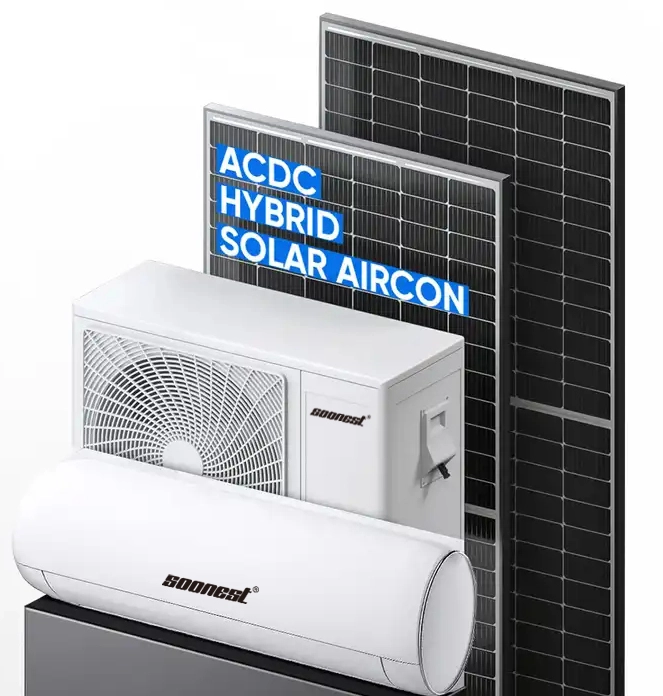
Large appliances, such as air conditioners or freezers, demand more current. This causes a small dip. The Soonest AC/DC Solar Air Conditioner 48V to 110V/220V Hybrid Grid With Solar Panel is designed for this exact situation. It can shift between solar and AC power, which helps keep the system from sagging too low when the compressor kicks in.
How Can Home Users Maintain Safe Voltage Levels in Daily Operation?
A home system stays stable through simple habits more than anything. Some users think it requires deep technical knowledge, but most of the time it just needs a bit of attention.
Proper Charge Controller and Inverter Settings
Most MPPT controllers now come with preset battery options: AGM, GEL, Flooded, Lithium. Choosing the right type is usually enough. Soonest appliances work with common home voltages—12V, 24V, and 48V—so users don’t need unusual settings.
Routine Monitoring for Healthy Voltage Range
Looking at the voltage early in the morning often gives the most honest reading because the battery rested overnight. Checking again at dusk shows how well solar production kept up. These two readings together tell a simple story about the day.
Timely Adjustment Based on Seasonal Solar Output
Winter sunlight is weaker and shorter. Many users notice their batteries drop sooner during cold months. Running a solar air conditioner all afternoon may push a small battery system too far. Hybrid mode helps during this season because it shifts part of the load to AC power.
Which Home Appliances Depend Most on Stable Solar Battery Voltage?
Not all appliances react the same way to voltage changes. Lights barely move the number. Phone chargers almost do nothing. But products with compressors respond fast to dips and rises. Soonest makes several items that handle this behavior in a more forgiving way.
Efficient Cooling With Soonest AC/DC Solar Air Conditioner 48V to 110V/220V
This hybrid unit can run with solar during the day and shift to AC power when sunlight fades. It reduces the battery’s burden. For homes with smaller battery banks, this matters a lot. The compressor does not shock the system as much as regular AC units.
Reliable Food Storage With Soonest AC/DC Solar Fridge & Solar Freezer 12V/24V to 220V
Soonest fridges and freezers are built with flexible inputs. They can take DC from solar batteries or AC when needed. Their compressors start more gently than many household fridges, which helps prevent sudden voltage drops during startup.
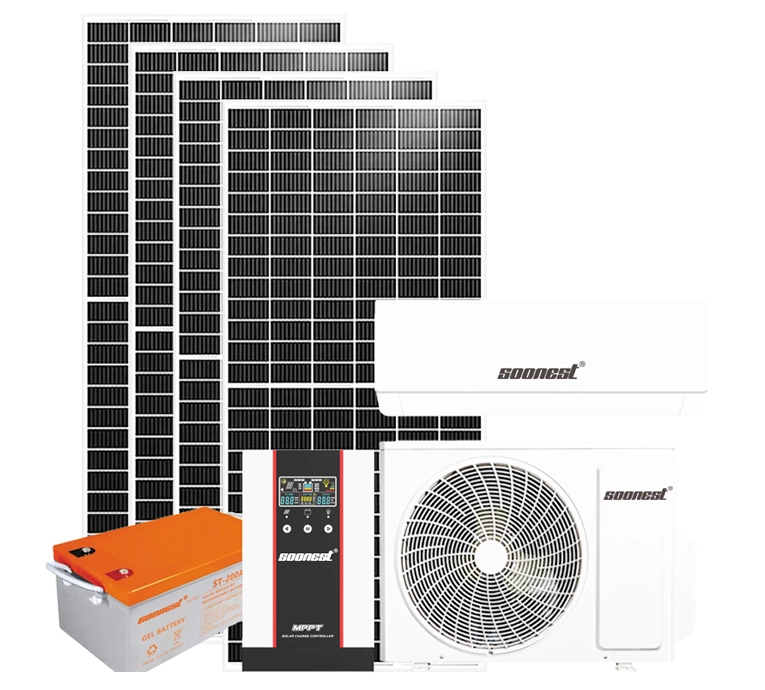
Off-Grid Climate Control With Soonest 48V DC Solar Air Conditioner With Battery and Solar Panel
For remote homes, this unit works directly on 48V DC. A 48V setup is widely used in off-grid locations because it carries more power without heating the cables. And the voltage stays steadier along longer wiring routes.
How Should Home Users Choose Solar Batteries Based on Voltage Needs?
Choosing a battery system depends on what the home does each day. Some households only need lighting and small electronics. Others run cooling appliances.
Matching Voltage to Household Loads
A home with an air conditioner usually chooses 24V or 48V. These systems handle larger loads with less strain. A small home with just lights and a fridge might stay with 12V.
Selecting Compatible Inverters and Controllers
A 48V inverter is common for families that use air conditioners. It keeps energy loss low. Soonest appliances match standard voltage levels, so they fit well into most home solar systems.
Planning Battery Capacity for Daily Solar Usage
Here is a simple guide:
| Home Appliance | Typical Daily Use | Suggested Battery (48V System) |
|---|---|---|
| Solar Air Conditioner | 6–8 hours | 5–10 kWh |
| Solar Fridge | 24 hours | 2–4 kWh |
| Lighting + Electronics | 4–6 hours | 1–2 kWh |
| Whole Small Home | — | 7–12 kWh |
Bigger battery banks hold voltage longer, which is important for homes with heavy loads.
FAQ
Q1: Does higher voltage always mean better performance?
A: Not always. Higher voltage helps handle larger loads, but wiring and battery type still matter.
Q2: Why does voltage drop during the night even when few devices run?
A: All batteries lose a little charge naturally. Lead-acid batteries lose it faster, especially in cold weather.
Q3: Can solar air conditioners work only with solar panels?
A: Some hybrid AC/DC models from Soonest can run during strong sunlight without a battery, though having a battery helps reduce sudden dips.




 English
  Russian
  German
  French
  Spanish
  Portuguese
  Arabic