El diésel solía ser la solución por defecto para granjas, pozos, refugios de telecomunicaciones, cabañas fronterizas y talleres remotos. En 2026, esa solución parece demasiado cara. Paneles solares Ahora son una opción más seria porque los precios del combustible, las rutas de reparto y la mano de obra de mantenimiento ya no son fáciles de controlar.
Pronto ha trabajado en la industria fotovoltaica durante 20 años, suministrando módulos solares, inversores fotovoltaicos, sistemas de almacenamiento de energía de litio y aire acondicionado solar. Sus productos han pasado las certificaciones CE, ROHS, SONCAP, UL e ISO y se exportan a Asia, África, Europa, Oriente Medio y América. A medida que la cadena de suministro de energía nueva de China se fortalece en el extranjero, este tipo de proveedor integral Ofrece a los compradores que viven fuera de la red eléctrica una alternativa más limpia para alejarse de la dependencia del diésel.
¿Por qué las granjas y los puestos remotos están dejando de usar generadores diésel?
Los generadores diésel son comunes, pero lo común no siempre significa barato. Para los usuarios en zonas remotas, el costo real no se limita al precio del combustible que figura en el recibo. También incluye el transporte, el almacenamiento, el mantenimiento, el riesgo de robo, los cambios de aceite, el tiempo de inactividad y la simple molestia de mantener el tanque lleno. Con la actual volatilidad del mercado petrolero, estos puntos débiles se hacen cada vez más evidentes.
Aumento de los costes de distribución de combustible en zonas remotas
Las recientes noticias sobre el petróleo constituyen una clara advertencia para los usuarios remotos. El crudo Brent subió un 3,2% el martes, hasta los 99,18 dólares por barril, después de que los ataques militares estadounidenses en el sur de Irán obstaculizaran los intentos de los actores regionales y mundiales por negociar la paz y garantizar el paso seguro de los buques por el estrecho de Ormuz, una vía marítima por la que transita cerca del 20% del comercio mundial de petróleo y GNL, según informó Reuters. La Administración de Información Energética de Estados Unidos estimó que las reservas mundiales de petróleo disminuirían en promedio 8,5 millones de barriles diarios en el segundo trimestre de 2026, y como resultado, el Brent cotizó en torno a los 106 dólares en mayo y junio, indicó la agencia.
Para un usuario urbano, esto puede significar facturas más altas. Para una granja a 80 kilómetros de la gasolinera más cercana, puede significar retrasos en el riego, mayores costos de transporte y llamadas incómodas a los proveedores. El combustible que parece caro en el puerto se vuelve aún más caro al llegar a una bomba de agua remota.
Presión por ruido, mantenimiento y tiempo de inactividad
Un motor diésel requiere atención constante. Es necesario revisar el aceite, los filtros, las correas, el sistema de refrigeración, la batería de arranque, la calidad del combustible y el escape. Un generador también es ruidoso. Cualquiera que haya estado junto a uno durante una larga jornada de riego sabe que el ruido se vuelve insoportable rápidamente.
La Agencia Internacional de Energía (AIE) prevé que la demanda mundial de petróleo se contraiga en 420.000 barriles diarios en 2026, principalmente debido a los altos precios, el debilitamiento de la economía y las medidas de ahorro energético que afectan al consumo de combustible. Esto indica que los usuarios están reduciendo activamente el consumo en la medida de lo posible. Para las explotaciones agrícolas y las estaciones remotas, sustituir parte del tiempo de funcionamiento de los generadores diésel por energía solar es una de las formas más directas de lograrlo.
La energía solar como fuente de energía de menor riesgo.
Los módulos fotovoltaicos convierten la luz solar directamente en electricidad de corriente continua (CC). La base de conocimientos describe los módulos fotovoltaicos como los componentes principales de las centrales eléctricas fotovoltaicas, fabricados con células, vidrio y película, y su rendimiento afecta directamente a la eficiencia y estabilidad del sistema.
Eso es importante para trabajos fuera de la red eléctrica. La luz solar no necesita transporte. No se derrama. No necesita un horario de entrega. Un sistema solar también se puede adaptar a la carga, por lo que un pequeño abrevadero para ganado y una estación de bombeo agrícola más grande no requieren la misma configuración.
¿Cómo reducen los paneles solares de 550W/585W los costes operativos en sistemas aislados de la red eléctrica?
Los módulos de alta potencia transforman la economía de los sistemas aislados de la red eléctrica, ya que permiten generar más energía con menos unidades. Esto reduce el trabajo de montaje, el cableado, la cantidad de paneles y, en ocasiones, el tamaño del área de instalación. En un terreno agrícola accidentado, menos componentes suelen significar menos problemas que solucionar posteriormente.
Mayor rendimiento con menos paneles
Un módulo de 550 W o 585 W puede suministrar más potencia por panel que módulos más pequeños de 100 W, 150 W o 300 W. Esto puede parecer obvio, pero es importante en el techo de una caseta de bombeo o en una estructura compacta instalada en el suelo. Además, un menor número de módulos reduce la cantidad de abrazaderas, rieles, puntos de cableado y mano de obra para la instalación.
Opciones de producto: 100W, 150W, 200W, 250W, 280W, 300W, 350W, 450W, 550W, 580W, 600W, 700W. Nuestros paneles solares domésticos son de una o dos caras y convierten la energía solar en electricidad mediante el efecto fotovoltaico. Pueden utilizarse como sistema de energía independiente o conectados a la red eléctrica.
Menor tiempo de funcionamiento del diésel durante las cargas diurnas.
Muchas tareas agrícolas se realizan durante el día. El bombeo de agua, el control del riego, la ventilación de los granos, los equipos de cercado, las cámaras de vigilancia, la refrigeración a pequeña escala y la carga de herramientas suelen funcionar cuando hay luz solar. Ese es el momento ideal para la energía solar.
El panel solar fotovoltaico puede cubrir parte de la carga diurna, por lo que el generador ya no necesita funcionar para cada vatio. Un generador diésel puede servir de respaldo para días nublados, trabajos nocturnos o períodos cortos de alta demanda. En muchas instalaciones de campo, esta es la opción más realista. No se trata de desechar el generador mañana, sino de dejar de usarlo todo el día para tareas que pueden cubrirse con luz solar.
Mayor rentabilidad a largo plazo para proyectos fuera de la red eléctrica.
Los módulos fotovoltaicos requieren menos mantenimiento que la maquinaria diésel. La base de conocimientos indica que los paneles solares fotovoltaicos tienen pocos componentes eléctricos complejos, rara vez se averían y suelen tener una vida útil de unos 25 años o más.
El diésel aún puede ser útil como combustible de reserva, pero su costo a largo plazo se repite. La compra de combustible se repite. El reemplazo de filtros se repite. Las visitas de servicio se repiten. La inversión en energía solar es diferente. La mayor parte del gasto se realiza al principio, y luego el sistema sigue produciendo energía con un costo operativo diario mucho menor.
¿Por qué los paneles solares fotovoltaicos son adecuados para aplicaciones agrícolas y en puestos remotos?
Los sistemas de energía aislados necesitan componentes básicos robustos. No requieren funciones sofisticadas que se vean bien en teoría, pero que fallen ante el polvo, el calor, la lluvia o un uso rudo. Un panel útil para sistemas fuera de la red debe ser eficiente, duradero, fácil de instalar y compatible con bombas, baterías e inversores.
Panel solar fotovoltaico para suministro de energía fuera de la red eléctrica
El Panel solar fotovoltaico Es ideal para granjas y puestos remotos, ya que puede alimentar sistemas independientes y proyectos conectados a la red eléctrica. Para usuarios aislados, la autonomía del sistema es aún más importante. Puede alimentar bombas, cargar baterías, proporcionar iluminación y reducir el tiempo de funcionamiento del generador.
La base de conocimientos también indica que la generación distribuida de energía fotovoltaica favorece la generación, la conversión y el consumo locales, reduciendo las pérdidas de energía derivadas de la transmisión a larga distancia. Esto es precisamente lo que necesitan muchas granjas y puestos remotos: generar energía cerca del punto de consumo, utilizarla in situ y mantener el sistema sencillo.
Capacidad de 550W/585W para cargas diurnas intensas.
Los módulos de mayor tamaño son útiles cuando las cargas no son pequeñas. Una bomba de alta presión, un abrevadero para ganado, un ventilador de almacén remoto o la carga de refrigeración de un refugio de telecomunicaciones pueden requerir más que unos pocos paneles pequeños. Los módulos de 550 W/585 W hacen que el conjunto sea más compacto.
Esto también resulta útil para los instaladores. Al transportar menos módulos de alta potencia, el trabajo en obra se vuelve más limpio, especialmente en cobertizos metálicos, sistemas montados en postes o estructuras de soporte cerca de pozos. Menos desorden. Menos uniones. Y también menos frustración en los días calurosos.
Diseño monocristalino para emplazamientos con limitaciones de espacio.
Los módulos monocristalinos son ideales para sistemas de alto rendimiento donde el espacio es limitado. Según la información disponible, los módulos fotovoltaicos monocristalinos están fabricados con un único cristal de silicio, suelen tener un color negro intenso, alcanzan una eficiencia del 18 % al 24 % y se caracterizan por su durabilidad y diseño compacto.
Esto les otorga una ventaja sobre las opciones de menor eficiencia cuando el área de instalación es limitada. El techo de una caseta de bombeo, un contenedor, un establo o un patio de equipos estrecho pueden no ofrecer mucho espacio libre. Una mayor eficiencia de conversión permite obtener más energía del espacio disponible.
¿Cómo debe funcionar un sistema solar con bombas, baterías e inversores?
Un panel solar por sí solo no constituye un sistema autónomo completo. Es necesario considerar la carga, las horas de funcionamiento, el tipo de energía requerida y si se necesita operación nocturna. El mejor sistema suele ser una combinación: módulos para la generación diurna, baterías para el almacenamiento de energía y un inversor o controlador de bomba para una salida estable.
Bombas de agua solares para riego y ganadería.
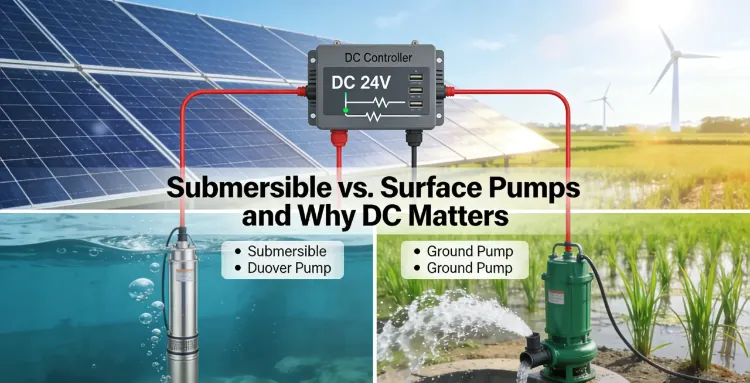
Las bombas de agua solares funcionan con electricidad generada por paneles fotovoltaicos o luz solar, en lugar de depender de la red eléctrica o de bombas diésel. La ficha técnica del producto incluye riego agrícola, uso doméstico, riego de jardines, bombas para pozos profundos, agua potable y agua para piscinas.
Para las explotaciones agrícolas, este es uno de los casos de uso más limpios para sustituir el diésel. La demanda de agua suele coincidir con el clima soleado. Los cultivos necesitan agua cuando el sol brilla con fuerza. La generación de energía solar también es intensa en ese momento. Esta coincidencia no es perfecta todos los días, pero es lo suficientemente buena como para resultar valiosa.
Almacenamiento de batería para condiciones nocturnas y nubladas.
Las baterías suplen la falta de luz solar cuando esta es escasa. Almacenan el exceso de energía diurna y la liberan posteriormente para alimentar luces, equipos de monitoreo, herramientas pequeñas, cercas eléctricas, enrutadores, sensores o cargas de emergencia.
La ficha del producto incluye baterías de fosfato de hierro y litio para montaje en pared con sistemas de 48 V/51,2 V, opciones de 100 Ah, 200 Ah y 500 Ah, y capacidades de almacenamiento como 5 kWh, 10 kWh, 15 kWh, 17,5 kWh, 20 kWh, 25 kWh y más de 50 kWh. También destaca un sistema de gestión de batería (BMS) integrado, expansión en paralelo, más de 6000 ciclos con una profundidad de descarga del 80 % y una garantía de 5 años.
Selección de inversor para equipos agrícolas de CA
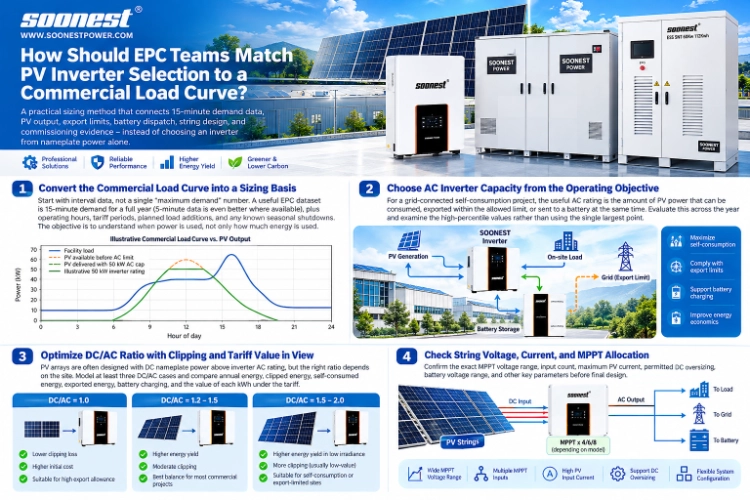
Muchos equipos agrícolas necesitan corriente alterna (CA), mientras que los módulos fotovoltaicos producen corriente continua (CC). Por eso, el inversor es importante. La base de conocimientos explica que un inversor fotovoltaico convierte la corriente continua de los paneles fotovoltaicos en corriente alterna de frecuencia estándar para redes aisladas o equipos de CA convencionales, y que los inversores solares incluyen funciones específicas para sistemas fotovoltaicos, como el seguimiento del punto de máxima potencia (MPPT) y la protección contra funcionamiento en isla.
Los inversores híbridos también pueden gestionar el uso de energía solar, baterías y carga. La ficha técnica incluye una serie de inversores monofásicos de 1 kW a 10,2 kW, carga solar MPPT, amplios rangos de entrada fotovoltaica, carga inteligente de baterías, arranque en frío, protección contra sobrecargas, monitorización RS485 y aplicaciones para bombas de agua solares.
¿Cómo pueden los compradores construir un proyecto solar fiable fuera de la red eléctrica?
Comprar equipos sin planificar la carga es arriesgado.Algunos sitios gastan de más. Otros dimensionan el sistema de forma insuficiente y luego culpan al equipo. Un mejor plan comienza con las cargas diarias, la luz solar, las horas de trabajo y las necesidades de respaldo.
Cálculo de carga antes del dimensionamiento del panel
Empiece con una lista sencilla: potencia de la bomba, horas de funcionamiento diarias, iluminación, cámaras, routers, ventiladores, refrigeración, cargadores de herramientas y cualquier consumo estacional. Luego, consulte las horas de sol locales y decida cuánto tiempo de funcionamiento del diésel debe compensar.
Por ejemplo, una bomba que funciona principalmente de 10 a. m. a 4 p. m. se adapta mejor a la energía solar que una carga que solo funciona a medianoche. La lógica de referencia es simple: calcular el consumo diario de energía, verificar los recursos solares, dimensionar el sistema y luego agregar un margen para las condiciones climáticas reales y el polvo. No es un trabajo glamuroso, pero evita proyectos fallidos.
Diseño de sistemas para condiciones exteriores adversas
Los sistemas agrícolas y de puestos de avanzada están expuestos al polvo, la lluvia, el calor, los insectos, el transporte accidentado y, a veces, a animales curiosos. La protección y el montaje del cableado son tan importantes como la potencia del panel.
También se debe verificar la calidad de los módulos. Según la base de conocimientos, los módulos fotovoltaicos de alta calidad deben tener un color uniforme en las celdas, rejillas sin roturas, soldaduras sin oxidación, soldaduras impecables, marcos de aluminio limpios, uniones firmes, sellado transparente y cajas de conexiones bien ensambladas. Para trabajos remotos, estos detalles son importantes, ya que las visitas de servicio son costosas.
Servicio y contacto para soporte de proyectos
Antes de realizar el pedido, prepare la ubicación del sitio, la lista de carga, la profundidad o altura de la bomba, las horas de funcionamiento diarias, el tiempo de respaldo previsto y si se utiliza equipo de CA. Luego, solicite un sistema que se ajuste a sus necesidades, incluyendo módulos, inversor, almacenamiento, montaje, cableado y protección.
El Panel solar fotovoltaico Es un buen punto de partida para reducir el consumo de diésel, pero el proyecto completo debe dimensionarse como un sistema de energía en funcionamiento. Paneles solares puede reducir los viajes de combustible, disminuir el ruido y hacer que la energía remota sea menos estresante. Para granjas, puestos de avanzada, instaladores y distribuidores, servicio y contactar con el servicio de asistencia debería ser el siguiente paso antes de solicitar un presupuesto.
Preguntas frecuentes
P: ¿Cuántos paneles solares se necesitan para reemplazar un generador diésel?
R: Depende de la potencia de carga, las horas de funcionamiento diarias, las horas de sol locales y si se incluyen baterías. Comience con su demanda diaria de kWh y luego dimensione el sistema con un margen de seguridad para días nublados y polvo.
P: ¿Puede un sistema solar alimentar las bombas de agua de una granja sin diésel?
R: Sí, muchos sistemas de riego y de suministro de agua para el ganado pueden funcionar directamente con energía fotovoltaica durante las horas de sol. Para uso nocturno o en condiciones climáticas inestables, añada almacenamiento de baterías o tenga un generador como respaldo.
P: ¿Por qué elegir módulos de 550W/585W para emplazamientos aislados de la red eléctrica?
R: Ofrecen mayor rendimiento con menos módulos, lo que reduce la cantidad de piezas de montaje, el cableado y el espacio de instalación. Esto resulta útil para casetas de bombeo, refugios de telecomunicaciones, cobertizos agrícolas y puestos remotos.