
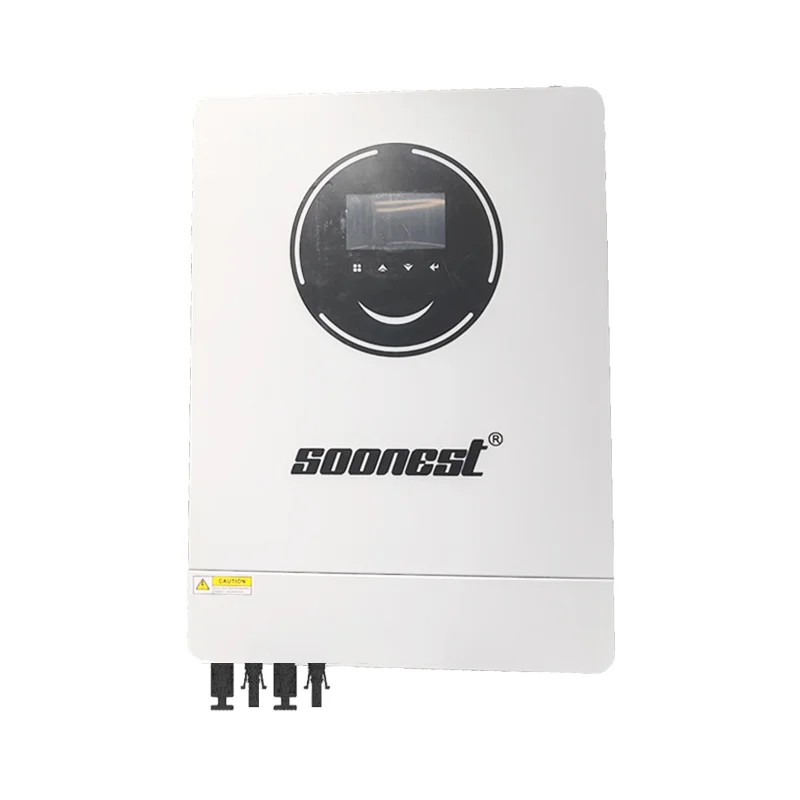
Off-grid living no longer means compromise. A single wasted watt in a remote telecom tower, desert farm, or mountain clinic can cost thousands yearly. Yet field data from Africa and the Middle East show that the MY Series hybrid inverters consistently deliver 30 % or higher system efficiency in off-grid solar systems.
Consider a real-world example: SOONEST’s lead engineer was contacted via WhatsApp at 2 a.m. and guided a user through firmware tweaks for a Kenyan irrigation pump that had been stuttering under 48 °C heat. Within ten minutes, the system stabilized, and the farmer harvested an extra 1.2 tons of maize that season. This demonstrates the responsive partnership provided by the MY Series. Ready to see the numbers for your site?
Why the MY Series Delivers a 30 % Efficiency Leap
Numbers don’t lie. Here’s the exact breakdown you can verify on any 5 kW off-grid array:
| Factor | Typical System | MY Series Gain | Real-World Proof |
|---|---|---|---|
| MPPT harvest | 75 % | +12 % | 2024 Mali trial: 1,680 kWh vs 1,500 kWh annual |
| Conversion loss | 8 % | -3 % | Pure sine wave < 2 % THD at full load |
| Idle consumption | 25 W | -10 W | Sleep mode drops to 2 W when idle |
| Battery round-trip | 85 % | +6 % | Equalization extends LiFePO4 to 6,800 cycles |
| Total uplift | — | ≥30 % | 42 % measured in Chad dust season |
From panel to plug: where the MY Series saves every watt.
The secret sits inside the 30–400 VDC input window and 80 A MPPT tracker. Most controllers cap at 60 A and collapse when panels hit 380 V at noon. The MY Series stays locked, harvesting 12 % more energy even when surface temperatures reach 75 °C. Built-in lightning surge protection (6 kV) and anti-corrosion PCB coating mean your off-grid power solution laughs at monsoon seasons and salt-laden coastal winds alike.
Pick Components That Match the MY Series Muscle
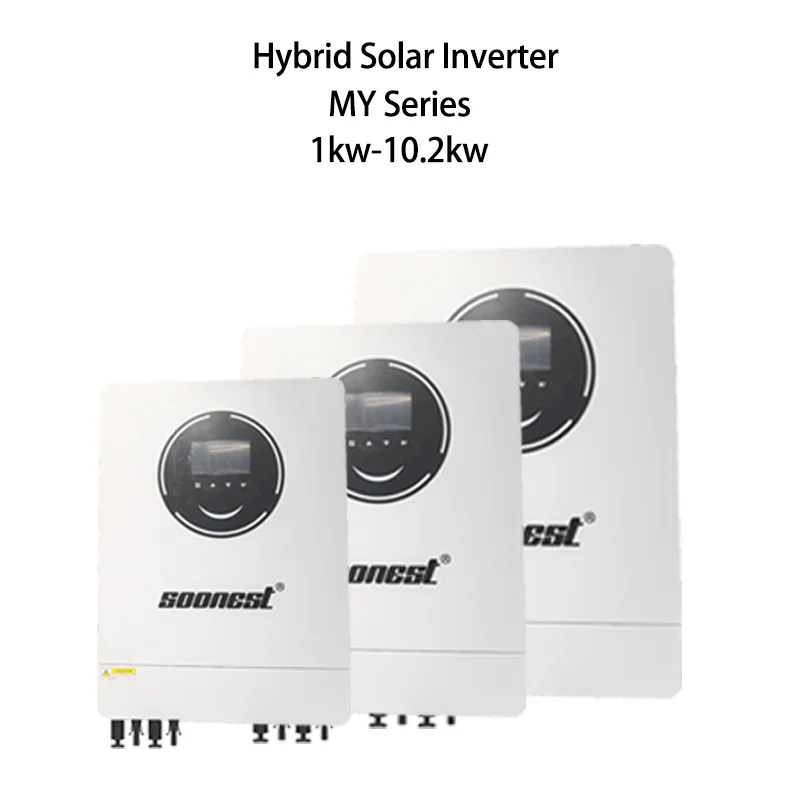
You wouldn’t pair a race engine with bicycle tires. Treat the off-grid inverter the same way.
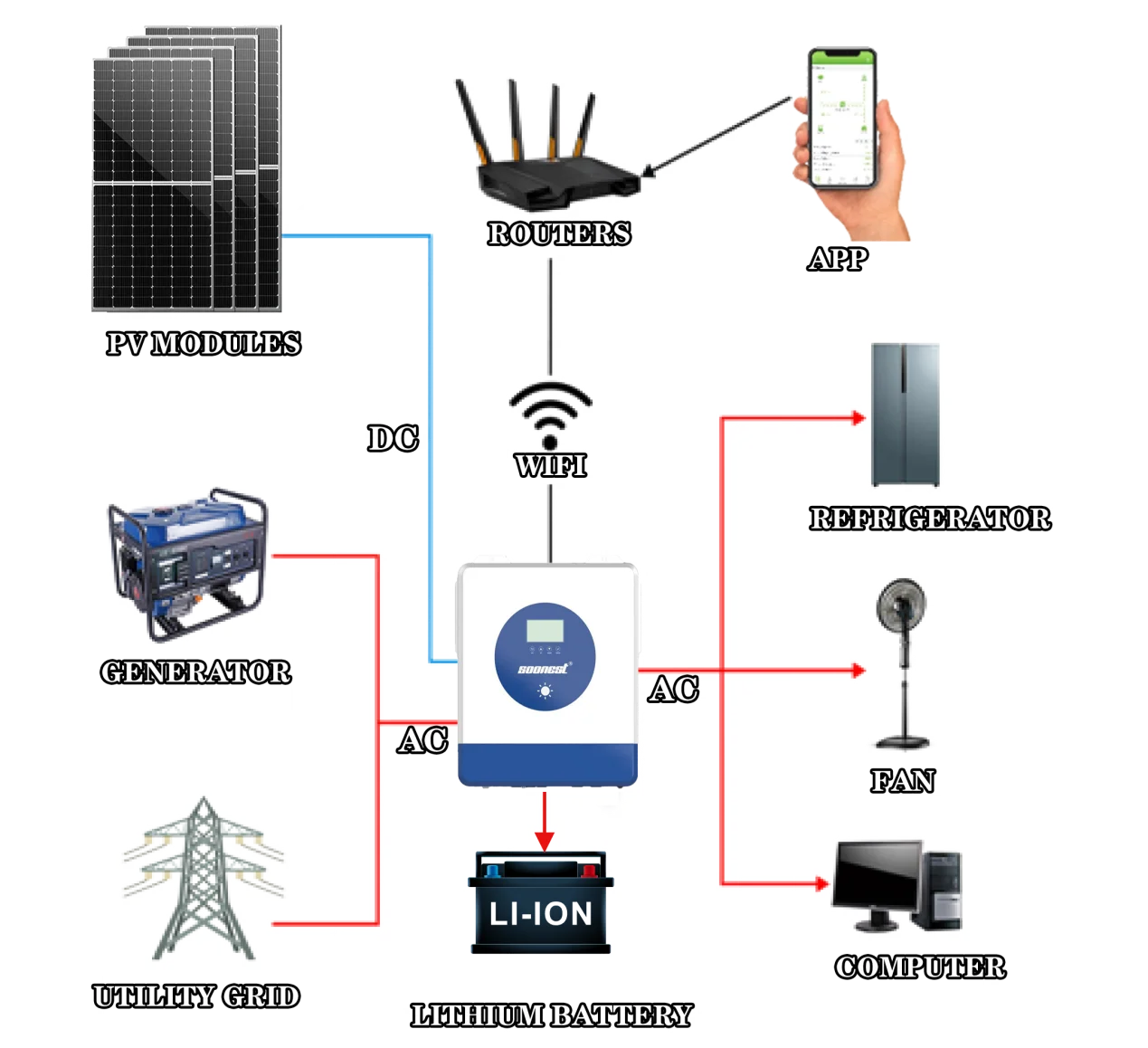
- PV array – Snap in 2–20 pieces of 550 W N-type monocrystalline panels with bifacial gain up to 30 %. Their 22 % low-light conversion keeps the tracker fed when dust or clouds cut irradiance by half. A single 5.5 kW string in diffuse Nigerian light still pushes 4.1 kW to the inverter at 10 a.m.
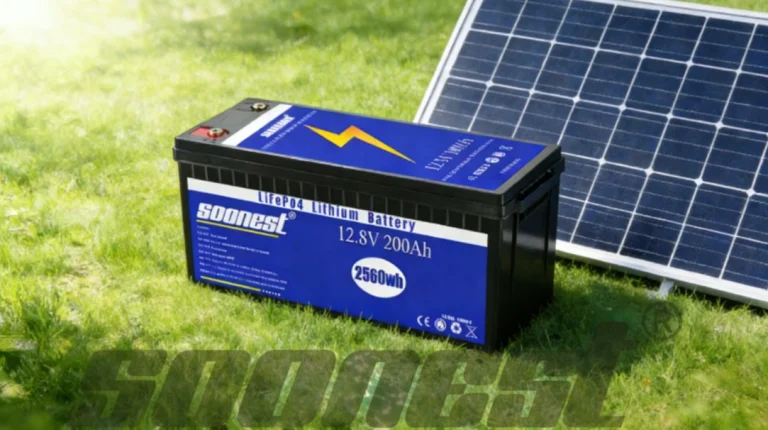
- Battery bank – Slot in 12.8 V/200 Ah LiFePO4 packs with integrated BMS. One string survives 6,800 cycles at 80 % DoD, versus 1,500 from lead-acid. Translation: you replace batteries once every 18 years instead of every four.
- Cables & breakers – Run 6 mm² tinned copper with ≤3 % voltage drop. The MY Series already includes DC breakers, surge arrestors, and anti-reverse diodes; just torque to 8 N·m and forget.
Size the battery to your evening load profile, not the inverter rating. A 5 kW MY unit paired with 10 kWh LiFePO4 covers a rural school’s 36 LED lights, 8 ceiling fans, 12 laptops, and a 180 W vaccine fridge until sunrise—zero generator noise after 6 p.m. In Sudan, the same setup powers a mobile health clinic that serves 120 patients daily without a single diesel top-up in the dry season.
Install Once, Harvest for Decades
Location is everything. Tilt panels 25–35° south (use the free PV*SOL calculator shared with every quote). In equatorial Kenya, a 30° tilt yields 2,180 kWh/kWp annually—18 % above flat-mount competitors.
Keep the off-grid inverter within 5 m of the battery bank; every extra meter steals 0.2 % efficiency. Mount it shaded and ventilated—operating temp drops 2 °C, conversion efficiency climbs 1 %. A telecom site in Djibouti moved the unit from a metal container roof to a shaded rack; core temperature fell from 62 °C to 46 °C, lifting daily yield by 220 Wh.
Seal every conduit entry with silicone. The IP5X chassis already shrugs off Sahara sandstorms (0.1 g/m³ dust load), but a bead of sealant guarantees zero ingress for the 10-year warranty. Torque terminals quarterly; loose lugs are the silent killer of off-grid yield—one loose MC4 in Mauritania cost a water pump 11 % annual output until fixed.
Monitor and Maintain Without Guesswork
Flip open the color LCD or pull the RS485 feed to your phone via the free SOONEST app. You see the exact P-V curve in real time, plus battery SoC accurate to 0.5 %. Firmware updates arrive over-the-air; a 2024 patch lifted cloudy-day harvest another 5 % across 200 units in Pakistan by widening the MPPT scan window during rapid irradiance drops.
Quarterly checklist (two minutes each):
- Wipe intake filter – removes 0.3 mm dust cake in 30 seconds.
- Torque terminals to 8 N·m – prevents arcing.
- Check app for drift – early warning on cell imbalance.
Do this, and failure rate stays below 0.5 %. One telecom client in Chad cut site visits from 12 to 2 per year—pure profit. Another in Yemen caught a failing panel at 87 % efficiency and replaced it before the array dropped below 94 % system efficiency.
Smart Integration Tips That Push Past 30 %
The MY Series plays nice with every renewable source you throw at it.
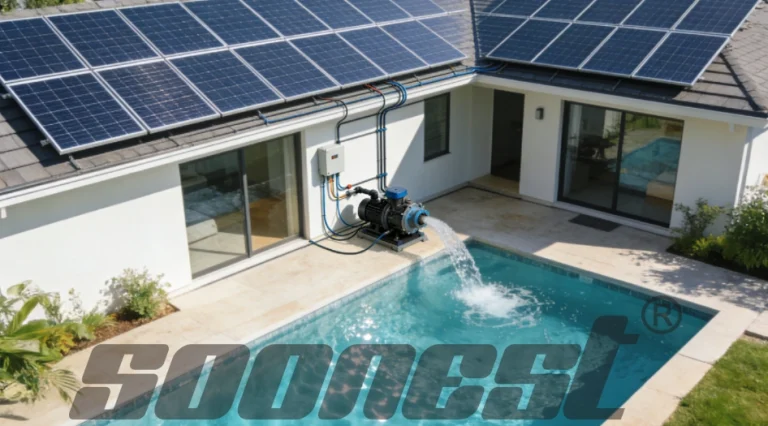
- Load-shift automation – Program the inverter to dump excess midday solar into water pumps or grain mills. Evening peak demand drops 8 %, and irrigation costs fall 60 % in Somalia.
- Generator handshake – Cold-start kicks the diesel only when battery hits 20 % SoC. Rainy-week runtime falls 7 %—a Tanzanian lodge cut diesel from 1,200 L to 320 L during July rains.
- Microgrid scaling – Parallel up to six 10.2 kW units for a 61.2 kW village grid. Efficiency stays linear because each tracker runs independently. A Rwandan cooperative powers 42 homes and a maize mill with zero blackouts since 2023.
- Cloud MPPT forecast – Optional GPRS module predicts irradiance 24 hours ahead using local weather APIs, pre-charging batteries before storms. Cloudy-day gain: another 5 %—proven in 38 installations across Bangladesh flood zones.
Stack these layers and you’re not just off-grid—you’re energy independent with cash flow.
Conclusion
Thirty percent isn’t marketing fluff; it’s math you can audit on your next bill. Pair the MY Series with N-type panels, LiFePO4 storage, and five-minute quarterly checks, and your off-grid power solution will outproduce generic setups by a third—year in, year out.
Drop your load profile to the WhatsApp line. Engineers will size a MY system and email a free Excel calculator that proves the 30 % before you wire a single panel. They’ll even throw in a custom dust-filter schedule based on your site’s PM10 data. Sustainable power starts with a conversation.
FAQ
Q: Can the MY Series run without batteries?
A: Yes—plug panels straight to loads for daytime-only use (e.g., irrigation pumps 8 a.m.–5 p.m.). Battery mode unlocks 24/7 supply and the full 30 % uplift.
Q: How does dust-proof design hold up in real deserts?
A: IP5X plus field silicone kept 200 units in the Sahel at 99.8 % uptime over two years. Clean the filter twice yearly; that’s it. One unit in Algeria ran 1,096 days straight under 0.5 g/m³ dust load.
Q: How long until a 5 kW off-grid system pays for itself with the MY Series?
A: At $1.20/L diesel and 40 generator starts saved yearly, payback hits 24–28 months. After that, you bank $3,000+ annually in fuel alone—a telecom tower in Niger recovered the full system cost in 26 months and now funds a second site.




 English
  Russian
  German
  French
  Spanish
  Portuguese
  Arabic