
Rising power bills, unstable electrical grids, and stricter green goals are reshaping how families manage their energy needs in 2025. People no longer see solar appliances as strange or experimental gadgets. On the contrary, these devices act as handy daily tools, mainly in spots with high cooling demands and lots of sunshine.
Among the range of solar-driven household items, solar air conditioners rank as one of the fastest-growing types. Cooling systems account for a large share of home power use, and switching from standard air conditioners to solar models can sharply reduce dependence on the central grid. Companies like Soonest push this shift forward by offering reliable hybrid and off-grid solar air conditioning units designed for real household needs.
What Are the Key Trends Driving Solar Appliances Adoption in Homes in 2025?
Solar appliances did not catch on overnight. Rather, certain clear factors motivate owners and builders to turn to solar-based home systems.
Technological Innovations Enabling Higher Efficiency
Recent progress in solar cell efficiency, DC-driven compressors, and vacuum tube thermal capture has changed how well solar appliances work in practice. Today, these modern solar air conditioners run on mixed energy types, and they shift smoothly from solar power to battery storage or the utility grid as needed.
The International Energy Agency notes that average solar PV panel efficiency has climbed more than 30% over the past decade, making solar appliances far more practical for everyday home tasks.
Grid Resilience and Energy Independence
Power cuts, limits in busy periods, and voltage swings happen often in many areas. Solar appliances lighten the pressure on local grids, and they allow homes to keep key systems running even if the grid goes down. What’s more, hybrid and off-grid cooling options draw big interest from rural areas, islands, and growing economies.
Cost Savings and Environmental Benefits
Cooling costs rise steadily across the world. In warm-climate countries, air conditioning often makes up 40–60% of household electricity use during summer months. So, solar cooling trims regular energy bills, and it lowers carbon releases too, helping both pocketbooks and planet-friendly goals.
Table 1: Average Residential Cooling Energy Share by Region
| Region | Share of Household Electricity Used for Cooling |
|---|---|
| Middle East | 60% |
| Southeast Asia | 45% |
| Southern Europe | 30% |
| Southern United States | 35% |
Data based on IEA and regional energy authority reports
How Do Solar Air Conditioners Transform Residential Energy Use?
With solar appliances evolving, air conditioners now handle and mix their energy supplies in more clever ways.
Hybrid Grid Integration for Continuous Power Supply
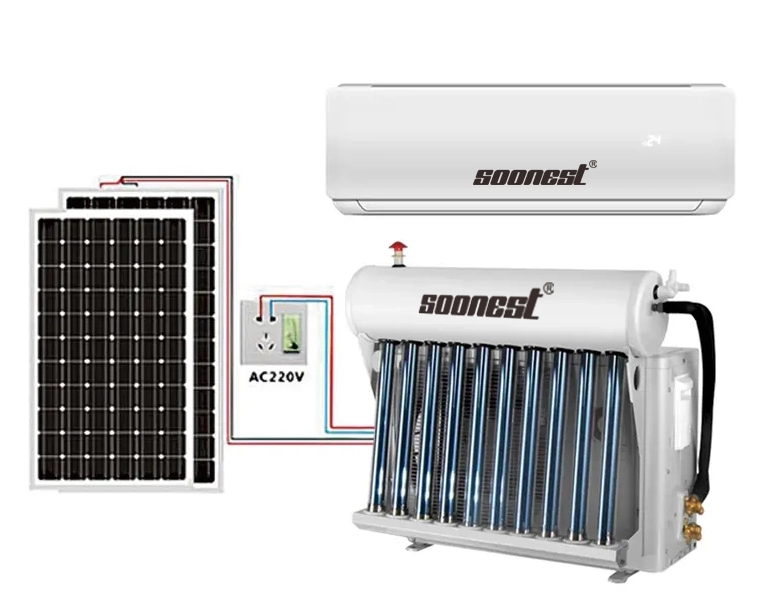
These hybrid solar air conditioners start by drawing power from solar panels, but they turn to the grid only when solar output dips low. In turn, this arrangement cuts daytime power pulls without cutting into comfort. Devices like the Soonest AC/DC Vacuum Tube Solar Air Conditioner – Hybrid Grid fit exactly for this flexible operation.
That approach fits well in urban houses where full off-grid systems do not work, but cutting energy use still matters a lot.
Off-Grid Capabilities With Solar Panels and Battery
Homes in remote places or spots with shaky grids find off-grid solar air conditioners useful for steady cooling without external power. They use DC current right from panels plus stored battery power, so they avoid waste from extra changes.
The Soonest 48V DC Solar Air Conditioner – Off Grid With Solar Panel and Battery matches this setup just right, since it keeps cooling steady even without grid links or during patchy service.
Reduced Electricity Demand During Peak Hours
Regular air conditioners spike power needs in warm afternoons, right when rates climb highest. Yet solar air conditioners line up cooling wants with peak sun hours, easing grid load and trimming top-rate fees for folks at home.
Why Choose Soonest Solar Air Conditioning Solutions for Modern Homes?
All solar air conditioners do not come built the same. Soonest focuses on designs that match true home patterns over lab-only tests.
AC/DC Vacuum Tube Solar Air Conditioner – Hybrid Grid Air Conditioner Benefits
This model pairs vacuum tube solar collectors with AC/DC hybrid features. Those tubes raise heat pickup rates, even in less-than-ideal light. Also, grid hybrid support keeps the unit running smooth without hands-on tweaks, making it great for home spots that need steady, round-the-clock cooling.
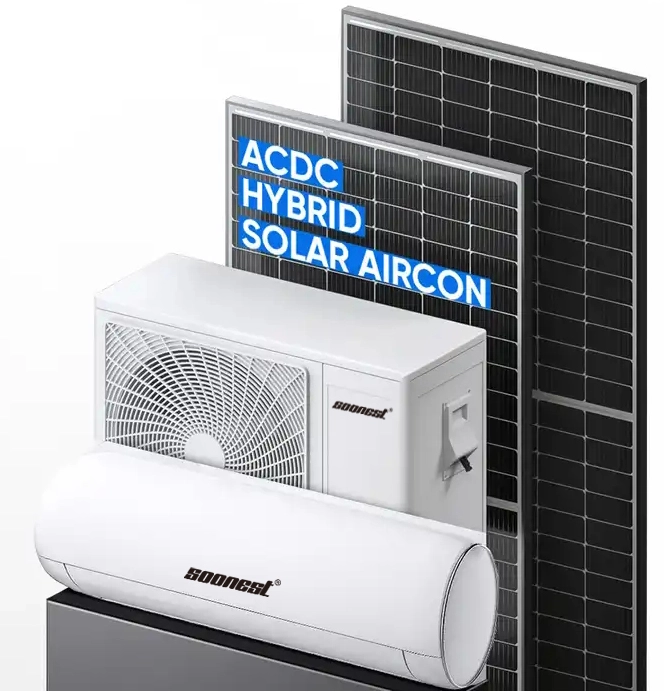
AC DC Solar Air Conditioner 48V To 110V/220V – Hybrid Grid With Solar Panel Advantages
This build gives flexibility by managing different voltage setups and hooking up straight to solar panels. It fits well in worldwide spots with varying power standards. Plus, the hybrid mode drops grid pulls during day hours, while holding full power in nights or dull skies.
48V DC Solar Air Conditioner – Off Grid With Solar Panel and Battery Features
This off-grid choice aims at houses seeking full energy freedom. It runs on 48V DC to cut changeover losses and links easy with solar panels and batteries. Usually, people use it in rural builds, eco-lodges, and areas with spotty power.
What Practical Benefits Can Homeowners Expect From Solar Appliances?
Besides power cuts, solar air conditioners bring daily upsides that matter in real homes.
Lower Electricity Bills and Long-Term Savings
The starting cost tops basic air conditioners, but daily run costs fall a good deal. In sunny places, these units can cut cooling bills by 50–70% annually, depending on size and how folks use them each day.
Enhanced Comfort With Sustainable Cooling
Steady inside temps, safe from surprise blackouts, lift daily comfort. Hybrid types skip abrupt stops in grid crashes, and off-grid ones run solo after that.
Support for Peak Demand and Grid Stress Reduction
Widespread use of solar cooling eases loads on national grids in hot waves. In that way, it helps keep power flow stable and cuts needs for quick backup plants.
Table 2: Traditional vs Solar Air Conditioner Comparison
| Feature | Traditional AC | Solar AC (Hybrid/Off-Grid) |
| Grid Dependence | High | Low to None |
| Peak Hour Cost Impact | High | Low |
| Power Outage Operation | Stops | Continues (Hybrid/Off-Grid) |
| Carbon Emissions | High | Significantly Lower |
| Long-Term Cost | Rising | Stable |
How to Choose the Right Solar Air Conditioner for a Home?
Choosing the right setup depends on everyday factors, not just sales talk.
Assessing Power Requirements and Usage Patterns
Homes that call for long daytime cooling get the biggest gains from hybrid setups. By contrast, off-grid kinds work best in areas without solid grid ties or where full freedom counts most.
Understanding Hybrid Grid vs Off-Grid Needs
Hybrid plans mix simple use with bill drops, but off-grid ones highlight alone-standing power. At bottom, choice turns on grid steadiness, cash on hand, and local sun levels.
Matching Product Features With Home Infrastructure
Roof room, panel yield, battery hold, and local weather all shape how a system runs. Soonest models build to fit many home styles, which makes picking easier.
Conclusion
Solar appliances shift home power ways in 2025, and solar air conditioners head that trend. With cooling calls growing and power prices up, hybrid and off-grid solar cooling give a smart path to smaller bills and better power freedom.
Soonest brings a mix of solar air conditioning picks that fit today’s home wants, from hybrid grid ties to full off-grid builds. These tools promise sure cooling, cut grid needs, and line up with global green aims, setting them as a solid choice for homes ready for what’s next.
FAQ
Q1: Can solar air conditioners work on cloudy days or at night?
A: Yes. Hybrid systems automatically switch to grid power when solar input is low, while off-grid systems rely on stored battery energy.
Q2: Are solar air conditioners suitable for apartments or only houses?
A: Hybrid solar air conditioners can be used in apartments if rooftop or shared solar access is available. Off-grid systems are more common in standalone homes.
Q3: How long does it take to recover the cost of a solar air conditioner?
A: In high-sun regions, payback periods typically range from 3 to 6 years, depending on electricity prices and system size.



 English
  Russian
  German
  French
  Spanish
  Portuguese
  Arabic