
Residential solar arrangements now include much more than rooftop panels alone. Power rates keep climbing gradually, while network reliability turns increasingly unreliable across numerous locations. Therefore, power reserve has developed into a vital component of home solar strategies. A carefully chosen battery array lets households store surplus midday solar output. Later, they draw on this power in the evenings. Additionally, such systems guard against electricity blackouts.
Among different reserve alternatives, lithium battery arrays draw special notice. Specifically, units based on LiFePO4 composition have earned broad acceptance in current residential solar applications. Soonest Power contributes over twenty years of knowledge in the solar panel field. It supplies a broad array of lithium battery items made specifically for home solar reserve purposes. These products find common use across Asia, Africa, Europe, and the Americas. Moreover, they work reliably in both connected-to-grid and independent setups.
What Are the Key Benefits of Using Lithium Battery Banks in Home Solar Systems?
Shifting away from standard batteries toward lithium reserve options brings multiple concrete advantages. These benefits shape daily power usage habits and total costs over extended periods.
Understanding the reason battery performance carries such weight in household solar designs proves helpful before reviewing each advantage closely. Reserve devices run on a regular basis and frequently last through numerous years. As a consequence, slight drops in output build up far sooner than many homeowners realize.
Higher Energy Density and Longer Lifespan
Lithium batteries pack more power into compact sizes. For that reason, they make setup simpler, especially in houses with tight room on walls or floors.
Of greater importance, lithium batteries outlast other choices by a wide margin. An ordinary LiFePO4 battery offers 4,000–6,000 full cycles when discharged to 80% depth. In everyday situations, this amounts to 10–15 years of typical home activity.
On the other hand, typical lead-acid batteries manage only 500–1,000 cycles before facing major capacity decline. Consequently, ongoing replacements boost both spending and care requirements.
Improved Safety and Reliability
Security stands out as a top concern for home power reserve devices. LiFePO4 composition receives praise for its warmth resistance and small risk of heat escalation. In this way, it operates without danger during intense operation or ongoing charge-discharge processes.
Soonest lithium battery arrays include sophisticated Battery Management Systems (BMS). These setups observe voltage, heat levels, and flow rates around the clock. Through this monitoring, they prevent dangers such as excess charging, deep depletion, or circuit issues. These protections carry special significance in family settings.
Better Performance in Different Climate Conditions
Surrounding heat levels affect battery endurance directly. Lithium batteries provide steady results across a wider set of environments than earlier varieties.
LiFePO4 batteries usually function effectively between -10°C to 50°C. This span fits hot areas, ocean-side spots, and places with clear seasonal changes. For these reasons, lithium reserve has spread widely in Africa, the Middle East, and parts of Southeast Asia.
How Do Lithium Battery Banks Improve Solar Energy Storage Efficiency at Home?
Battery output goes further than simple holding capacity. It also decides how much generated solar power ends up available in practice.
With solar arrays growing stronger, reserve shortcomings show up more clearly. Lithium batteries cut down on these issues via several approaches.
Lower Self-Discharge and Higher Round-Trip Efficiency
Lithium batteries suffer little power drain while idle. Their self-discharge figures remain below 3% per month, while lead-acid ones fall between 5–15%.
Round-trip output serves as another essential indicator. LiFePO4 batteries routinely hit 92–98% efficiency. Hence, almost every bit of saved power stays ready for access.
Table 1: Lithium vs Lead-Acid Battery Performance Comparison
| Feature | LiFePO4 Battery | Lead-Acid Battery |
| Cycle Life (80% DoD) | 4,000–6,000 cycles | 500–1,000 cycles |
| Round-Trip Efficiency | 92–98% | 70–85% |
| Usable Capacity | 80–90% | 50–60% |
| Maintenance | None | Regular |
| Typical Lifespan | 10–15 years | 3–5 years |
Data based on manufacturer specs and industry standards.
Faster Charging and Discharging Capabilities
Lithium batteries manage higher input currents without damage. As a result, they capture extra solar generation in short bursts of strong light. This feature offers clear value in places facing changing weather patterns.
The quick output ability further supports energy-demanding equipment such as air coolers, water movers, and EV charging points. Thus, lithium reserve fits nicely with today’s households dealing with rising power needs.
Scalable Capacity for Growing Household Needs
Lithium battery arrays grow easily to address changing requirements. Their modular builds allow users to boost capacity without rebuilding the full system.
Soonest battery setups handle both side-by-side and stacked connections. Consequently, they connect smoothly to various inverters and power management tools.
Which Soonest Lithium Battery Packs Are Best Suited for Home Solar Storage?
Soonest Power offers lithium battery types suited to different setup sizes, budget levels, and placement options. Each line considers real household uses.
Before picking a battery, assess system voltage, daily power draw, and backup time goals.
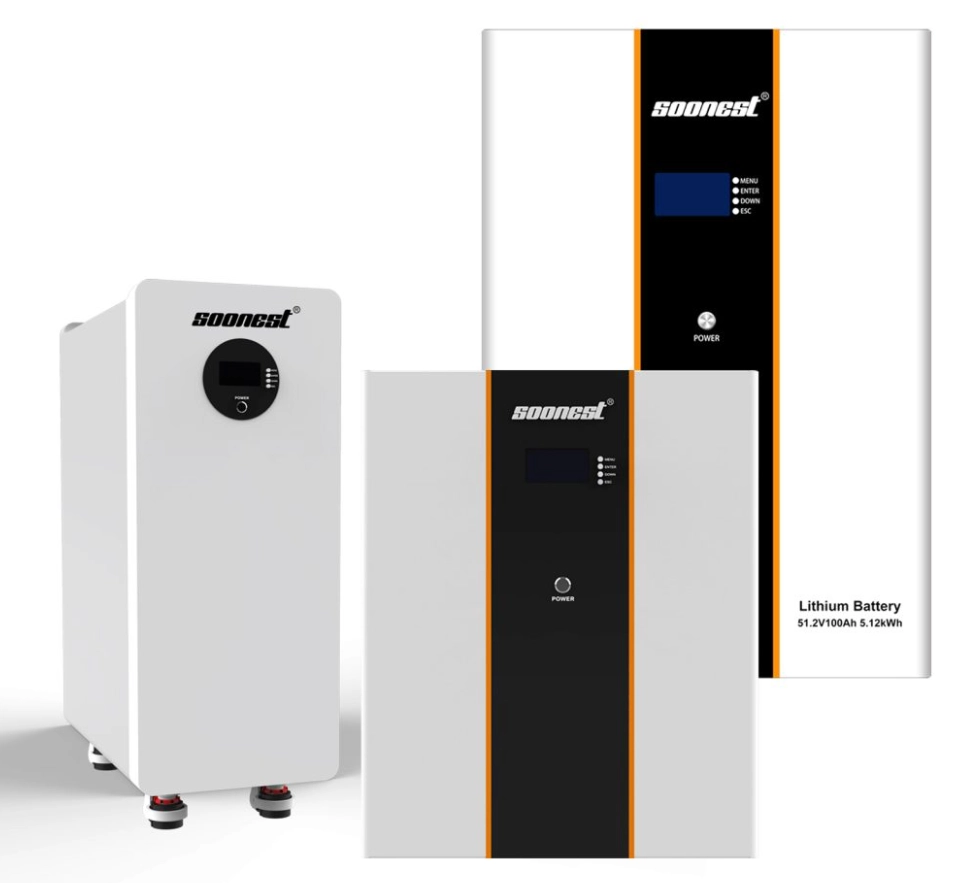
SOONEST 48V / 51.2V LiFePO4 Battery Packs for Whole-Home Storage
This group aims at large home systems matched with hybrid inverters.
Available sizes cover 5kWh, 15kWh, 17.5kWh, 20kWh, and 30kWh, with ampere-hour ratings from 100Ah to 500Ah. Technicians often install them for complete outage support and high-use homes.
These packs include CAN and RS485 links, which guarantee easy and solid pairing with hybrid inverters.
SOONEST Deep Cycle 12.8V / 25.6V LiFePO4 Batteries (50Ah–250Ah)
This set stresses affordability and adaptability. It acts as a favored swap for lead-acid types in smaller solar designs.
These units work for jobs like lighting, internet gear, fridge units, and small off-grid arrangements. Many customers pick them for updating old systems while keeping the same inverters.
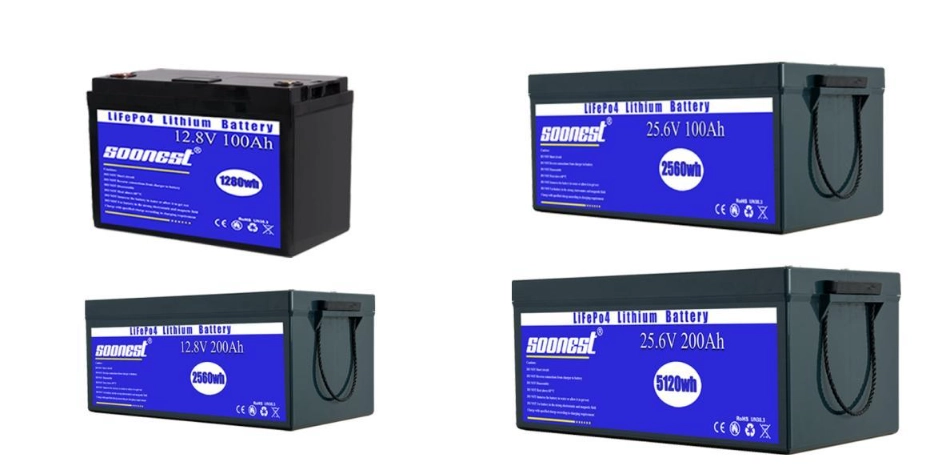
SOONEST Deep Cycle 12.8V / 25.6V Batteries (100Ah–200Ah)
This middle option blends capacity with price effectively. It supports growing home setups that expand step by step.
Such batteries find acceptance in mixed solar designs and basic backup roles expecting steady use cycles.
What Factors Should Homeowners Consider When Choosing a Lithium Battery Bank?
Picking a battery means looking past capacity alone. Fit with current setups and usage behaviors count just as heavily.
Matching reserve selections to true power habits supports smart choices prior to completing a buy.
Capacity and Scalability for Household Load
Routine power use sets the right battery dimensions. A standard household pulls 10–30 kWh per day, based on gadget varieties and area climate.
Table 2: Typical Home Energy Use vs Suggested Battery Size
| Daily Consumption | Suggested Battery Capacity |
| 5–10 kWh | 5–10 kWh |
| 10–20 kWh | 10–20 kWh |
| 20–30 kWh | 20–30 kWh |
Estimates based on residential energy studies and inverter sizing guidelines.
Battery Chemistry and Cycle Life
LiFePO4 batteries draw favor for home uses because of their safe makeup and lasting quality. The long cycle count lowers replacement rates and limits total expenses.
Compatibility With Solar Inverters and System Design
Voltage matching stays key to success. Soonest batteries match common inverter power levels and signals, which reduces setup hurdles and time spent adjusting.
How to Maximize the Return on Investment With Lithium Solar Battery Banks
Power reserve buys should bring cost reductions in addition to new gear.
Careful planning and steady use methods speed up payback timelines and boost everyday results.
Optimizing Energy Usage and Peak Shaving
Gathering extra daytime solar for night use lessens dependence on main grid supply. Where time-based rates apply, these steps can cut bills by a good amount each month.
Integrating Backup Power Needs
Lithium batteries supply quick standby power when cuts occur. In homes near shaky grid zones, this steady feature often covers the initial cost by itself.
Routine Monitoring and Smart Use
While lithium batteries need little care, ongoing checks on the arrangement spot troubles early. This approach, in effect, stretches the full working life.
Conclusion
Lithium battery arrays offer a practical and solid choice for home solar power holding. Their extended run time, strong output, and flexible build make them fit for modern house systems.
Soonest Power blends solid lithium progress with practical solar insights. It delivers battery selections that fit varied home demands. From basic deep-cycle packs to sturdy 48V reserve groups, these items promote safe, reliable, and ongoing power freedom.
Homeowners aiming to improve or set up solar reserve structures discover that lithium batteries from Soonest Power form a firm ground for advanced power methods.
FAQ
Q1: How long do lithium battery banks usually last in home solar systems?
A: Most LiFePO4 batteries hold up for 10 to 15 years during normal daily runs. Discharge levels and use styles affect this span.
Q2: Are lithium batteries safe for indoor residential installation?
A: Yes. LiFePO4 batteries count as some of the safest lithium kinds. They build in protections to control heat, voltage, and current paths.
Q3: Can lithium batteries replace existing lead-acid batteries without changing the inverter?
A: Yes, in many situations. Power-level matching lithium types, like Soonest 12.8V or 25.6V units, work as direct stand-ins. Still, adjusting inverter options might prove necessary.




 English
  Russian
  German
  French
  Spanish
  Portuguese
  Arabic