
Choosing the right inverter can make or break your solar power system. While solar panels often get all the attention, it’s the inverter that truly determines how effectively you can use that harvested energy. The decision typically comes down to two main types: hybrid and off-grid inverters. This isn’t just a technicality—it’s a choice that affects your energy independence, potential savings, and system functionality for years to come. Whether you’re looking to stay connected to the grid with backup options or go completely independent, understanding the real-world pros and cons of each system is crucial. Let’s break down how these inverters differ and which scenario each one best serves.
Overview of Solar Inverter Technologies
Defining Hybrid and Off-grid Inverter Systems
When you set up a solar power system, the initial major decision involves selecting the correct inverter type. Two primary options emerge: hybrid and off-grid inverters. Their main distinction appears in the way they connect to the primary electricity network.
A hybrid solar inverter blends the roles of a grid-connected inverter and a battery storage inverter. It connects directly to the grid. Moreover, it stores surplus electricity in batteries. This arrangement permits electricity to move in both directions. That kind of adaptability suits locations with unreliable electricity supply or substantial power requirements.
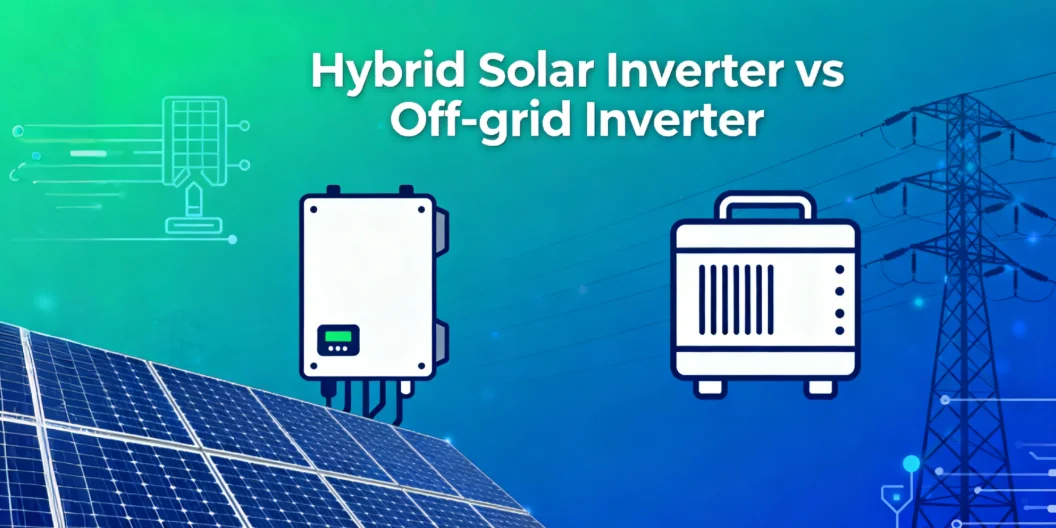
In comparison, an off-grid solar inverter converts direct current from solar panels into alternating current. It avoids any link to the electricity network. Rather, it supplies power to devices independently. Such arrangements perform best in distant areas. In those places, access to the grid is absent or far too expensive to install.
During regular applications, hybrid inverters frequently appear in suburban residences. They likewise appear in urban structures or commercial locations. These sites manage irregular power demands and opportunities for net metering. Off-grid arrangements prevail in isolated sites such as cabins. Agricultural fields and island vacation spots rely on them as well.
Technical Architecture Comparison
From a technical perspective, both arrangements manage electricity in separate manners. Hybrid inverters enable electricity to travel in opposite directions. Consequently, they transition effortlessly between solar generation, battery storage, and grid provision. The majority of them incorporate MPPT (Maximum Power Point Tracking) controllers. These components maximize the benefit from solar energy input.
Recent hybrid inverters feature Maximum Power Point Tracking (MPPT) technology. This feature observes the output from solar panels. Then, it modifies that output to align with the battery system’s voltage. Therefore, the charging process remains efficient despite significant variations in sunlight.
Off-grid inverters employ MPPT as well. However, they fail to synchronize with the utility grid. Batteries receive charges solely from solar energy. Alternatively, a generator serves as a backup source. Careful planning of load management becomes necessary. This precaution prevents power failures when generation levels decrease sharply.
Advantages of Hybrid Solar Inverters
Grid Interaction and Flexibility
The primary attraction of hybrid arrangements lies in their operational simplicity. Hybrid inverters transfer surplus electricity from solar panels to the grid. This occurs whenever production exceeds immediate needs. Should solar electricity become limited, the inverter retrieves power from batteries. Alternatively, it obtains it from the grid. Thus, it maintains balance among sources automatically.
This rapid adjustment sustains continuous electricity flow amid grid disruptions. Users benefit additionally from net metering programs. Through these, they sell excess energy for compensation. These attributes prove especially valuable in urban settings. In such environments, electricity reliability fluctuates throughout the day.
Enhanced Energy Management Capabilities
Leading hybrid inverters provide intelligent instruments for energy control. The hybrid inverter includes intelligent software. This software pairs with a straightforward user interface. Such instruments allow immediate inspection of energy production, battery status, and consumption habits.
Furthermore, optimization for time-based usage is achievable. For instance, batteries charge during inexpensive off-peak periods. Subsequently, they release power during expensive peak times. Distant monitoring and software improvements reduce maintenance requirements. They likewise minimize interruptions.
Product Spotlight: New Module 3.6Kw 5Kw 6Kw 8Kw 10 Kw IP65 Solar Inverter On Off Grid Hybrid Grid Single Phase 220V Solar Inverter
If you seek expandable capacity with dependable commercial reliability, the New Module 3.6Kw 5Kw 6Kw 8Kw 10 Kw IP65 Solar Inverter On Off Grid Hybrid Grid Single Phase 220V Solar Inverter offers substantial value.
Key Features of the New Module 3.6Kw 5Kw 6Kw 8Kw 10 Kw IP65 Solar Inverter On Off Grid Hybrid Grid Single Phase 220V Solar Inverter
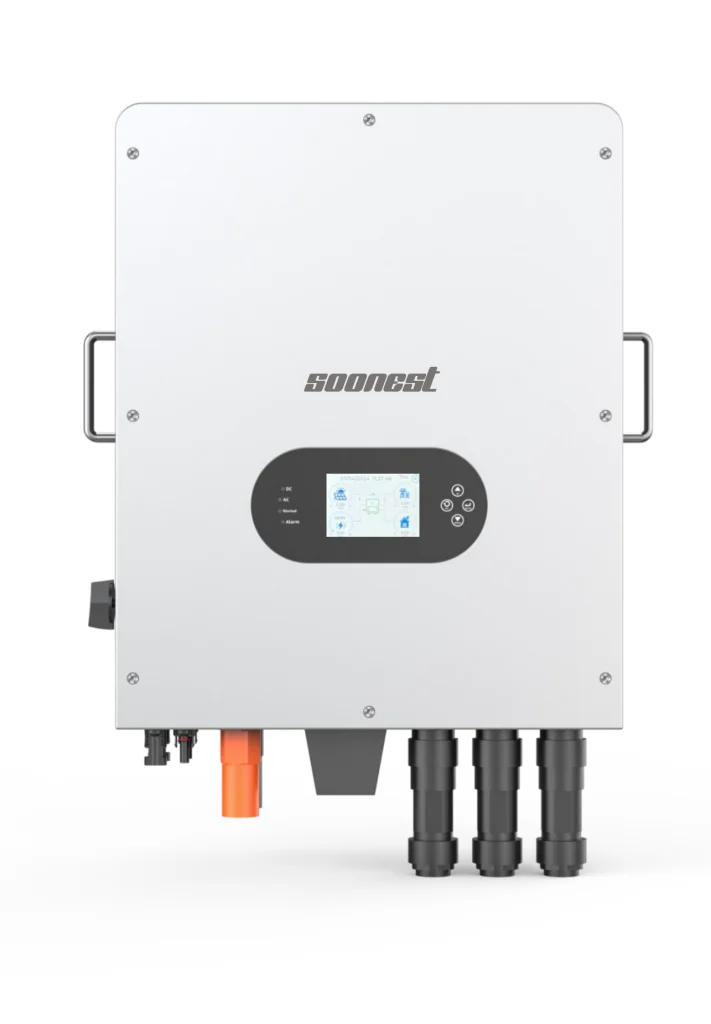
9Pcs Of 6.2Kw Or 6Pcs Of 11Kw Parallel Operation, Industrial-Grade 55.8Kw Or 66Kw Inverter Designed For Large Solar Arrays. With high-frequency design and PF=1 output, it ensures compatibility with various residential and commercial loads.
Support lithium battery activation wake-up start function and real-time load display enhance usability. Optional Wi-Fi remote monitoring and flexible parallel configurations make this series ideal for modular expansion.
Performance Highlights of the New Module 3.6Kw 5Kw 6Kw 8Kw 10 Kw IP65 Solar Inverter On Off Grid Hybrid Grid Single Phase 220V Solar Inverter
Delivers 97.5% Efficiency, Ip21 Protection, And Dynamic Grid Support. You can count on it for high conversion efficiency under varying environmental conditions.
Its advanced protection mechanisms — including output short circuit protection — safeguard both hardware and connected loads. Anti-PID technology prolongs PV panel life, ensuring lower total cost of ownership over time.
Limitations of Hybrid Solar Inverters
Higher Initial Investment Costs
Although filled with features, hybrid arrangements typically demand greater expense upfront. In contrast to off-grid versions of equivalent capacity, hybrids necessitate additional components for grid compliance. Items such as anti-islanding safeguards contribute to the starting expense.
Besides, the intelligent software, EMS connections, and bidirectional operations entail increased expenditure. This encompasses both materials and installation assistance.
Complexity in Configuration and Maintenance
Hybrid systems require expert installation. Firmware compatibility with various battery varieties is essential. MPPT adjustment according to panel arrangement proves vital. EMS calibration demands professional expertise.
Frequent firmware updates remain crucial. These maintain alignment with updated regulations or smart home integrations. Consequently, they introduce additional procedures to routine operations.
Advantages of Off-grid Inverters
Independence from Utility Grid Infrastructure
Off-grid inverters provide total independence from electricity providers. This inverter is suitable for remote areas where the power supply is unstable or cannot be connected to the power grid. When operating in challenging terrain or secluded locations lacking infrastructure, it serves as the preferred choice.
During power outages or adverse incidents, an off-grid arrangement operates independently. It delivers reassurance for essential operations or crisis situations.
Simplicity in System Design and Operation
Off-grid arrangements incorporate fewer elements compared to hybrids. They omit grid regulation attachments or export measurement devices. This fundamental structure lowers expenses. It furthermore accelerates implementation schedules.
For modest projects — such as rural dwellings or irrigation pumps on farms — this straightforwardness yields improved financial outcomes.
Limitations of Off-grid Inverters
Lack of Grid Support Capabilities
Although self-sufficient, these arrangements cannot transmit surplus electricity to the grid. Consequently, opportunities for financial returns or credit accumulation vanish. Generated electricity demands immediate utilization. Otherwise, it transfers to storage. When storage reaches capacity, any additional electricity dissipates unused.
This drawback affects regions offering attractive feed-in tariffs or variable pricing models. Such frameworks encourage connections to the grid.
Limited Scalability in Power Management
Off-grid structures frequently encounter challenges in expansion. Managing fluctuating or increasing loads may overburden storage capabilities. It could also cause inverter overload.
Additionally, dependence on batteries elevates long-term maintenance expenses. Batteries deteriorate from repeated deep discharge cycles. This diminishes operational efficiency. Periodic replacements become necessary as a result.
Choosing Between Hybrid and Off-grid: Application Scenarios
Residential Installations with Grid Access
In urban residences where electricity service exists but may waver or become costly during peak periods, hybrid options excel. They facilitate optimal use of self-generated power. Participation in net metering remains possible if available.
Variations in load from appliances like air conditioners or electric vehicle chargers receive effective management. Programmable settings within hybrid EMS platforms handle these adjustments.
Remote Installations Without Grid Connectivity
For cabins, rural agricultural sites, or distant communication towers, off-grid solutions deliver operational autonomy. They eliminate dependence on public infrastructure development. Integrating a generator supplements solar production during overcast periods or seasonal sunlight variations.
These configurations suit scenarios where connection expenses surpass potential benefits from grid alternatives.
Commercial or Industrial Use Cases
Hybrid arrangements offer superior adaptability for extensive applications like manufacturing facilities or electric vehicle charging stations. Modular construction permits capacity growth via parallel operations — reaching up to 81.6kW using 8 units of 10.2kW. This scalability aligns with business expansion.
Real-time monitoring through RS485/Wi-Fi/GPRS assists facility supervisors. They observe consumption trends, direct storage allocation, and address problems remotely. As a result, this enhances operational reliability and financial returns.
Load Prioritization Strategies Using Hybrid Systems
Hybrid arrangements enable strategies such as peak shaving. This reduces grid consumption during elevated tariff intervals. Load shifting relocates energy-intensive activities to daylight hours. Backup prioritization maintains vital circuits active during interruptions.
These capabilities render hybrids indispensable for commercial properties. In those contexts, energy expense management directly influences profitability.
Service Support and Contact Information from Soonest
Seeking a partner that manages the entire lifecycle of your system? Soonest distinguishes itself through technical products and comprehensive service approaches. The company is located in Foshan City. Its 4,000-square-meter facility emphasizes innovative developments from research efforts. These are supported by international certifications including CE and ISO. Yiwu Soonest New Energy Co., Ltd. is a company focused on R&D, production, and sales of solar photovoltaic power generation systems and components.
Soonest provides pre-sales consultation for system designs. These tailor to your location’s electrical characteristics and climatic factors. Installation support arrives from certified technicians. They possess knowledge of regional standards in areas spanning Asia, Africa, and South America. They hold over 50 R&D patents and provide high-quality OEM, ODM, and customized packaging services.
Following deployment, assistance encompasses firmware enhancements, performance adjustments, and access to technical documents on their primary website. For inquiries, contact via email or telephone at +8613263232118 — responses are assured within 24 hours for technical concerns.
img.New Module 10Kw 12kw 15kw 20kw 30kw 40kw IP65 Solar Inverter On Off Grid Hybrid Grid 3Phase Solar Inverter.webp
FAQ
Q: Can I switch an existing off-grid system to hybrid later?
A: Yes, but it requires significant reconfiguration including replacing the inverter unit and possibly rewiring battery connections to allow grid interaction safely.
Q: How do hybrid inverters manage different battery types?
A: Many models support multiple chemistries such as lithium-ion and lead-acid through programmable charging profiles enabled by internal EMS platforms.
Q: What are MPPTs and why do they matter?
A: MPPT (Maximum Power Point Tracking) ensures your solar panels always operate at optimal voltage/current ratio for maximum output — crucial for both off-grid and hybrid systems efficiency.




 English
  Russian
  German
  French
  Spanish
  Portuguese
  Arabic