Les coupures de courant fréquentes ne sont plus un problème exclusivement rural. Maisons, petits commerces, exploitations agricoles, cliniques, locaux de télécommunications et même immeubles de bureaux ont désormais besoin d'une alimentation de secours capable de pallier une panne de réseau soudaine sans perturber le quotidien. Lorsqu'une électricité s'éteint, ce n'est pas seulement la lumière qui est coupée. On peut aussi se retrouver sans Wi-Fi, sans réfrigérateur, sans terminal de paiement, sans caméra de sécurité, sans pompe à eau, et parfois même sans une journée de travail entière.
Pourquoi les coupures de courant fréquentes nécessitent-elles une batterie de secours solaire ?
Un système de stockage d'énergie solaire par batterie n'est pas réservé aux personnes vivant en totale autonomie énergétique. Il s'avère également utile lorsque le réseau fonctionne la plupart du temps, mais tombe en panne au pire moment. Vous avez peut-être déjà des panneaux solaires sur votre toit, mais sans batterie, l'énergie produite en journée ne vous sera d'aucune utilité la nuit ou en cas de coupure de courant. Une batterie transforme l'énergie solaire en énergie stockée et utilisable.
Énergie solaire stockée pour une utilisation nocturne
Les panneaux solaires produisent du courant continu (CC) lorsque la lumière du soleil est présente. L'énergie solaire excédentaire non utilisée est stockée dans une batterie. Cette énergie est ensuite restituée en cas d'ensoleillement insuffisant ou de coupure de courant. L'onduleur convertit le courant continu de la batterie en courant alternatif (CA), utilisable par le foyer ou l'entreprise.
C’est pourquoi un système d’alimentation de secours par batterie doit être conçu en fonction de la consommation réelle. Quelques lampes LED, un routeur, un ventilateur et des chargeurs de téléphone nécessitent beaucoup moins d’espace de stockage qu’un réfrigérateur, une pompe à eau, un climatiseur ou un outil d’atelier.
Alimentation stable pour les charges essentielles
Lors de coupures de courant fréquentes, votre objectif n'est pas de tout faire fonctionner, mais de maintenir l'essentiel. Dans une maison, cela peut inclure l'éclairage, le réfrigérateur, le Wi-Fi et les prises de courant de base. Dans un magasin, cela peut inclure le terminal de point de vente, l'éclairage, le système de caméras et un petit congélateur. Sur un site de télécommunications, cela peut inclure une alimentation de secours fiable pour les équipements de communication.
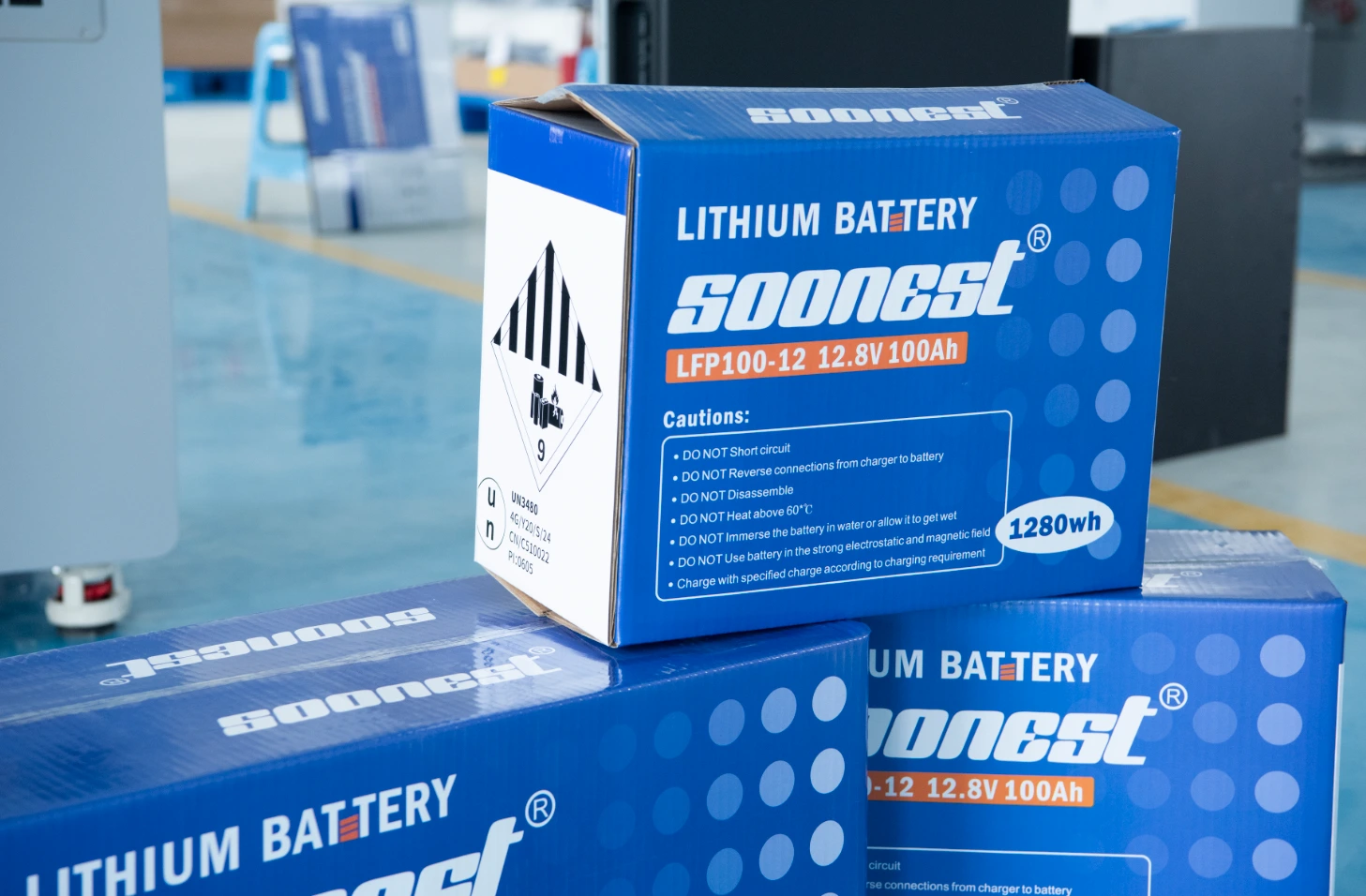
Le Batterie solaire de cycle profond LiFePO4 Cette batterie est parfaitement adaptée aux systèmes de secours nécessitant des cycles de charge/décharge fréquents. Elle convient aux systèmes d'énergie solaire 12 V/24 V et est disponible en capacités de 50 Ah, 100 Ah, 150 Ah, 200 Ah et 250 Ah. Fabriquée avec la technologie lithium-fer-phosphate, elle est conçue pour les maisons et chalets autonomes, les systèmes d'onduleurs solaires hybrides, les caravanes, et comme alimentation de secours pour les serveurs informatiques et les équipements de communication, notamment les stations de télécommunications et les équipements associés tels que les éclairages de secours, les systèmes de surveillance et l'électronique.
Dépendance réduite aux réseaux instables
Une batterie de secours vous offre une plus grande autonomie. En cas de coupure de courant, vous pouvez stocker l'énergie solaire produite pendant la journée et l'utiliser au besoin. Lorsque le gazole est cher ou difficile à trouver, la batterie vous propose une solution plus propre et plus silencieuse. Franchement, personne ne regrette l'odeur d'un petit groupe électrogène diesel dans un atelier exigu.
Dans les régions où l'alimentation électrique est instable, l'énergie solaire associée au stockage par batterie peut limiter les achats de panique et les interventions de dépannage en pleine nuit. Elle ne résoudra pas les problèmes du réseau, certes, mais elle vous donne du temps, et parfois, c'est suffisant.
En quoi les batteries au lithium et les batteries au gel fonctionnent-elles différemment ?
Les batteries au lithium et les batteries GEL peuvent toutes deux servir au stockage solaire, mais elles ne sont pas conçues pour le même usage. Si vous choisissez uniquement en fonction du prix, vous risquez d'acheter le mauvais modèle. Si vous ne considérez que la durée de vie, vous risquez de dépenser trop. La meilleure solution consiste à choisir une batterie adaptée à la fréquence des coupures de courant, à la profondeur de décharge, à l'espace disponible, à la température et à votre budget.
Batterie LiFePO4 pour une densité énergétique plus élevée
La batterie solaire à décharge profonde LiFePO4 remplace les batteries au plomb encombrantes par une solution au lithium plus compacte. Sa densité énergétique supérieure permet de stocker davantage d'énergie dans un volume réduit. C'est un avantage indéniable pour les maisons disposant d'un local technique exigu, les commerces avec un espace mural limité ou les caravanes où chaque kilogramme compte.
Ce modèle prend également en charge la charge partielle sans effet mémoire. Cela peut paraître technique, mais c'est simple : il n'est pas nécessaire de décharger complètement la batterie avant de la recharger. En utilisation solaire, c'est important car l'ensoleillement varie au cours de la journée. Les nuages passent et les appareils s'allument et s'éteignent. Une batterie qui gère bien la charge partielle est donc plus adaptée à une utilisation réelle avec l'énergie solaire.
Batterie GEL pour électrolyte scellé stable
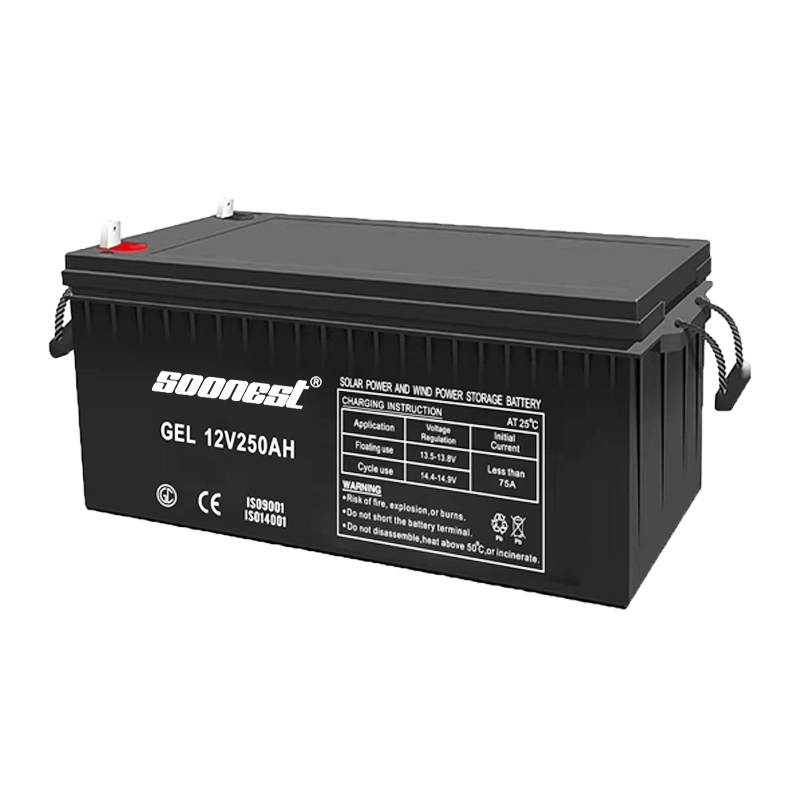
Le Batterie solaire AMG/GEL à décharge profonde Il s'agit d'une batterie 12 V à décharge profonde disponible en capacités de 100 Ah, 150 Ah, 200 Ah et 250 Ah. Elle utilise un électrolyte gélifié obtenu par mélange d'acide sulfurique et de fumée de silice. Cet électrolyte, de consistance gélifiée, est immobile et étanche, ce qui assure une réaction homogène entre les plaques.
Cette batterie convient au stockage d'énergie solaire et éolienne, aux systèmes de secours EPS et UPS, aux systèmes de signalisation, à l'éclairage de secours, aux systèmes de sécurité, aux équipements de télécommunications, aux centrales électriques et aux réseaux de transport d'énergie. Elle constitue un excellent choix lorsqu'une batterie de secours étanche, à décharge stable et de conception classique de type plomb-acide est requise.
Comportements de charge et de décharge différents
Les batteries au lithium supportent généralement mieux les cycles de décharge profonds. Les batteries GEL sont plus sensibles à la méthode de charge et à la profondeur de décharge. Il est important d'utiliser un régulateur de charge adapté, d'éviter la surcharge et les décharges profondes extrêmes. La température a également une incidence. Les batteries doivent être maintenues propres, bien ventilées et à l'abri de la lumière directe du soleil.
En cas de coupures de courant fréquentes et quotidiennes, la durée de vie des cycles devient un facteur crucial. Pour les pannes occasionnelles, un système GEL peut rester pertinent, notamment lorsque le budget est limité et la consommation électrique simple.
| Type de batterie | Produit le plus proche | Tension et capacité principales | Meilleure adaptation |
| Phosphate de fer lithié | Batterie solaire de cycle profond LiFePO4 | 12,8 V/25,6 V, 50 Ah à 250 Ah | cyclisme quotidien, installation compacte, systèmes solaires hybrides |
| GEL Deep Cycle | Batterie solaire AMG/GEL à décharge profonde | 12 V, 100 Ah à 250 Ah | Alimentation sans coupure (UPS), télécommunications, éclairage de secours, stockage économique |
Quelle batterie supporte le mieux les coupures de courant quotidiennes ?
L'utilisation quotidienne est le meilleur moyen de constater la qualité d'une batterie. Une batterie utilisée une fois par mois s'usera rapidement. En revanche, une batterie déchargée tous les soirs et rechargée tous les matins sera mise à rude épreuve. C'est pourquoi il est important de ne pas se focaliser uniquement sur le prix d'achat.
Lithium pour cycles profonds fréquents
Si votre région subit des coupures de courant quotidiennes ou fréquentes, l'option lithium est généralement plus performante. La batterie solaire LiFePO4 à décharge profonde offre plus de 6 000 cycles à 80 % de profondeur de décharge. Elle fournit également une tension de sortie stable, même à faible niveau de charge, ce qui assure un fonctionnement optimal des appareils sensibles.
Il est aussi question d'espace. Bientôt Il est indiqué que cette batterie peut être environ 50 % plus petite, ce qui facilite son installation et permet un gain de place dans les systèmes éoliens ou solaires. Pour un petit magasin, cela peut faire toute la différence entre une armoire électrique bien rangée et un coin encombré de batteries.
GEL pour une sauvegarde économique
Les batteries GEL conservent toute leur utilité. Si votre système de secours ne doit pallier que les coupures occasionnelles, alimenter l'éclairage de secours, les systèmes de sécurité ou les télécommunications, la batterie solaire AMG/GEL à décharge profonde est une solution pratique. Elle offre une excellente dissipation thermique, une large plage de températures de fonctionnement et un système de ventilation efficace qui évacue automatiquement l'excès de gaz.
Pour les acheteurs qui privilégient un type de batterie plus courant et un prix d'achat plus abordable, la batterie GEL peut s'avérer un choix plus sûr. Il est important de préciser que toutes les installations n'ont pas besoin de lithium.
La taille de la charge détermine le meilleur choix
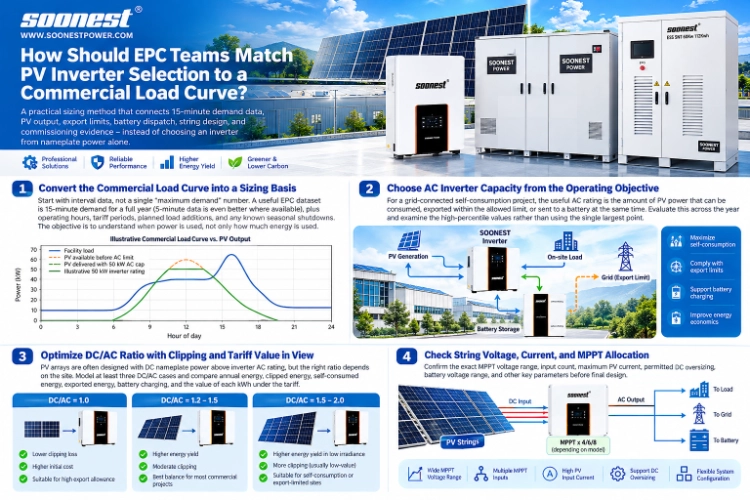
Une maison équipée d'éclairage, d'un routeur et d'un petit réfrigérateur est différente d'un magasin doté d'un congélateur, d'un système de caméras, d'une imprimante et d'un terminal de paiement. Une clinique rurale avec une réserve de médicaments présente encore d'autres caractéristiques. Avant de choisir la batterie, il convient de lister tous les appareils critiques, d'indiquer leur puissance nominale, puis de déterminer l'autonomie souhaitée.
En cas de coupures de courant fréquentes dans un contexte commercial, il est souvent préférable d'exclure les appareils énergivores du circuit de secours. Conservez le réfrigérateur, l'éclairage, le routeur et le terminal de paiement. Évitez d'y brancher un gros radiateur ou un moteur puissant, sauf si le système est dimensionné pour cela.
Que devez-vous vérifier avant de choisir la capacité de votre batterie ?
Il ne faut pas se fier à la photo du produit pour estimer la capacité d'une batterie. Une batterie de 100 Ah offre des performances différentes selon la tension, et son autonomie réelle dépend de la charge. Bien planifier son achat permet d'éviter d'acheter une batterie trop petite ou trop grande.
Estimation de la consommation énergétique quotidienne
Commencez par les appareils dont vous avez réellement besoin. Par exemple, quatre lampes LED, un routeur, un ventilateur et un petit réfrigérateur peuvent suffire à une famille lors d'une coupure de courant nocturne. Un magasin aura peut-être besoin d'un éclairage de vitrine et d'un système de caisse enregistreuse. Une exploitation agricole aura peut-être besoin d'une pompe, mais les pompes consomment un courant de démarrage élevé ; l'onduleur doit donc être adapté.
La capacité d'une batterie est généralement mesurée en ampères-heures (Ah). En termes simples, une batterie de 100 Ah peut fournir un certain courant pendant une certaine durée dans des conditions nominales. Cependant, en pratique, ses performances varient en fonction du niveau de décharge, de la température, des pertes de l'onduleur et de l'âge de la batterie.
Heures de sauvegarde et équipements critiques
Avez-vous besoin de 2 heures, 6 heures ou d'une nuit entière ? Cette question est déterminante pour la conception du système. Pour une alimentation de secours quotidienne, la batterie solaire LiFePO4 à décharge profonde est plus facilement recommandée en raison de sa longue durée de vie et de sa taille compacte. Pour les systèmes de secours fixes, la batterie solaire AMG/GEL à décharge profonde peut suffire, notamment pour l'éclairage de secours, la signalisation et les télécommunications.
Voici une règle simple : ne dimensionnez pas le système pour toute votre maison, sauf si votre budget le permet. Dimensionnez-le en fonction des objets que vous ne pouvez absolument pas perdre.
Compatibilité entre l'onduleur et le contrôleur
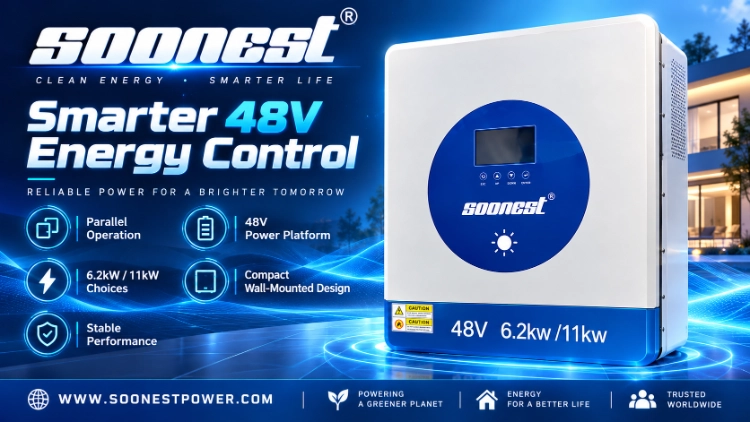
Le choix de la batterie doit être compatible avec l'onduleur et le régulateur de charge. Les onduleurs hybrides SOONEST offrent une sortie sinusoïdale pure, la charge solaire MPPT, un courant de charge configurable, la priorité de charge CA/solaire, la fonction de démarrage à froid, la protection contre les surcharges et les courts-circuits, ainsi qu'une conception intelligente du chargeur de batterie. Certaines séries prennent également en charge l'activation des batteries au lithium et la surveillance à distance.
C'est important car la batterie ne représente qu'une partie du système. Les panneaux solaires, le régulateur de charge, l'onduleur, le câblage et les dispositifs de protection fonctionnent de concert. Même une bonne batterie dans un système mal adapté finira par poser problème.
Comment SOONEST peut-il vous accompagner dans votre projet de batterie de secours ?
Un bon système de secours doit être discret après son installation. Il se charge, il attend, et il prend le relais en cas de panne de courant. C'est tout son intérêt. SOONEST accompagne les acheteurs dans le choix des produits, la compatibilité des batteries solaires et des onduleurs, ainsi que dans la fourniture de matériel pour leurs projets à l'étranger.
Sélection des produits basée sur les charges réelles
En cas de coupures de courant fréquentes, SOONEST vous aide à choisir le type de batterie adapté à votre consommation. La batterie solaire LiFePO4 à décharge profonde est idéale pour une utilisation fréquente, un espace réduit et une longue autonomie. La batterie solaire AMG/GEL à décharge profonde est quant à elle plus adaptée aux systèmes de secours stables, aux onduleurs, à l'alimentation de secours pour les télécommunications et aux projets économiques.
C'est également utile pour les distributeurs. Vous pouvez proposer deux options claires au lieu d'imposer une seule batterie à tous. Cela facilite la négociation.
Solutions de batteries OEM et ODM
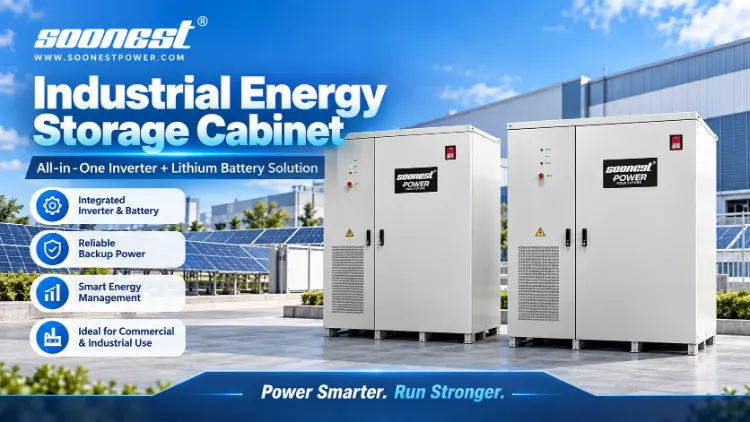
SOONEST propose des services OEM, ODM et personnalisés. Pour les distributeurs, les installateurs et les acheteurs de projets, cela permet de répondre à différents besoins en termes de tension, de capacité, de boîtier, d'étiquetage et de système. L'entreprise intervient également sur les modules photovoltaïques, les onduleurs, les systèmes de stockage d'énergie au lithium et la climatisation solaire, permettant ainsi à un acheteur de concevoir une solution complète auprès d'un fournisseur unique.
Pour les marchés étrangers, cela a son importance. Chaque pays présente des problématiques de réseau électrique, des conditions d'ensoleillement, des réglementations de transport et des habitudes de consommation différentes. Une solution unique convient rarement à tous.
Assistance et contact pour les projets
Avant de commander, préparez une liste de vos besoins en énergie, la durée d'autonomie souhaitée, la tension de prédilection et les caractéristiques de l'environnement d'installation. Demandez ensuite un plan adapté. Vous pouvez consulter le site web de l'entreprise. informations sur le service et envoyer les détails du projet via La chaîne SOONEST.
En cas de coupures de courant fréquentes, la meilleure batterie est celle qui correspond à vos habitudes d'utilisation. Une utilisation quotidienne et un espace limité privilégient le lithium. Une utilisation occasionnelle en veille et un budget maîtrisé optent pour une batterie GEL. En cas de doute, basez votre choix sur la charge, l'autonomie et l'espace disponible.
Conclusion
L'alimentation de secours par batteries fait désormais partie intégrante de la planification énergétique courante, et non plus un luxe. De nos jours, les foyers et les entreprises stockent généralement l'énergie localement, car le marché pétrolier reste sous tension, les réseaux électriques sont défaillants et la demande en énergie propre ne cesse d'augmenter.
En cas de coupures de courant fréquentes, nous recommandons la batterie solaire LiFePO4 à décharge profonde pour sa longue durée de vie, ses dimensions compactes, sa tension stable et son utilisation quotidienne comme alimentation de secours. Pour des solutions étanches, fiables et économiques destinées aux systèmes d'alimentation sans coupure (UPS), à l'éclairage de secours, aux télécommunications et à la sécurité, la batterie solaire AMG/GEL à décharge profonde constitue une excellente alternative.
FAQ (questions fréquentes)
Q1 : Quel est le meilleur type de batterie en cas de coupures de courant fréquentes ?
Pour les coupures quotidiennes ou quasi quotidiennes, la batterie solaire LiFePO4 à décharge profonde est généralement le meilleur choix car elle offre plus de 6000 cycles à 80 % de profondeur de décharge, une taille compacte, une tension de sortie stable et aucun effet mémoire lors d'une charge partielle.
Q2 : Une batterie solaire GEL vaut-elle encore la peine d’être achetée ?
Oui. Une batterie GEL reste utile pour l'alimentation de secours, les équipements de télécommunications, l'éclairage de secours, les systèmes de signalisation, les systèmes de sécurité et le stockage d'énergie solaire à budget limité. Elle n'est pas obsolète ; elle est simplement adaptée à des usages différents.
Q3 : Comment choisir entre 100 Ah, 150 Ah, 200 Ah et 250 Ah ?
Commencez par identifier vos principaux besoins en énergie et en autonomie. Une petite alimentation de secours domestique peut nécessiter moins de capacité qu'une alimentation pour un magasin, une clinique ou un local de télécommunications. La tension, le rendement de l'onduleur, la profondeur de décharge et la température influent également sur l'autonomie réelle.
Q4 : Ces batteries peuvent-elles fonctionner avec des panneaux solaires et des onduleurs hybrides ?
Oui. Les batteries solaires au lithium et au gel peuvent être utilisées dans les systèmes de stockage d'énergie solaire, à condition d'être associées à un onduleur, un régulateur de charge et un système de protection adaptés. Les onduleurs hybrides SOONEST prennent en charge la charge solaire MPPT, le réglage du courant de charge de la batterie et la priorité entre le chargeur secteur et le chargeur solaire.
Q5 : Pourquoi contacter SOONEST avant de commander ?
Une batterie doit être adaptée à votre charge, tension, autonomie, espace d'installation et climat local. SOONEST vous accompagne dans le choix du produit, la prise en charge de vos besoins OEM/ODM, la compatibilité avec votre onduleur et la planification de votre projet, afin d'éviter l'achat d'une batterie qui, malgré son apparence, s'avère peu performante sur site.