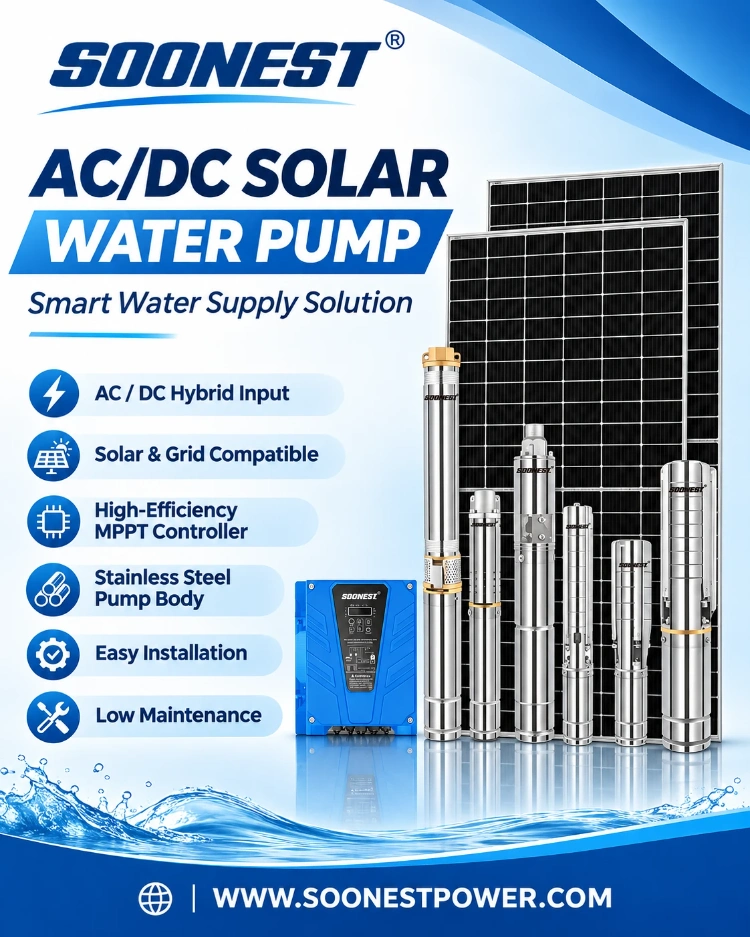
Dealers field this one weekly, usually before the coffee. All-in-one cabinet versus separate inverter-plus-battery, which is better, and the honest reply refuses the question. Both store the same kilowatt-hours through the same physics, and any salesperson swearing one “wins” has never wired either one where the electrician bills by the afternoon and spare parts travel by ship.
What the paths genuinely share is hardware. What they don’t share is morning one, the first bad evening, and year two. Morning one is installation labor. The bad evening is warranty blame. Year two is the clinic adding a ward and somebody having to grow the system. Money per stored kilowatt-hour nearly ties, a coin flip. Nobody’s decision is really about that number once installation quotes land, whatever the comparison spreadsheet pretends.
What Sits Inside Each Buying Path
Strip the packaging and both paths ship three machines, and the packaging is most of what differs. Machine one is the hybrid inverter, and the job is juggling: solar, grid, battery, all at once, while running MPPT (maximum power point tracking), the algorithm that works out what panels honestly hand over at 10 a.m. versus 2 p.m. behind a water tank’s shadow. Machine two carries the actual energy: a lithium iron phosphate (LiFePO4) battery, the chemistry worth roughly 6,000 cycles at 80% depth of discharge, and both crates’ datasheets print that number without arguing about it. Machine three? The BMS, battery management system in full. Nobody notices it until the day it saves somebody, sitting over every cell’s voltage and temperature and refusing, very firmly, the instant anything drifts outside its window.
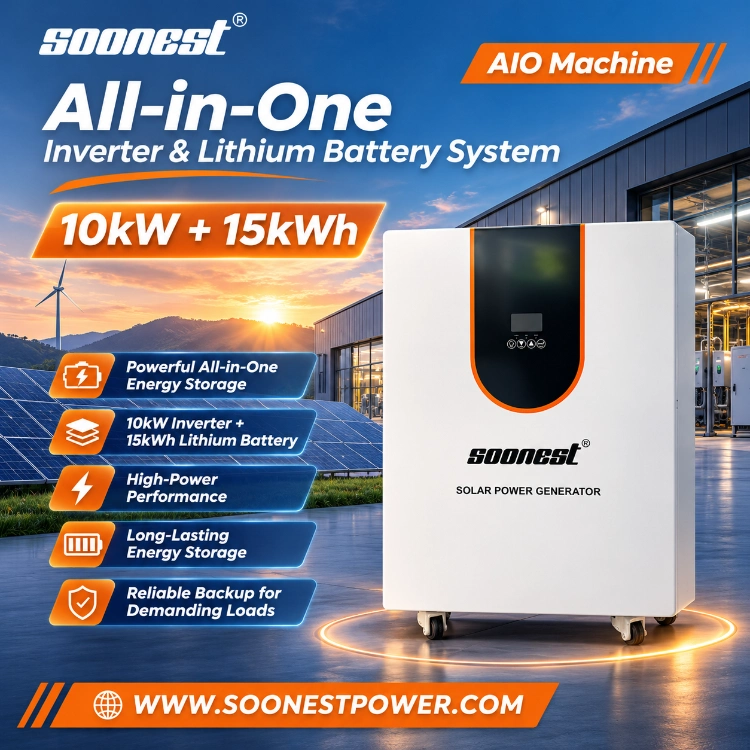
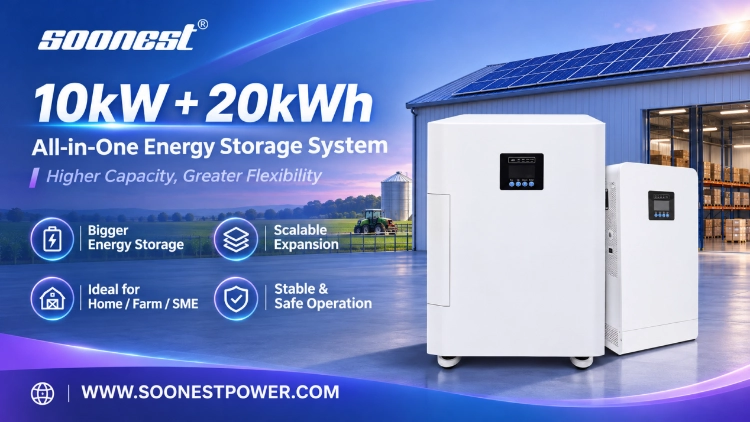
The all-in-one (AIO) bolts those three into one shell. SOONEST’s AIO Series spans 5 kW, 10 kW, 15 kW and 20 kW on 48V/51.2V cells, IP65 shell, Wi-Fi and Bluetooth on the readings, RS485/RS232 for installers who trust copper more than phones. Configurations on the AIO product page. The split path delivers the same trio in two crates, a single-phase 220V machine from the MY Series hybrid range and a wall pack bolted beside it, more packs paralleling onto the bus the Saturday the clinic expands.
Both crates, by the way, come from the same factory, said out loud before anything else here. Zhejiang SOONEST New Energy, twenty years of inverters and cabinets and pumps and fridges, CE, ROHS, SONCAP, UL and ISO paperwork behind exports into Africa, the Middle East, Asia, Europe, the Americas. The main catalog keeps everything under one cover, which also means one parts chain and one throat to choke at dusk.
Four Lines Where the Two Paths Actually Differ
| Decision line | All-in-one unit | Separate inverter + battery |
| Site labor | One crate, one mounting point, factory-matched cables | Two mountings, field-terminated DC cable, breaker sized by the installer |
| Warranty call-point | One supplier owns the whole chain | Inverter fault blamed on battery settings, and back again |
| Expansion route | Parallel more units for more power | Add packs to the existing inverter, if headroom was planned |
| Component replacement | Failed inverter can idle the stored energy too | Swap one box, keep the other alive |
The labor row deserves a real rooftop in mind, not a wiring diagram. The split install wants a DC disconnect between boxes, copper thick enough for the actual distance between them, and a human who cracked both manuals open before energizing anything.
The integrated unit just talks to itself over a factory-paired lead, and charge priority gets set once, one screen, one person, then his van rolls to the next roof. Electricians vote with their calendars. Calendars vote for one crate.
The warranty row stays theoretical until an evening like last Tuesday, somewhere hot, when grid voltage sags at dusk, the system trips for the third time that week, and a vaccine fridge starts counting degrees upward while staff phone numbers. One sealed cabinet, one supplier answering. Two crates, two suppliers, each calmly explaining which of the other’s settings failed, in a voice note, at midnight. Split systems run fine and simply hand the diagnosis to the local dealer, and that dealer’s patience is the real engine of the repeat order in most African and Middle Eastern markets.
Costs That Hide on One Side of the Ledger
Quotes mislead in a pattern. The interesting part is direction, which flips depending on whose quote sits open on the desk.
Start with hardware, since everyone compares that row at trade fairs. Boring row, honestly, and the least interesting one on this page. A matched 5 kW inverter plus a 10 kWh wall pack, bought apart, lands near the integrated box once freight consolidates. Call it a tie.
Commissioning pulls the other way, and the market settled that argument years ago, quietly, without announcing it anywhere. Why have integrated units taken homes and small shops outright? Pairing a third-party battery to an inverter on-site burns hours over communication protocols, that’s why. Protocol mismatch has topped every service desk’s complaint list for as long as hybrid inverters have existed.
Growth flips the board. Wall packs on 48V/51.2V, like the lithium range SOONEST lists here, slot onto the parallel bus so tranche two arrives months later without touching the inverter. One condition hides in that sentence like a trapdoor, though, because the original charge-current spec had to imagine those future packs on day one. Buyers who skipped that question pay tranche two twice, once in cells and once in an inverter.
Death flips it back. A lightning spike or a tired fan finishes an inverter welded inside an integrated cabinet, and the battery sits beside it fully charged, useless, until repair crosses two oceans by boat. Separate boxes keep at least one asset breathing through that wait, and sites where a storage-less week survives and parts crawl will pay real money for that half-resilience. Different religion from the integrators, sane arithmetic either way.
Where Each Path Stops Making Sense
The integrated story breaks when loads outgrow the shell, and the customer usually knows before the salesperson does. Twenty kilowatts handles houses and a wide slice of workshops. Push a factory’s 100 kW three-phase load through a single-phase wall box and the answer is simply wrong. Dead wrong. Commercial cabinets with tariff strategies are the right reply, no matter how handsome the box photographs. The route also makes nobody happy where a healthy inverter already hangs on the wall, since buying a whole cabinet to add storage leaves two identical inverters, and warehouses collect orphaned inverters like souvenirs.
The split story dies at the settings menu, and dealers who’ve repaired enough systems quietly stop offering split to end users. Why? A configurable inverter hands an installer a screen full of numbers. Installers work under clock pressure, so they guess charge currents and cutoff voltages. Guessed numbers cook batteries. The warranty afterward calls the result “customer error” with unreasonable cheerfulness. If the dealer’s technician can’t walk a manual unaided, ship him the factory-configured box and sleep properly.
Three questions belong to any supplier before purchase, typed into the contact page where answers stop being voice notes. Which protocol pairs this battery to this inverter, what does the charge-current ceiling become fully parallel, which certificate covers the destination market.
FAQ (questions fréquentes)
Can an All-in-One Unit Run Without Any Grid Connection?
Configured for the specified application, yes, and across regions the grid forgot, plenty already do. Panels and cells carry off-grid loads themselves while the AC input waits as an optional lane for generator fuel or whatever the grid decides that week. The habit behind most off-grid failures is quoting the sunny-noon load and forgetting the night’s. The sun sets on schedule. Freezers have never once come to the table to negotiate.
Does Mixing an Inverter and Battery From Different Brands Void Anything?
Read a compatibility list closely and it reads like an accident report written afterward, because that is what it is. Protocols mismatched and the inverter never sees the BMS’s current limits, and the warranty investigation opens inside that gap every time. Matched pairs skip the argument. Mixed pairs want the handshake in writing before a terminal gets crimped, a rule somebody documented after learning it the expensive way. Twice, probably.
Is LiFePO4 Worth It Over a Gel Battery in a Hot Climate?
Sticker price is the wrong scoreboard, so compare what actually ages a battery, cycles and heat. Gel tolerates heat politely and bills less on day one, sure. LiFePO4 answers with around 6,000 cycles at 80% depth of discharge against a fraction of that from lead-acid, at a fraction the weight per kilowatt-hour. Eight-year owners stop remembering the lead-acid discount around year four, right when the replacement quote arrives by the same boat as everything else.