
Living way out at the end of a country power line brings a lot of headaches. You get used to the lights flickering every time the wind blows hard. Then a storm hits and suddenly you are throwing out expensive groceries because the fridge quit hours ago. People get tired of resetting clocks and sitting in the dark. That is exactly why property owners eventually reach out to our team at SOONEST to ask a very direct question. They want to know exactly how many solar panels to power a house and finally get some real independence from that terrible local grid.
Finding the right number requires a little bit of basic math. It mostly comes down to your daily habits and the quality of the hardware you put up on your roof. We have spent twenty solid years building renewable energy equipment for people dealing with these exact frustrations. We build machines meant to survive decades of bad weather out in the wild. If you want to see our factory background and understand why we care so much about keeping your lights on, take a look at our About Us page.
Let us break down the exact steps to figure out your true energy needs.
What Factors Determine Your Rural Home’s Power Demand?
Before anyone pulls out a calculator or orders heavy boxes of equipment, you have to look at what you actually plug in every single day.
Daily Household Electricity Consumption Patterns
The easiest way to start this project is by grabbing your last few utility bills out of the kitchen drawer. You want to find your average daily kilowatt hour usage. A typical remote cabin might only burn through 10 to 15 kilowatt hours a day. They might run a kitchen refrigerator, a router for the internet, and some basic lights. Figuring out this baseline number gives you a realistic starting point so you do not waste money on gear you just do not need.
Peak Wattage Requirements for Essential Appliances
We see people trip up on this part all the time. Sometimes a customer will call us wondering why their new system crashed every morning. It usually turns out their old water pump pulled a massive surge of power the exact second it woke up. A heavy machine that runs totally fine on 1000 watts might suddenly draw 3000 watts for just a second when it kicks in. If your design ignores this starting surge, your inverter will just shut everything down to protect the circuits.
Seasonal Variations in Heating and Cooling Needs
Think about how the changing weather shifts your habits. Winter usually means dragging out those electric space heaters that eat a ton of power. Summer means turning on the air conditioning to beat the afternoon heat. These seasonal jumps dictate the absolute minimum capacity your setup must handle. A system built just for a nice spring day might leave you freezing when December rolls around.
How Does the Local Climate Affect Solar Panel Efficiency?
Your location plays a huge role in how much juice you can pull from the sky. Laboratory testing numbers are great for printed catalogs, but the weather in your backyard dictates the real world performance.
Average Peak Sun Hours in Your Specific Region
A piece of equipment rated for 585W only hits that exact mark under perfect laboratory lights. Out in the real world, you have to rely on peak sun hours. Even if the sun stays up in the sky for 12 hours, you might only get 4 or 5 hours of sunlight strong enough to actually charge your batteries. This single weather detail completely changes the math on how many solar panels to power a house you will end up buying.
Impacts of Winter Snow and Heavy Rain
If you live in a valley that gets hammered by thick snowstorms or suffers through weeks of heavy rain, your production will drop. Snow covering the glass means zero electricity until you get a broom and sweep it off. We always tell clients to add a 20 percent safety margin into their calculations just to cover those gloomy weeks.
Temperature Coefficients During Extreme Summer Heat
There is a weird myth floating around that hotter weather equals more electricity. It is actually the exact opposite. When summer temperatures push past 40 degrees Celsius, the dark surface of the glass gets painfully hot to touch. Standard equipment actually loses power when it gets that hot. You need hardware built to resist extreme heat so the power keeps flowing during a heatwave.
Why Are High-Efficiency Mono Panels the Best Choice?
Picking the right technology is often just as important as the math itself.
High Energy Conversion Rates Maximize Limited Space
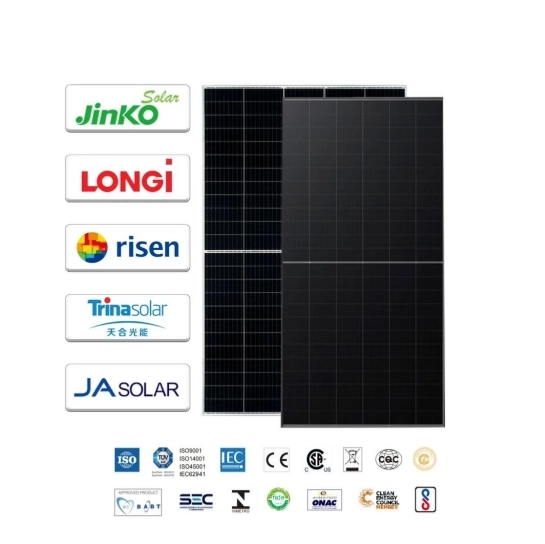
Rural roofs might look massive from the driveway, but they have limited usable space once you work around old chimneys and shade from big trees. You do not want to cut down a beautiful old oak tree just to fit more equipment. That is why we recommend our Photovoltaic Solar Power Panel. Built with premium monocrystalline materials, it pushes energy conversion rates above 22 percent. You generate a lot more electricity using fewer units, saving you serious money on heavy metal racks and labor.
Low-Light Performance for Stable Off-Grid Generation
Older style setups tend to give up and stop working at dawn, dusk, or under heavy cloud cover. Our modern modules perform exceptionally well in poor lighting conditions. They keep pulling in a charge even when the sky looks gray and miserable. That adds a huge layer of security for properties struggling with bad grid connections.
IP68 Waterproof Designs Withstand Harsh Weather
Your equipment sits outside on the roof every day of the year. We encase our products in tough tempered glass and use waterproof connection boxes. Whether you face a torrential rainstorm or a sudden hailstorm, water will not get inside the casing.
Table 1: Quick Tech Comparison
| Panel Technology | Energy Conversion Rate | Low-Light Performance | Roof Space Requirement |
|---|---|---|---|
| SOONEST Monocrystalline | > 22% | Strong | Minimal |
| Standard Polycrystalline | 15% – 18% | Average | Large |
| Early Thin Film | 10% – 12% | Good | Massive |
Exactly How Many Solar Panels to Power a House?
Now let us get into the hard numbers. You can figure out your specific needs by following three straightforward steps.
Assessing Your Total Daily Kilowatt-Hour Usage
Grab a piece of paper and list out your main appliances. Guess how many hours they run daily. Let us look at a quick breakdown.
Table 2: Common Household Appliance Consumption
| Appliance | Running Wattage | Daily Use | Total kWh |
|---|---|---|---|
| LED Lights (x5) | 50W | 6 hours | 1.5 kWh |
| Kitchen Fridge | 150W | 24 hours (cycled) | 1.5 kWh |
| Deep Well Pump | 1000W | 1 hour | 1.0 kWh |
| Air Conditioner | 1500W | 5 hours | 7.5 kWh |
Add your entire house up. Let us assume your home needs a total of 20 kilowatt hours per day to function comfortably without making you feel like you are camping.
Factoring in System Inefficiencies and Weather Buffers
Power naturally gets lost as it travels through copper wires and circuits. Dust settling on the glass also lowers the output over time. We always tell people to multiply their daily usage by a factor of 1.3 to create a safe buffer. So that 20 requirement becomes 26.
Dividing Total Demand by Individual Panel Wattage
Take that 26 number and divide it by your local peak sun hours. If your area gets 4 hours of solid overhead sun, you need 6500 watts of total array capacity. If you use our 585W modules, you just divide 6500 by 585. That gives you roughly 11.1. Round up to 12. And there you have it. That is exactly how many solar panels to power a house you need to order to stay comfortable off the grid.
How Our Services Support Your Off-Grid Transition
Switching away from an unreliable utility grid is a big project. But you do not have to figure it all out alone in the dark.
Two Decades of Expertise Back Your Renewable Investment
Because we design and manufacture our own hardware in our factory, we know exactly what it takes to build a resilient system. We control the quality closely from the factory floor directly to your property. We are not just buying cheap parts and putting a fancy sticker on them.
Proven Solution Cases Demonstrate Real-World Success
If you are still wondering how these setups actually perform out in the wild, take a minute to click through our Solution Cases. You can see real photos of how we have helped remote farms and isolated cabins achieve total power independence. Seeing real world examples often helps people understand the scale of the equipment.
Comprehensive Technical Support Provides System Maintenance
Designing the right layout involves tricky wiring and matching voltages. You might run into a weird problem during installation. Our dedicated Service Support crew is always ready to step in. We help you pick the right hardware and troubleshoot any small issues down the line. We want to make sure you never have to guess how many solar panels to power a house again.
FAQ
Q: If I want to run a heavy air conditioner all night, how many solar panels to power a house will I actually need?
A: An air conditioner pulls a serious amount of power. A 1500W unit running for 8 hours at night will consume 12 kilowatt hours just on its own. Using our 1.3 safety buffer and assuming 4 peak sun hours, you would need an extra 3900W of capacity. With our 585W modules, you would need to add 7 more units to your roof just to cover the cooling.
Q: How Long Does a Solar Battery Last before it needs to be replaced?
A: This is a great question because batteries are the heart of a night time system. High quality lithium iron phosphate batteries usually last between 10 to 15 years depending on how hard you drain them every day. Taking good care of them and keeping them out of extreme freezing temperatures will definitely push them closer to that 15 year mark.
Q: Can I install this equipment on my roof completely by myself?
A: While the math to figure out the sizing is pretty simple, the actual wiring carries high voltage. Unless you have real electrical experience, we strongly suggest hiring a licensed local electrician to handle the final connections to your main breaker box. It keeps you safe and protects your warranty.
Q: Do these systems still generate electricity when it is raining?
A: Yes, but at a heavily reduced rate. Modern monocrystalline cells are very good at picking up scattered light through the clouds. You might only get 10 to 20 percent of your normal power during a heavy rainstorm, which is why having a properly sized battery bank is so important.
Q: What happens if a bad hailstorm hits my roof?
A: Quality modules are built with thick tempered glass specifically designed to take a beating. They are tested to survive direct hits from standard sized hail traveling at high speeds. While giant freak hailstones can cause damage, standard storms will bounce right off the glass without leaving a scratch.