Solar-Diesel Hybrid Systems are no longer just backup plans for remote sites. The hard part is making solar, battery storage, diesel backup, and three-phase loads work together without wasting fuel or stressing batteries.
SOONEST is a practical solar power and storage equipment supplier with R&D, production, OEM/ODM support, international export experience, and certified power products. For projects that need stronger three-phase output and better storage control, its 3-Phase High Voltage Hybrid Inverter is a sound match because it combines 10KW–50KW sizing, 380V three-phase power, MPPT solar charging, Li-ion battery BMS communication, IP65 protection, and pure sine wave AC output.
This inverter is designed to address common pain points in off-grid and hybrid solar systems: it realizes solar priority power flow to reduce unnecessary diesel generator startup, avoids overuse of fossil fuel brought by unstable solar input, and corrects battery charging imbalance through accurate charge and discharge control.
Why do Solar-Diesel Hybrid Systems Need Smarter Power Control?
Unstable Solar Input
Solar power is valuable, but it is not steady every hour. Cloud cover, dust, shade, and high heat can all change PV output. Loads do not wait for the weather. Motors, pumps, refrigeration, lighting, and office loads keep asking for power. That is why the inverter becomes the control point, not just a box on the wall. The 3-Phase High Voltage Hybrid Inverter uses advanced MPPT with up to 99.9% efficiency and supports up to 22A × 2 PV input current, so the system can collect more energy from changing sunlight.
Diesel Generator Overuse
Diesel generators are still useful at remote pump stations and small industrial plants. The problem starts when it runs too often, especially for light loads. That means more fuel delivery, engine hours, oil changes, and noise. Recent oil-market movement in 2026 has reminded project owners that diesel cost is not fully under their control. You may not remove diesel on day one, but solar and batteries can carry more daily demand.
Battery Charging Imbalance
Battery storage helps only when it is charged and discharged in a clean, controlled way. Poor charging habits can shorten battery life. Too much current, weak battery communication, or deep discharge can turn a good storage plan into a service headache. The featured inverter supports up to 200A charging current and Li-ion battery BMS communication. It also supports exclusive Li-ion battery BMS dual activation for safer wake-up after low voltage or long idle time. A battery is not just a box of electricity. It needs rules.
How does a Smart Hybrid Inverter Coordinate Solar, Battery, and Diesel Power?
Solar Priority Power Flow
In Solar-Diesel Hybrid Systems, solar should usually get the first chance to serve the load. If sunlight is available and the inverter can turn it into stable AC power, the site can use less generator output. The 380V three-phase design helps because many commercial loads already use three-phase power. A small residential-style inverter may look cheaper, but it can become awkward when the site has pumps, motors, or mixed building loads.
Battery Charge and Discharge Control
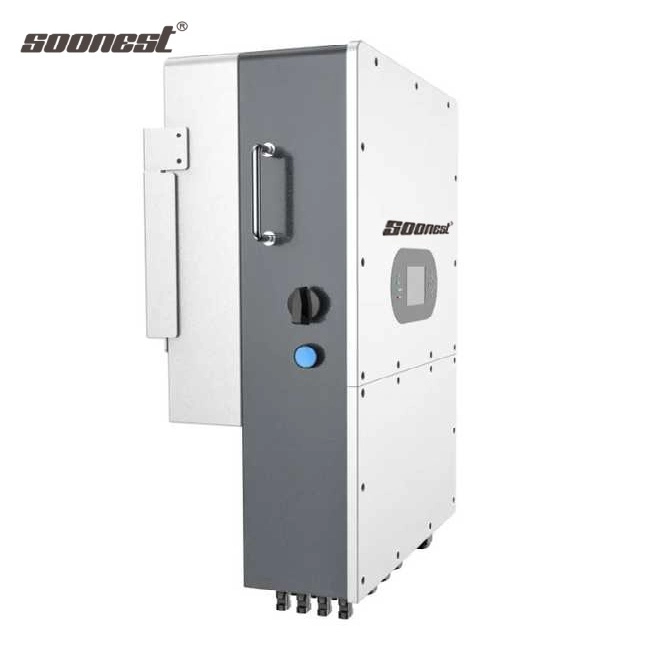
A hybrid system should not simply charge a battery whenever PV output is high. It should consider the load, battery condition, tariff period, and backup need. During the day, excess PV power can charge the battery. At night or during weak sunlight, stored energy can support critical loads before the generator starts. The 3-Phase High Voltage Hybrid Inverter works as an all-in-one power conversion unit with high charging current and battery communication, which is useful for modern lithium storage.
Diesel Backup Power Coordination
Diesel backup should enter the plan when solar and battery power cannot cover the load, not every time a short cloud passes. With a proper site controller, transfer device, and generator logic, the generator can start later, run in a healthier load range, and stop sooner. This matters where fuel delivery is slow. A farm that stores diesel in drums knows this very well. Every avoided generator hour has real value.
Which Product Features Improve Efficiency in Solar-Diesel Hybrid Systems?
Advanced MPPT Energy Harvesting
MPPT is easy to mention and easy to ignore, but it sits close to the money. If the inverter cannot track the best operating point of the solar array, energy is lost before the battery or load even sees it. Up to 99.9% MPPT efficiency helps the system pull more available power from the array. It is useful for rooftops, ground-mount fields, and agricultural sites where dust, shade, humidity, and seasonal weather are part of normal life. A good inverter will not clean your panels. Sadly, someone still has to do that.
High-Voltage Three-Phase Output
The 380V three-phase high-voltage design gives the product a better fit for loads that are too heavy or too unbalanced for simple single-phase systems. Factories, warehouses, outdoor EV charging areas, irrigation systems, and remote utility rooms often need three-phase support. The 10KW–50KW options also let you size by the real load profile, not just the panel size.
Pure Sine Wave Power Quality
The inverter outputs high-quality pure sine wave AC power. This matters for sensitive equipment, motor loads, office electronics, and communication devices. A poor waveform can create heat or unstable behavior. It is one of those issues people only care about after something starts buzzing in the electrical room. Software and hardware safety protection also make the system more suitable for outdoor commercial use. A hybrid project is still an electrical project with daily operating pressure.
How can the 3-Phase High Voltage Hybrid Inverter Reduce Project Risk?
IP65 Outdoor Protection
Hybrid equipment often works in places that are not gentle. Commercial rooftops face heat, rain, dust, and wind. Farms have humidity and fine particles. Coastal sites may have salt and sticky air. The IP65 protection degree helps the inverter handle dusty and wet outdoor conditions. It does not mean installation quality can be ignored. Cable entry, wall strength, ventilation, and service space still matter. Still, IP65 protection makes outdoor placement more practical for rooftops, field arrays, dock areas, and remote stations.
Li-Ion Battery BMS Communication
This is where Solar-Diesel Hybrid Systems can lose money quietly. The PV array looks fine, the generator starts, and the load is running, but the battery may be cycling in a poor pattern. Over time, storage degradation becomes visible through shorter backup time and more service visits. Li-ion battery BMS communication gives the inverter a direct way to work with battery status. It helps control charging behavior and supports safer operation.
Time-Slot Energy Scheduling
The inverter includes a time-slot function for peak-valley cost control. For a site with time-of-use prices, this supports better energy scheduling. You may store solar-made power, or lower-cost power, and use it during higher-cost periods. For hybrid sites that still keep grid access, this feature can improve daily energy planning. It can also reduce evening generator starts when the battery is ready before the load rises. On site, fewer noisy starts after dark is not a small thing.
How Should You Plan Service and Contact for a Reliable Hybrid System?
System Design Support
A strong hybrid project starts with the load list. You should check running power, starting current, daily operating hours, battery capacity, PV size, diesel generator rating, and future expansion. Do not size the inverter only by the PV array. The load is the real customer. The 10KW–50KW range gives you several sizing paths, but the right answer depends on the site. A farm pump system and a rooftop need different planning.
Quality Inspection and After-Sales Service
The manufacturer provides OEM, ODM, customized service, certifications, and technical after-sales support. For overseas projects, that matters. Different markets have different wiring habits and site skills. Before shipment, confirm the model, battery match, protocol, installation environment, and accessories. It is boring paperwork, yes. But boring paperwork is cheaper than a stopped system in the hot season.
Contact the Team for Project Matching
If you are planning Solar-Diesel Hybrid Systems for a factory, farm, island facility, remote station, or commercial rooftop, the 3-Phase High Voltage Hybrid Inverter deserves a close look. It brings together 380V three-phase output, 10KW–50KW capacity options, up to 200A charging current, Li-ion battery BMS communication, IP65 protection, time-slot scheduling, and pure sine wave AC output. Contact the technical team with your PV size, generator rating, battery plan, load list, and site photos. The best system is not always the biggest one. It is the one that keeps your load running and makes diesel work only when needed.
FAQ
Q: Are Solar-Diesel Hybrid Systems useful when diesel fuel is still required?
A: Yes. The point is not always to remove diesel immediately. The point is to reduce unnecessary generator runtime by using solar power and battery storage first.
Q: What battery features should you check before choosing this inverter?
A: Check battery voltage, capacity, BMS communication, charge current limits, and protection settings. Lithium storage works best when the inverter and battery exchange useful data.
Q: Is the 3-Phase High Voltage Hybrid Inverter only for large solar farms?
A: No. It can fit commercial rooftops, agricultural sites, remote off-grid stations, outdoor EV charging areas, and industrial facilities that need stronger three-phase power.