Climbing electricity costs and extended summer seasons are shifting the methods people use to cool their houses and structures. In numerous areas, air conditioning currently takes up a big part of power consumption, and that share is increasing fast. According to the International Energy Agency (IEA), air conditioners and electric fans already make up roughly 10% of global electricity consumption, and the need might triple by 2050 since more families start using cooling units.
For these reasons, solar air conditioners are drawing more notice. These setups draw on solar power in the daytime—right when cooling needs peak—so they aid in trimming power bills and lightening the load on the electrical network. Hybrid arrangements, which blend solar power and grid electricity, have turned into one of the most workable answers for houses, companies, and places without grid access.
Businesses with solid backgrounds in photovoltaic tech, like Soonest Solar, are launching fresh units to the market that link solar production with solid cooling. Knowing the main points to check in a solar air conditioner can guide shoppers in picking the best setup for 2026 and later years.
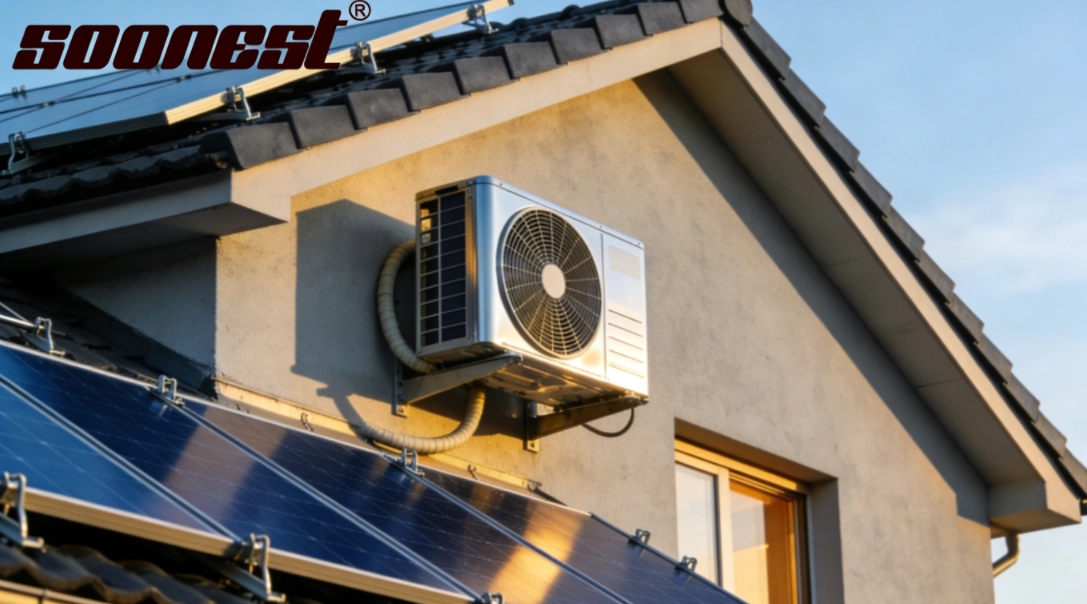
What Makes a Solar Air Conditioner Worth Buying in 2026?
Solar cooling tech has grown swiftly over the past few years. First solar AC units cost a lot and were usually hard to set up, yet today’s versions offer better adaptability and are quite simpler to handle. When looking at solar air conditioners now, a few core traits decide if a unit merits the spend.
Solar-Hybrid Cooling Technology
A key step forward in solar air conditioning is the hybrid power setup. A hybrid solar air conditioner can work straight from solar power when sun is out and shift smoothly to grid electricity if required.
This method keeps the system useful for routine tasks. In sunny times, much of the cooling work gets done by solar power. On nights or cloudy days, the grid just steps in to cover what’s missing.
Soonest Solar has put a lot of effort into this hybrid style. Its AC/DC Vacuum Tube Solar Air Conditioner – Hybrid Grid Air Conditioner joins solar collectors and regular power feed in one package. As a result, it gives steady cooling output while cutting power draw in busy sun hours.
High Energy Efficiency and SEER Ratings
Efficiency stays a key element in picking any air conditioner, and solar types follow the same rule. Strong compressors and inverter tech let current solar AC systems give good cooling with lower power use.
The Seasonal Energy Efficiency Ratio (SEER) gets used a lot to gauge this output. A higher SEER score means less power is required to create the same cooling level.
The table below outlines how solar-supported systems stack against standard air conditioners.
| Air Conditioner Type | Typical SEER Range | Estimated Electricity Savings |
|---|---|---|
| Conventional Window AC | 10–12 | Baseline |
| Standard Split AC | 13–16 | 10–20% |
| Inverter Split AC | 16–21 | 20–40% |
| Solar Hybrid AC | 18–25+ | 30–70% (depending on solar input) |
These figures show usual spans from HVAC field reports and maker specs. Solar hybrid systems hit the biggest cuts because some of the cooling task comes from solar power rather than the grid.
Reliable Operation in Multiple Environments
One more point that counts in actual setups is how well it holds up in different settings. Solar air conditioners often go into spots with warm temps and bright sun, for example the Middle East, Africa, and Southeast Asia.
Current hybrid systems are made to handle these setups. Lots of units work in temp spans from −10°C to around 50°C, so they fit in dry hot areas and milder places alike.
Shoppers in far-off spots or areas with shaky power find this steadiness a big plus. Solar power takes care of day cooling, and the grid or spare source deals with the other parts.
Why Are Hybrid Solar Air Conditioners Becoming the Mainstream Choice?
With solar tech getting less pricey and more usual, hybrid air conditioners are shifting from special items to common picks in the HVAC world. A handful of solid reasons back this up.
Flexible Dual Power Supply
Old-school solar air conditioners at times stuck to just solar panels alone, which cut their value on cloudy days. Hybrid systems fix that by mixing two power types.
Solar power keeps the system going when sun is plenty, and the grid lends a hand when it’s short. The changeover runs on its own, so folks hardly spot it.
This range lets the air conditioner act like a basic cooling unit and yet trim power costs.
Lower Electricity Bills and Higher Energy Independence
Power bills tend to jump in summer as air conditioners hum for long stretches daily. Solar AC systems ease this hit since part of the power pulls right from the sun.
Facts from the International Renewable Energy Agency (IRENA) point out that solar power costs have slid by over 80% since 2010. Now that solar power runs cheaper than it used to, tying it to cooling setups pays off for plenty of homes and firms.
The table below lines up normal yearly cooling costs for varied systems in like conditions.
| Cooling System | Average Annual Electricity Use (kWh) | Estimated Annual Cost* |
|---|---|---|
| Conventional Split AC | 1,500 – 2,000 | $180 – $300 |
| Inverter Split AC | 1,100 – 1,400 | $130 – $210 |
| Solar Hybrid AC | 500 – 1,000 | $60 – $150 |
Estimated using global average electricity price ranges reported by the IEA and World Bank.
Savings change with area, sun time, and setup scale. Even so, the gap can add up well over a few years.
Easy Integration With Solar Systems
Hybrid solar air conditioners fit nicely with present solar gear too. In houses with roof solar panels already, the AC setup can link up straight to the solar feed often.
Firms that span the photovoltaic sector get a leg up here. Take Soonest Solar, which holds more than 20 years of experience in photovoltaic systems, inverters, and energy storage, and that lets its solar air conditioners mesh well with solar panels and hybrid power setups.
This kind of linking helps a ton in country spots, telecom posts, and little business sites where firm cooling and power self-rule both count.
Which Solar Air Conditioner Models Stand Out in 2026?
The solar AC field holds a range of system kinds these days. Some aim at home use, while others suit business or no-grid spots.
Vacuum Tube Hybrid Solar Air Conditioner
One neat style uses vacuum tube solar collectors. These pull in solar heat better than flat types in some cases, like chillier days or early sun.
Soonest Solar puts out the AC/DC Vacuum Tube Solar Air Conditioner – Hybrid Grid Air Conditioner, which ties vacuum tube tech to hybrid AC/DC running. The setup pulls power from solar collectors and hooks to the grid as well.
This layout does fine in zones with good sun and big day cooling pulls. Places like homes, tiny offices, and help centers can save on power in top hours.
AC/DC Solar Air Conditioner With Solar Panel Integration
A further liked pick is the AC/DC solar air conditioner built to tie right to photovoltaic panels. These setups use DC power from solar parts and keep grid ties.
Since they take various voltage bands, they go into many world markets. That bend makes them right for home roof solar and small business builds. In spots with high power rates, solar panel ties can cut the payback time for the setup.
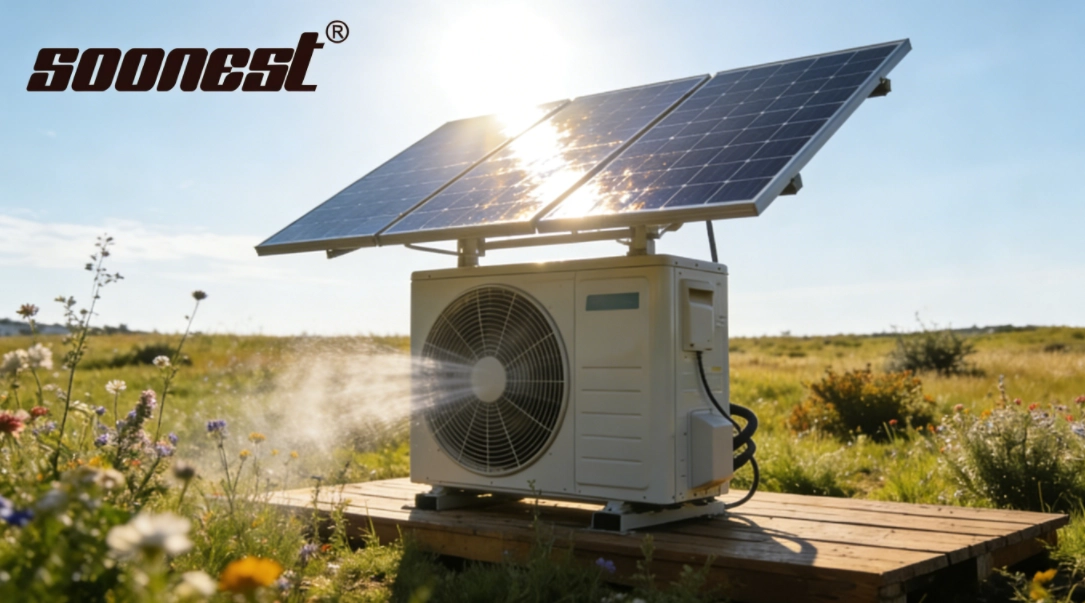
48V DC Off-Grid Solar Air Conditioner
For full off-grid spots, DC solar air conditioners give another way. These pieces usually run on 48-volt setups fed by solar panels and battery holds.
These setups see wide use in out-of-way houses, telecom towers, farm sites, and island spots. Cooling comes in day when solar power flows, and batteries back it up after dark. With solar and battery tech keeping better, these no-grid cooling setups should spread more in growing areas.
How Do You Choose the Right Solar Air Conditioner for Your Needs?
Solar air conditioners hold lots of upsides, but the top unit fits the exact use. A number of points need a look before buying.
Match the System With Your Solar Power Setup
Some houses have solar panels on the roof already. Here, a hybrid AC setup that links right to the solar feed can work well. For no-grid places, a DC solar air conditioner with batteries might suit better.
Evaluate Cooling Capacity and Climate Conditions
Cooling power has to fit the build size and local weather. A too-small setup will fight in hot spells, and a too-big one throws away power.
Weather matters too. Areas with solid sun get more from solar cooling since day solar output lines up with top cooling needs.
Check Installation and Maintenance Requirements
Solar air conditioners need setup by techs who know HVAC and photovoltaic gear. Good setup keeps the system steady for years.
Care needs line up with standard air conditioners mostly, like cleaning filters and checking wires now and then.
Why Consider Soonest Solar Air Conditioners in 2026?
The solar cooling sector has many makers, but those with strong photovoltaic know-how often bring fuller answers.
Soonest Solar acts as a photovoltaic tech firm that builds solar panels, hybrid inverters, energy storage systems, and solar air conditioners. Holding over two decades of field know-how, the firm eyes setups that blend solar production with real daily uses.
Its solar air conditioning goods go into home builds, business spots, telecom bases, and far setups. Hybrid tech lets these cut power use while running like normal air conditioners.
With world cooling needs still climbing, solar-powered air conditioning should take a bigger spot in the HVAC field. Hybrid setups that mix solar power with solid grid work may stand as a top practical fix for the next ten years.
FAQ
Q1: What is a solar hybrid air conditioner?
A: A solar hybrid air conditioner is a cooling system that can run on both solar energy and grid electricity. During sunny hours it uses solar power, while the grid provides backup power when sunlight is not sufficient.
Q2: How much electricity can a solar air conditioner save?
A: Savings depend on sunlight conditions, system size, and usage patterns. In many cases, solar hybrid air conditioners can reduce electricity consumption by 30% to 70% compared with conventional air conditioners.
Q3: Are solar air conditioners suitable for residential homes?
A: Yes. Many modern solar air conditioners are designed specifically for residential installation. Hybrid systems are especially suitable because they work with rooftop solar panels while still connecting to the grid for stable operation.