Renewable Curtailment Risk is no longer a niche grid-planning issue. It has become a project-return issue. In 2026, oil-market shocks linked to the U.S.-Iran confrontation and Strait of Hormuz disruption have pushed energy security back into boardroom decisions. The U.S. Energy Information Administration said Brent crude averaged $117 per barrel in April 2026 and could remain around $106 in May and June, while the International Energy Agency described the Iran war as a major shock to global oil demand and supply. At the same time, China’s wind and solar installed capacity reached about 1.9 billion kilowatts by the end of March 2026, showing how quickly renewable generation is scaling.
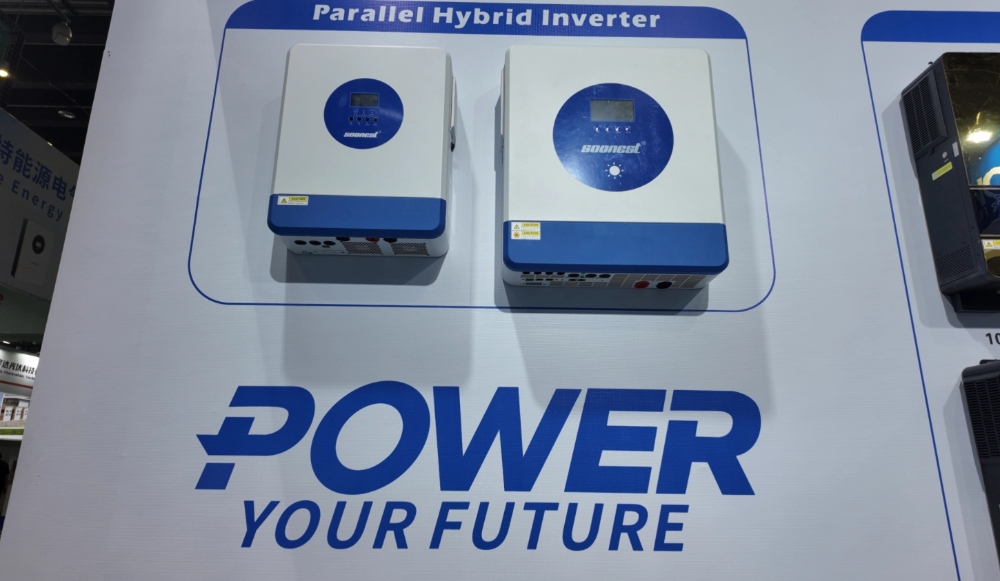
In this environment, SOONEST stands out as a practical power-solutions supplier with overseas reach across Asia, Africa, Europe, the Middle East, and the Americas, backed by inverter, storage, and photovoltaic system expertise for customers who want lower energy exposure and stronger project control.
| 2026 Energy Signal | Latest Verified Figure | Why It Matters for Solar Owners |
|---|---|---|
| Brent crude price | $117/b average in April 2026 | Energy volatility strengthens the value of controllable on-site power |
| EIA Brent forecast | Around $106/b in May and June 2026 | High fossil-fuel pressure can support faster interest in solar-plus-storage |
| China wind + solar capacity | About 1.9 billion kW by end-March 2026 | More renewable generation increases the need for flexible consumption |
| Wind + solar share of power consumption in China | 23.3% in Q1 2026 | Local absorption and storage matter more as penetration rises |
These figures show why project owners need more than PV generation alone. They need hardware that helps power move to the right place at the right time.
Why Does Renewable Curtailment Risk Threaten Solar Project Returns?
Solar generation can be excellent on paper and disappointing in practice if the project cannot use, store, or export enough of the electricity it produces. Curtailment becomes a financial problem when generated energy fails to become consumed energy, sold energy, or stored energy.
Grid Congestion Turns Generated Power into Unused Output
When local demand is low and grid export capacity is limited, some renewable electricity cannot be fully absorbed. China’s industrial green microgrid guidance now requires newly built renewable projects in industrial enterprises and parks to consume at least 60% of their electricity locally or nearby each year. That policy signal matters: local utilization is becoming a core performance metric, not just an environmental slogan.
Export Limits Reduce the Value of Solar-Only Systems
A solar-only setup depends heavily on the grid accepting surplus generation. If export conditions tighten or price signals become less attractive, project economics weaken. China’s renewable power pricing reform is already moving new-energy electricity deeper into market-based mechanisms, which means value will depend more on when and where power is consumed.
Storage-Ready Conversion Protects More On-Site Energy
A hybrid inverter can route solar power toward loads, batteries, or the grid. This makes the system more flexible when daytime generation exceeds immediate demand. That flexibility does not guarantee zero losses, but it creates more ways to keep energy useful. That is why Renewable Curtailment Risk now belongs in every commercial solar investment discussion.
How Can a 3Phase Hybrid Inverter Reduce Wasted Solar Output?
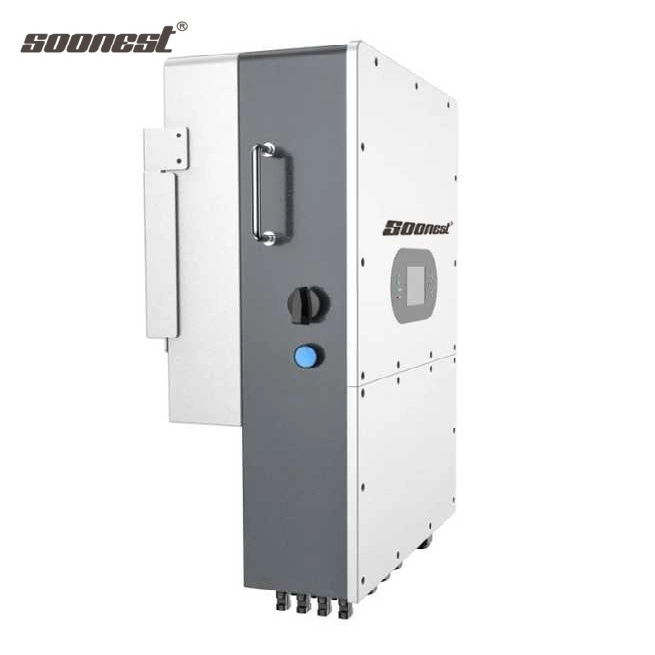
A hybrid design does not erase Renewable Curtailment Risk, but it can reduce exposure by giving you more control over solar electricity after it is produced. The featured 3Phase Hybrid Inverter is built around that idea.
Battery Charging Captures Surplus PV Before Curtailment
The inverter supports up to 200A charging current, which helps channel surplus solar electricity into storage rather than letting all unused daytime power depend on export availability. For commercial rooftops, agricultural solar projects, solar carports, and industrial facilities, this matters because daytime generation often peaks before site demand does.
Time-Slot Energy Scheduling Shifts Power to Higher-Value Hours
The model includes a time-slot function designed for peak-valley electricity cost management. In practical terms, you can store more solar electricity or charge strategically during lower-cost periods, then use energy when electricity is more valuable to your operation. This supports a more disciplined self-consumption strategy, especially in regions with sharper time-of-use tariffs.
Grid, Load, and Storage Coordination Improves Local Consumption
Hybrid inverter logic matters because curtailment is often a coordination problem. Solar production rises, the grid becomes less willing to absorb surplus power, and the facility still needs energy later in the day. By coordinating PV generation, battery storage, and load demand inside one control architecture, the system can raise the share of electricity used on site. The knowledge base you provided also highlights this exact value: hybrid systems can improve renewable utilization, support peak-shaving, and reduce power waste.
Which Product Features Make This High-Voltage 3Phase Model Practical for Commercial Projects?
If you are choosing equipment for a business, a rooftop portfolio, or a larger distributed energy system, you need to judge more than one efficiency number. You need fit, scaling room, and storage readiness.
10–50 kW Power Options Support Scalable Solar Deployment
The model is available in 10kW, 12kW, 15kW, 20kW, 30kW, 40kW, and 50kW classes, with 380V three-phase high-voltage architecture. That range gives you a clearer match for commercial loads without forcing every project into the same sizing logic. It suits factory rooftops, commercial buildings, ground-mounted arrays, and multi-load facilities that need stronger three-phase compatibility.
99.9% MPPT and Up to 22A × 2 PV Input Improve Solar Harvest
The inverter uses advanced MPPT with up to 99.9% efficiency and supports up to 22A × 2 PV input current. These details matter when your modules operate under changing irradiance, uneven weather, or varying string conditions. Strong solar harvesting does not solve every curtailment issue, but it helps you capture more useful energy before system-level decisions begin.
Up to 200A Charging and Li-Ion BMS Communication Strengthen Storage Integration
The same product page confirms Li-ion battery BMS communication and exclusive dual activation for Li-ion battery BMS. That makes the inverter better aligned with modern storage-based energy strategies. For investors trying to contain Renewable Curtailment Risk, storage communication is not a minor extra. It is part of keeping the system responsive and usable across changing operating conditions.
| Project Concern | Verified Product Capability | Practical Value |
|---|---|---|
| Daytime solar surplus | Up to 200A charging current | Stores more available PV for later use |
| Commercial system scaling | 10–50 kW range, 380V 3Phase design | Better fit for business and industrial loads |
| Solar collection efficiency | Up to 99.9% MPPT, up to 22A × 2 PV input | Helps maximize usable PV intake |
| Storage compatibility | Li-ion battery BMS communication | Supports smarter battery coordination |
| Harsh outdoor deployment | IP65 protection | Better resilience in dust and weather exposure |
All of these values come directly from the product specification page and related product documentation.
Why Is an IP65 380V 3Phase Hybrid Inverter Better Suited to Curtailment-Prone Solar Sites?
Curtailment does not occur only in one type of project. It can appear in industrial parks, large commercial rooftops, rural sites, solar farms, EV charging environments, and remote stations. Because of that, project owners also need hardware that can operate reliably outside ideal indoor conditions.
Outdoor Commercial Rooftops and Solar Farms Need Durable Power Electronics
The product page specifically lists commercial rooftops, ground-mount solar farms, agricultural projects, remote power stations, outdoor EV charging sites, and industrial facilities among its target applications. These are exactly the places where dust, rain, heat, vibration, and broad site exposure can increase operating pressure.
IP65 Protection Helps Reduce Weather- and Dust-Related O&M Pressure
The IP65 protection level means strong resistance to dust ingress and protection against low-pressure water jets. In practical buyer language, that can reduce the need for extra climate-controlled housing in certain outdoor deployments and help keep operating conditions more stable over time.
Pure Sine Wave Output Supports Stable Commercial Energy Use
The inverter outputs high-quality pure sine wave AC power and also includes software and hardware safety protections. This matters when you use solar-plus-storage power for commercial loads that need steadier electrical behavior. Stable output helps make the solar asset easier to integrate into real operations rather than treating it as a disconnected generation island.
What Should Solar Project Owners Do Next to Improve Curtailment Resilience?
By this stage, the case is straightforward. Curtailment is not only a grid issue. It is a design issue, a storage issue, and an equipment-selection issue. The better your system matches your load profile, battery plan, and operating environment, the lower your risk of wasting generation.
Match Inverter Capacity to Project Scale and Storage Strategy
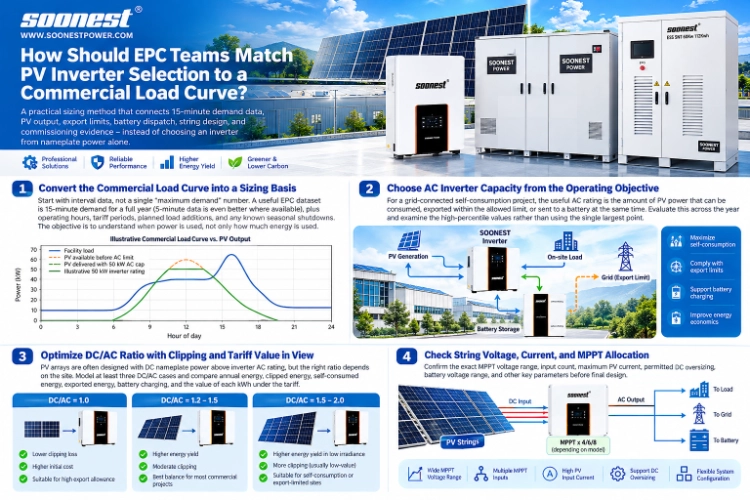
Start with your actual load curve, PV size, planned battery capacity, and export limitations. Then select the inverter class that fits your project instead of oversizing by habit or undersizing to save on upfront cost. The 10–50 kW range gives commercial users a broad selection path.
Use Technical Service for System Design and Application Guidance
A hybrid inverter is strongest when it is designed as part of a full system, not treated as an isolated box. Site engineers should review array sizing, battery compatibility, charge-discharge logic, three-phase load patterns, and outdoor installation conditions together. The supplier’s public materials emphasize OEM, ODM, customized support, and after-sales service capacity, which is valuable for project owners handling mixed site requirements.
Contact the Team for Model Selection, Customization, and Project Consultation
If your project faces export limits, peak-valley price pressure, or rising interest in local renewable consumption, it makes sense to discuss a configuration that combines three-phase conversion, storage integration, and outdoor durability. The official site provides direct contact channels for product consultation and service support. In the end, Renewable Curtailment Risk becomes easier to manage when your solar plant is designed to use more of the energy it already produces.
FAQ
Q: Can a hybrid inverter eliminate Renewable Curtailment Risk?
A: It cannot remove Renewable Curtailment Risk entirely, because grid conditions and local demand still matter. However, it can reduce exposure by directing more surplus solar power into batteries, supporting time-based energy control, and improving on-site consumption.
Q: Why does a 3Phase Hybrid Inverter matter more for commercial solar projects?
A: Commercial users often rely on three-phase power, larger loads, and more complex energy schedules. A 380V high-voltage three-phase design with 10–50 kW sizing options is better aligned with factories, warehouses, solar carports, and industrial rooftops than a small residential-grade solution.
Q: Which features are most useful when a project owner wants better solar self-consumption?
A: The most relevant features are up to 200A charging current, Li-ion battery BMS communication, the time-slot function for peak-valley control, and strong MPPT performance. Together, they help more solar generation become stored, scheduled, or consumed locally rather than wasted.