
The answer to how many solar panels to power a house starts with energy use, not roof size or a generator rating. A home may need 12 kWp; a farm may need 30 kWp, 60 kWp, or more. Sun hours, night loads, motor starts, and backup needs change the count.
SOONEST develops photovoltaic systems and components for residential, commercial, and off-grid projects. Its MONO panel comes in 350W , 450W, 550W, 575W, and 585W versions. The N-type monocrystalline, mono-facial, single-glass module reaches 22.85% efficiency. This range can fit an irregular roof or cut a farm array’s panel count. Published warranties cover materials for 25 years and power output for 30 years.
How Much Electricity Does a Large House or Farm Actually Use?
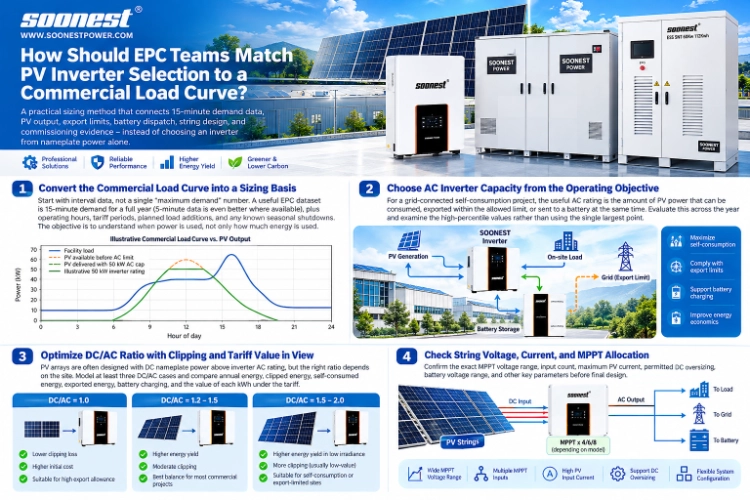
Solar sizing has two jobs. Daily energy use sets the rough array capacity, while the highest simultaneous load sets the inverter requirement. Mixing up kW and kWh is one reason systems look fine on paper but still start the generator at dinner time.
A 24-Hour Appliance and Equipment Inventory
List each load, its watts, quantity, and running hours. A house may have air conditioning, water heating, pool pumps, and vehicle charging. A farm adds irrigation, refrigeration, feed equipment, and workshop tools. Multiply watts by daily hours, then divide by 1,000 for kWh. Plain bookkeeping, yes, but one missed 3 kW heater adds 12 kWh in four hours.
Peak Load and Motor Starting Demand
Do not convert generator kVA directly into solar kWp. A 30 kVA generator describes momentary power, not daily energy. Pumps and compressors draw extra startup current. Record which machines can start together and whether soft starters are fitted, since the inverter must carry those surges.
Daily Energy Use in Kilowatt-Hours
Separate daytime and nighttime energy. A pump can run during strong sun; an overnight cold room needs storage. One residential design has 8.2 kW connected load and 30 kWh daily use, split into 10 kWh by day and 20 kWh at night. It pairs 12.18 kWp of PV with 25.6 kWh of LiFePO4 storage. A 3.6 kW critical load runs about seven hours at full capacity. This shows why how many solar panels to power a house needs more than one number.
How Do You Calculate How Many Solar Panels to Power a House?
A practical calculation starts with daily energy, local peak sun hours, and real system losses:
Required PV capacity = daily kWh ÷ (peak sun hours × system efficiency) × reserve factor
Divide that capacity by one panel’s wattage and round up.
Peak Sun Hours at the Project Site
Peak sun hours express daily radiation as equivalent full-output hours. They are not daylight hours. A five-hour site needs a smaller array than a three-hour site. Use monthly data and size an off-grid farm around the difficult season.
Conversion Losses and a 20% Design Margin
Temperature, dust, cables, inverter conversion, cloud, and shade reduce delivered energy. Early calculations often use 75% to 85% system efficiency. Add 20% for variable weather or load growth, but do not count the same loss twice.
Panel Wattage and the Final Module Count
For 40 kWh of daily use, five peak sun hours, 80% system efficiency, and a 1.2 reserve factor give 12 kWp:
40 ÷ (5 × 0.80) × 1.2 = 12 kWp
That line answers how many solar panels to power a house only after you select a module rating. String voltage, MPPT current, low-temperature open-circuit voltage, roof space, and electrical rules still need checking.
How Many SOONEST Panels Are Typical for a Large House or Farm?
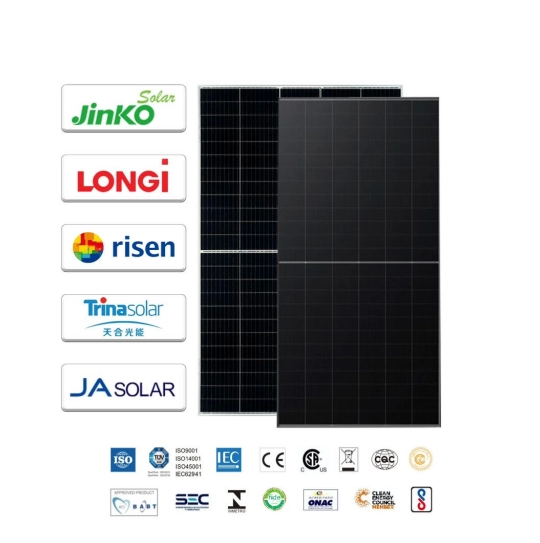
The SOONEST MONO panel reaches one array capacity through different module counts. N-type cells, an anti-reflective surface, low-light performance, and tempered glass suit roofs and farms. The page lists IP68 weather resistance; confirm its scope in the datasheet.
| Target Array | 350W Panels | 450W Panels | 550W Panels | 575W Panels | 585W Panels |
|---|---|---|---|---|---|
| At least 12 kWp | 35 | 27 | 22 | 21 | 21 |
| At least 30 kWp | 86 | 67 | 55 | 53 | 52 |
| At least 60 kWp | 172 | 134 | 110 | 105 | 103 |
The values are direct wattage-to-capacity calculations rounded up to whole panels. They are not final string designs.
A 12kW Large-House Array
At 12 kWp, 21 × 585W produces 12.285 kWp. The 575W choice also needs 21 panels; 350W needs 35. Higher ratings suit tight roofs, while smaller modules fit around vents. The best answer to how many solar panels to power a house is not always the fewest panels.
A 30kW Mixed-Load Farm Array
A farm using 100 kWh daily reaches 30 kWp under the same assumptions. That equals 52 × 585W panels and 30.42 kWp installed; 550W raises the count to 55. The 585W model suits open roofs or ground racks. Daytime irrigation may reduce battery needs.
A Scalable Array for Energy-Intensive Farms
At 200 kWh per day, the result is 60 kWp, or 103 × 585W panels. Cold stores, poultry houses, and workshops may need three-phase inverters and staged motor starting. Divide large arrays into inverter sections for simpler expansion and service.
Can Solar Fully Replace a Diesel Generator?
Panels cannot provide dependable power at night or through several cloudy days. The question of how many solar panels to power a house therefore becomes a system question once diesel removal is the goal.
Direct Solar Supply for Daytime Loads
Move flexible loads into the solar window. Water pumping, heating, feed processing, and vehicle charging can run from late morning to afternoon. Direct use avoids a battery cycle and cuts generator hours. SOONEST lists roofs, irrigation, greenhouses, solar farms, and backup supply among the panel’s applications.
Battery Storage for Nights and Cloudy Weather
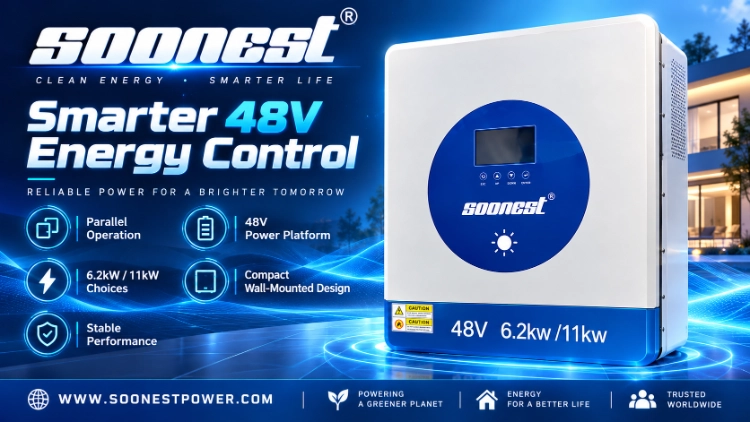
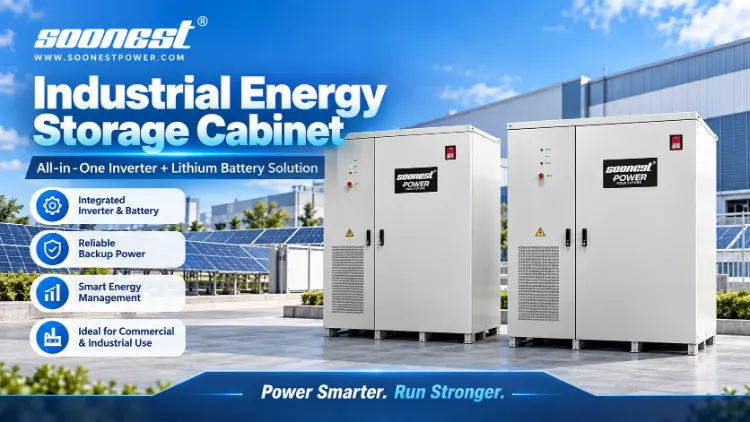
Size storage from nighttime kWh, critical power, backup hours, usable discharge depth, and losses. A 25.6 kWh battery does not provide 25.6 kWh of usable AC energy. The inverter must match voltage and current. A hybrid unit may combine PV, battery, utility, and generator input.
Hybrid Backup for Critical Farm Equipment
Full diesel removal may suit a home with manageable night loads. A farm with ventilation, refrigeration, or a deep-well pump may keep emergency backup. SOONEST’s overseas activity reaches Africa, Asia, the Middle East, Europe, and the Americas. In remote markets, fewer fuel deliveries and engine services matter too. Solar and storage can turn a daily generator into rare backup.
How Does SOONEST Support System Design and Long-Term Operation?
Hardware is only part of the purchase. You also need a string plan, inverter match, battery calculation, mounting review, protection design, and a clear service route after commissioning. These details decide whether the quoted panel count becomes a reliable power system.
Pre-Sales Load and Site Assessment
Send 12 months of electricity records, a 24-hour load list, motor data, site dimensions, coordinates, and required backup hours. State your diesel-reduction target. SOONEST’s solution cases cover residential storage, hybrid systems, solar pumping, and off-grid applications. This gives its design team a practical basis for matching panels, inverter, and storage.
Quality Control and After-Sales Service
Request the datasheet, temperature coefficients, dimensions, connectors, mechanical-load values, warranty, and packing plan. Review wind, corrosion, dust, and cleaning access. The company’s service support covers design, inspection, troubleshooting, performance checks, and maintenance guidance. Monitoring data is more useful than “the solar is low today.”
Contact SOONEST for a Project Proposal
Contact SOONEST with daily kWh, peak kW, critical loads, location, available area, generator rating, and backup hours. Request annual production and a difficult-season scenario. The 585W panel is recommended where space and installation count matter. The 350W to 575W choices remain useful for divided roofs, transport limits, and specific string layouts.
Conclusion
The calculation for how many solar panels to power a house works only after the load data is sound. Start with daily kWh, sun hours, losses, and reserve. Then check peak power, motor starts, storage, and string limits. SOONEST’s 350W to 585W N-type range and project support can turn a panel count into a workable diesel-reduction system.
FAQ
How many solar panels to power a house using 40 kWh per day?
With five peak sun hours, 80% system efficiency, and a 20% reserve, the target is about 12 kWp. That equals 21 × 585W SOONEST panels. Your roof, local sunlight, and winter demand may change the final number.
Can a solar array run a farm irrigation pump without batteries?
Yes, during adequate sunlight if the inverter can handle motor starting current. Storage or backup is needed after sunset or during poor solar weather.
Should the diesel generator be removed immediately?
Not always. Keep it for emergencies until operating data confirms seasonal production, battery performance, and critical-load coverage.