
Single-phase vs. three-phase power affects several design considerations. While a Hybrid Solar Inverter manages all the components in a single system, the power is delivered in single-phase or three-phase format. Therefore, the designer must consider aspects like cable sizing, motor design, backup power, solar-array design and future expansion in the context of the building where the power is going to be used. While a home with lighting or refrigeration would need single-phase power, a workshop with pumps, compressors, etc. would require three-phase power, and several motors running at the same time.
SOONEST develops solar inverters, batteries, panels, and complete power systems for residential and commercial projects. Its work covers system design, production, quality inspection, and after-sales support. Buyers rarely need an inverter alone; they also need the right PV strings, battery settings, protection, and load priorities. More detail is available through its company background.
How Do Single-Phase and Three-Phase Systems Differ?
Your grid connection, peak load, motor use, and expansion plan should point toward the same phase type.
Power Delivery and Phase Structure
Single-phase supply is common in homes, small shops, and light offices. Three-phase supply spreads power across three phases and suits larger loads. For the same total power, it can carry less current per conductor, which helps on larger sites.
Load Type and Phase Balance
Single-phase systems fit lighting, computers, refrigerators, and many small appliances. Three-phase systems are better aligned with pumps, compressors, machine tools, and mixed commercial loads. A three-phase Hybrid Solar Inverter must still be checked per phase. A 12 kW nameplate does not always mean the full 12 kW can sit on one phase during backup.
Installation and Expansion
Single-phase projects need simpler protection and distribution. Three-phase projects require closer attention to phase sequence, metering, current transformers, and load allocation. That work makes sense when larger equipment is planned.
| Selection Point | Single-Phase System | Three-Phase System |
|---|---|---|
| Common use | Homes, small offices, light retail | Workshops, farms, larger homes, commercial sites |
| Typical loads | Appliances and small equipment | Motors, pumps, compressors, mixed loads |
| Installation | Simpler wiring and protection | More detailed phase planning |
| Expansion | Best for modest growth | Better for larger future loads |
| Main risk | Overloading one circuit | Poor phase balance |
Which Hybrid Solar Inverter Fits Your Loads Better?
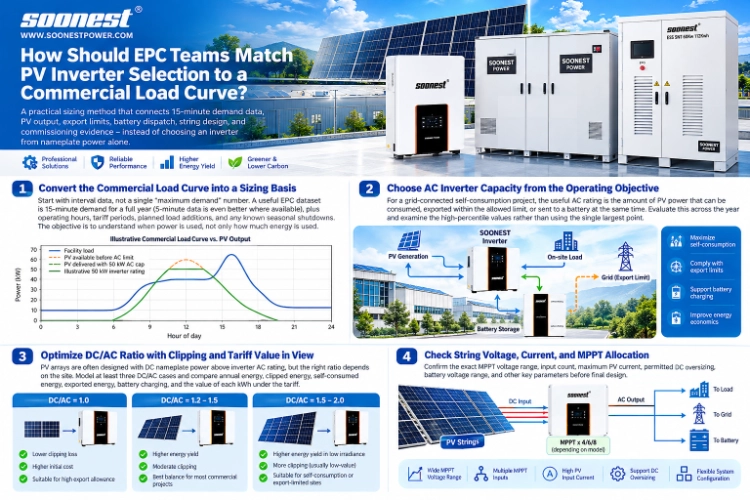
Start with measured load data. Daily energy sets solar and storage needs; peak power and starting current show whether the inverter can carry the site.
Homes and Light Commercial Loads
For single-phase supplies with normal appliances a single-phase model is suitable. Leave headroom as refrigerators, pumps and air conditioners use a lot of power when starting up, but after that they only use a small amount of power during normal operation.
Motors, Pumps, and Mixed Three-Phase Loads
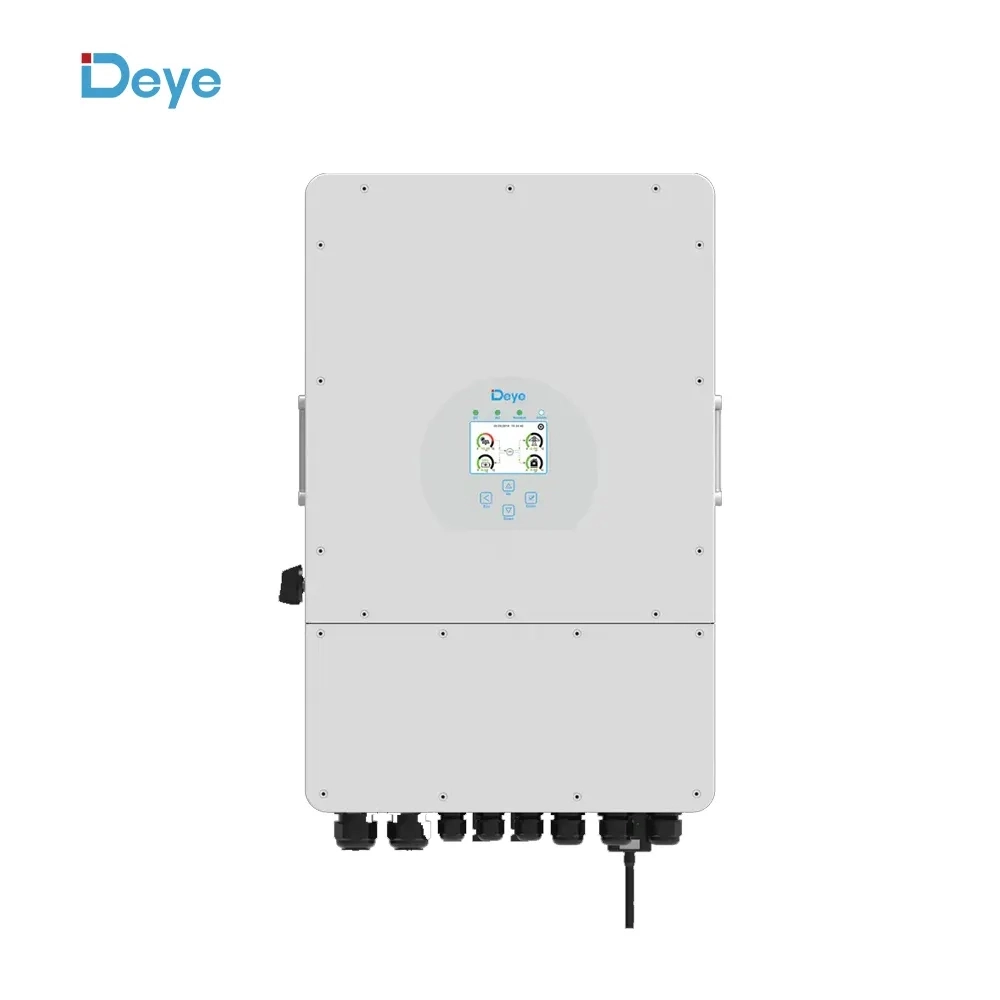
Choose three-phase when the site already has a 380 V supply, uses three-phase motors, or carries several large loads together. The recommended Three-Phase Hybrid Solar Inverter is available in 6 kW, 8 kW, 10 kW, and 12 kW versions. It fits small factories, farm buildings, workshops, larger villas, and commercial premises with three-phase distribution.
Backup Coverage and Battery Charging
Battery design must match capacity and charge-discharge power. The reference guide highlights daily energy, solar conditions, battery voltage, charge current, settings, and monitoring. The same checks apply inside a hybrid inverter.
This low-voltage three-phase model can do 200 A of charging current. That means the battery management system, cables, fuses, connectors, and battery modules have all got to be rated for that amount of current. A strong inverter does not compensate for poor connections to the battery.
What Are the Pros and Cons of Each Option?
Purchase price alone does not show system cost. Installation, backup limits, expansion, and service access also matter.
Single-Phase Advantages and Limits
Single-phase equipment fits common residential boards and modest backup loads. Its limits appear with several air conditioners, EV charging, large pumps, or workshop machinery, where current rises and expansion becomes less tidy.
Three-Phase Advantages and Limits
Three-phase power handles larger and more varied loads naturally. It also gives designers room to spread circuits across phases. The trade-off is stricter commissioning. Phase allocation, backup circuits, grid rules, and current sensing all need attention. It is not glamorous work, but it prevents costly callbacks.
Cost Beyond the Inverter Price
Fuel exposure also matters where diesel generators still cover outages. A July 2026 international market report said global oil supply recovered to 98.8 million barrels per day in June but remained 9.4 million barrels per day below pre-war levels. Fuel costs can therefore stay difficult to budget even when supply starts recovering.
A Hybrid Solar Inverter with correctly sized storage can reduce generator runtime. Oversized batteries waste capital, while undersized batteries fail during the first long blackout. Use real outage duration and critical-load data.
Why Does the 6–12 kW Three-Phase Model Suit Growing Sites?
This model addresses complex roofs, low-voltage batteries, outdoor conditions, and remote checks.
Four Independent MPPT Trackers
Commercial roofs often have several directions and uneven shade. Four independent MPPT trackers let separate PV strings work under different conditions, reducing the effect of one weaker roof section.
High Charging Current and Communication
The unit supports up to 200 A charging plus Modbus/CAN communication. This helps it exchange operating data with compatible battery management and monitoring systems, especially in LiFePO4 projects. The Hybrid Solar Inverter should still be matched to battery voltage, BMS protocol, cable rating, and allowed charge current before installation.
IP65 Protection, Wi-Fi, and Conversion Efficiency
The enclosure carries an IP65 rating, Wi-Fi monitoring is available, and listed conversion efficiency reaches 98.8%. Pure sine wave output and communication functions support mixed residential and commercial loads. These specifications suit utility areas, farm buildings, workshops, and sheltered outdoor positions where dust or moisture is a real concern.
| Verified Product Data | Specification |
|---|---|
| Rated power options | 6 kW, 8 kW, 10 kW, 12 kW |
| AC system | Three-phase, 380 V |
| Protection rating | IP65 |
| MPPT channels | 4 independent trackers |
| Maximum charging current | Up to 200 A |
| Maximum listed efficiency | Up to 98.8% |
| Communication | Wi-Fi, Modbus/CAN |
How Should You Confirm the Right System Before Ordering?
The final choice must connect the grid, load curve, roof, battery bank, and local rules.
Collect Real Load and Phase Data
Record daily kWh, peak kW, motor ratings, outage duration, and load per phase. Mark critical circuits separately; a freezer or controller may need backup, while a large heater may not.
Check Solar Strings and Battery Parameters
Confirm module voltage, current, string length, roof direction, shading, battery voltage, BMS protocol, and permitted charge current. The published solution and project cases include 10 kW and 30 kW hybrid systems in overseas markets, but another site’s sizing should never replace your own measurements.
Use Project Support and Service
Send the supplier a load list, single-line diagram, grid voltage, roof layout, battery plan, and target backup time. The service support team covers design, quality inspection, troubleshooting, and after-sales work. The company also reports CE, RoHS, and ISO certifications and project reach across Asia, Africa, Europe, the Middle East, and the Americas.
Conclusion
For a single-phase home or small shop with normal loads, select single-phase. Three-phase is for buildings already running on 380 V power, with motors or mixed of commercial nature or just looking for room to grow. The 6–12 kW model includes 4 MPPTs, up to 200 A of charging, IP65, Wi-Fi, Modbus/CAN, and up to 98.8% efficiency. A Hybrid Solar Inverter is at its best when its features are matched to the real load and battery data, not just to the power rating.
FAQ
Can a Hybrid Solar Inverter Run Both Single-Phase and Three-Phase Loads?
Only when the system design and product specifications allow it. A three-phase inverter serves a three-phase distribution system, while single-phase branch circuits may be spread across its phases. Confirm backup output and phase-imbalance limits before purchase.
Is a 12 kW Three-Phase Inverter Always Better Than a 10 kW Unit?
No. The better unit is the one that matches peak load, motor starting demand, PV capacity, battery power, and future growth. Oversizing raises cost without always adding useful energy.
Why Do Four MPPT Trackers Matter?
They help when solar strings face different directions or receive different levels of shade. Each tracker can manage its connected string separately, which is valuable on complex commercial roofs.