A 48V hybrid inverter does not automatically require a battery for every operating mode. It can often convert PV power for an active load without a battery, but battery-free operation depends on sunlight, inverter configuration, load changes, and the unit’s control logic. A battery becomes necessary when the system must shift solar energy into the evening, ride through a cloud transient, support backup during a grid outage, or regulate a load that is larger than the instantaneous PV supply.
Key Takeaways
Battery-free PV operation can work when the inverter supports it and the PV array is producing enough power for the live load.
A battery is required for energy shifting, stable backup, and short-term power support when PV output changes faster than the load can respond.
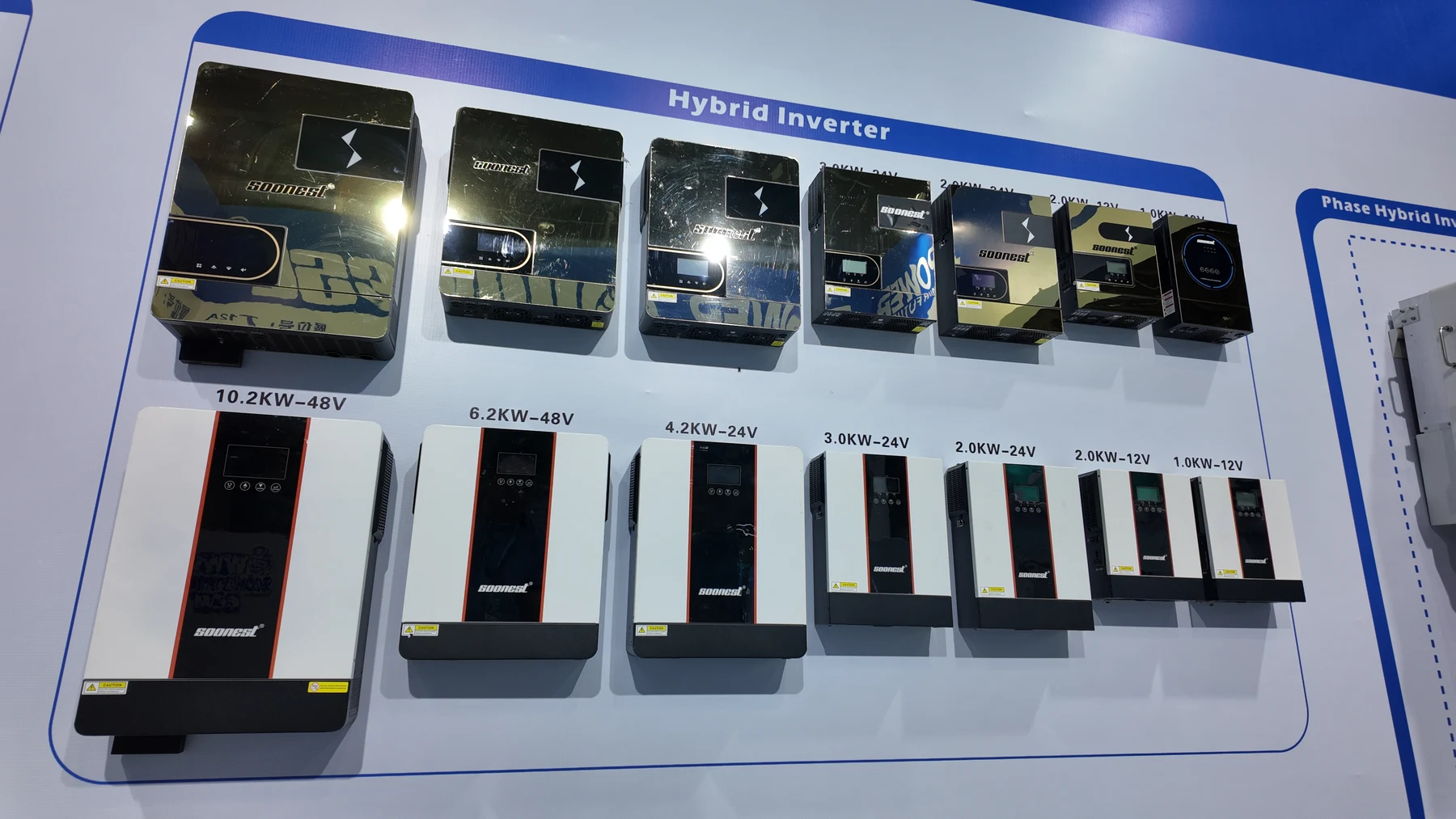
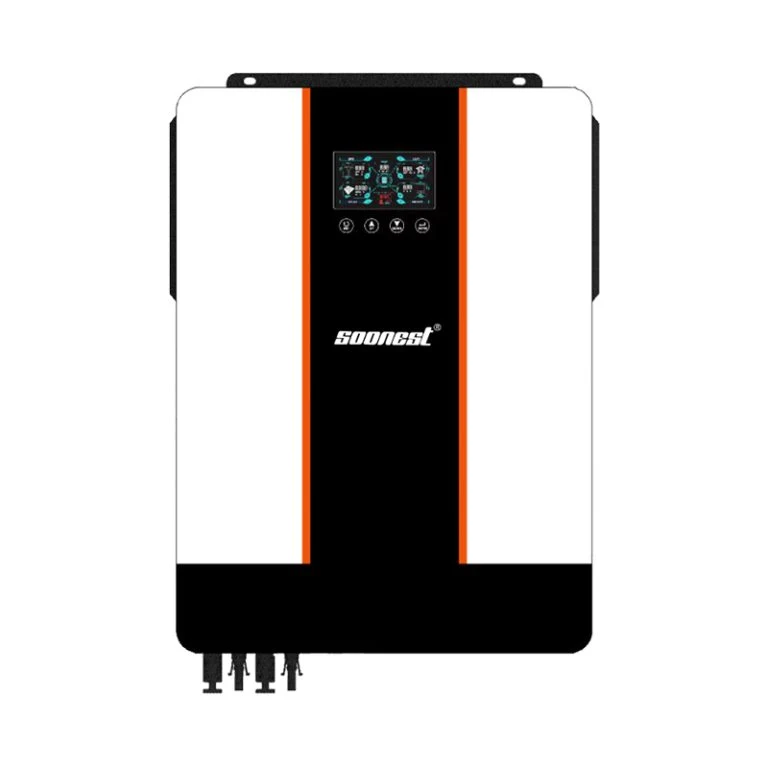
The SOONEST SF Series hybrid solar inverter is specified as a 1kW–10.2kW single-phase range with built-in 100A, 120A, or 160A MPPT solar charging options; the selected configuration still needs system-level verification.
What the 48V Label Actually Tells You
“48V” identifies the nominal battery bus, not the AC output power or the battery energy stored. A 48V battery system can be paired with different inverter power classes, but the DC current rises as output power rises. At a simplified 5kW DC transfer, the battery-side current is roughly 104A before conversion losses when using 48V as the nominal value. The actual design current depends on bus voltage, efficiency, temperature, and the manufacturer’s limits.
That distinction matters during cable, fuse, and battery selection. A 48V, 100Ah battery represents about 4.8kWh at nominal voltage, while a 48V, 200Ah battery represents about 9.6kWh. Neither figure alone tells you the usable energy, maximum continuous current, or whether the BMS can communicate with the inverter. The load profile and battery operating limits must be reviewed together.
When Battery-Free Operation Makes Sense
Battery-free operation is most useful for daytime self-consumption where the PV array follows a predictable load. A workshop running pumps, fans, or daytime machinery may use PV directly and allow the grid or generator to cover the shortfall. The battery is not doing energy shifting in this arrangement, so its cost, maintenance, and replacement cycle are removed from the first-stage design.
The Operating Conditions to Confirm
- The inverter explicitly supports operation without a battery; do not infer this from the word hybrid.
- The PV array can remain inside the inverter’s DC voltage range during both low irradiance and full sun.
- The load accepts the inverter’s output behavior during rapid cloud movement or start-up surges.
Grid or generator support is available if the live load exceeds PV output.
Battery-free PV is a daytime operating mode, not a substitute for storage. When the sun falls or a cloud reduces PV power, the system must curtail the load, draw from the grid, or stop the inverter output according to its configuration. A refrigeration compressor, well pump, or motor-driven tool can expose this limitation quickly because its starting demand is not the same as its running demand.
When a Battery Is the Correct Engineering Choice
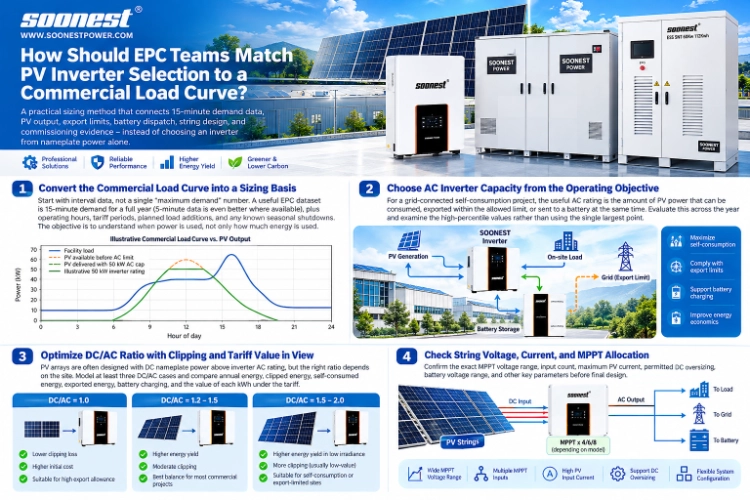
A battery earns its place when the timing of generation and consumption does not match. It stores midday PV for evening loads, supports critical circuits during outages, and reduces the effect of short PV dips. It can also supply a brief surge that a PV array cannot provide at that instant. These are functional requirements, not generic benefits, and they should be tied to a load curve.
| System objective | Battery role | Design evidence to collect |
| Daytime PV self-consumption | Optional buffer | Hourly load and PV overlap |
| Evening or night operation | Stores energy for later discharge | Required kWh after sunset |
| Backup during outages | Maintains selected circuits | Critical load kW and runtime hours |
| Motor or compressor start | Short-term power support | Starting current and inverter surge limit |
| Peak shaving | Discharges during demand window | Interval demand data and dispatch schedule |
The solar inverter cooling and maintenance reference is relevant here because adding a battery usually increases the inverter’s operating hours and bidirectional power flow. Thermal clearance, fan condition, and ambient temperature should be included in the commissioning record.
BMS Communication Is Part of the Battery Decision
A lithium battery is not just a voltage source. Its BMS monitors cell voltage, temperature, current, and protection status, then may limit charging or discharging when conditions move outside the allowed range. If the inverter and BMS do not exchange the expected protocol, the system may fall back to conservative settings or refuse to charge. Confirm the communication port, protocol, cable pinout, battery address, and charge-voltage settings before energizing the DC bus.
Two Installation Mistakes That Cause Field Problems
First, installers sometimes size the battery from inverter power alone. A 10.2kW inverter does not mean that a 10kWh battery can sustain 10.2kW for an hour. The battery’s continuous current, usable depth of discharge, BMS limit, and thermal condition determine whether that operating point is permitted.
Second, a 48V battery bank may be wired with undersized or unequal-length parallel cables. One branch can then carry more current or heat more than the others. Use matched cable lengths where the installation method requires it, torque terminals to the equipment instruction, label every branch, and check current sharing after the system reaches a meaningful load.
How to Match the SF Series to the Use Case
The SF Series is a concrete option when a project needs a single-phase hybrid inverter with a 1kW–10.2kW power range, pure sine wave output, configurable AC, DC, and solar priorities, and built-in MPPT charging options. Its product information also describes operation without a battery, lithium battery compatibility, WiFi and GPRS monitoring, and a high PV input range listed as 90–450VDC. Those values should be checked against the selected local model, array design, and battery communication plan before purchase.
For a distributor or EPC team, Soonest can support a complete equipment discussion covering the inverter, battery, PV input, and monitoring arrangement. Ask for the exact model datasheet, communication protocol list, parallel-operation limits if relevant, and the installation clearances for the intended enclosure. The service and support channel can be used to confirm these items before the equipment schedule is frozen, preventing a nominally compatible 48V battery from becoming a commissioning delay.
FAQ
Can a 48V hybrid inverter run a load without a battery
It can when the specific inverter supports battery-free operation and PV power is available. The grid or another source must cover any shortfall, and the system will not provide stored energy after sunset without a battery.
What size battery is suitable for a 48V inverter
Choose the battery from the required runtime, continuous load, surge demand, usable depth of discharge, and BMS current limit. Nominal amp-hours are only the starting point; communication compatibility and cable protection are equally important.
Is 48V safer than a high-voltage battery system
A lower nominal voltage can reduce the voltage level in the battery circuit, but high current remains a serious design issue. Short-circuit protection, conductor sizing, isolation, enclosure access, and correct commissioning are still required.
Conclusion
Use a 48V hybrid inverter without a battery when the goal is direct daytime PV supply and another source can cover shortages. Add a battery when the project needs energy shifting, backup, surge support, or a defined peak-shaving schedule. The right decision comes from the load curve and verified equipment limits, not from the inverter’s nominal voltage label.