An AC-coupled system is often easier when you already have a working grid-tied solar array. A DC-coupled system usually suits a new solar-plus-storage project because it keeps the charging path shorter and places control in one Hybrid Inverter. Your best choice therefore depends on existing equipment, backup loads, installation space, and future expansion.
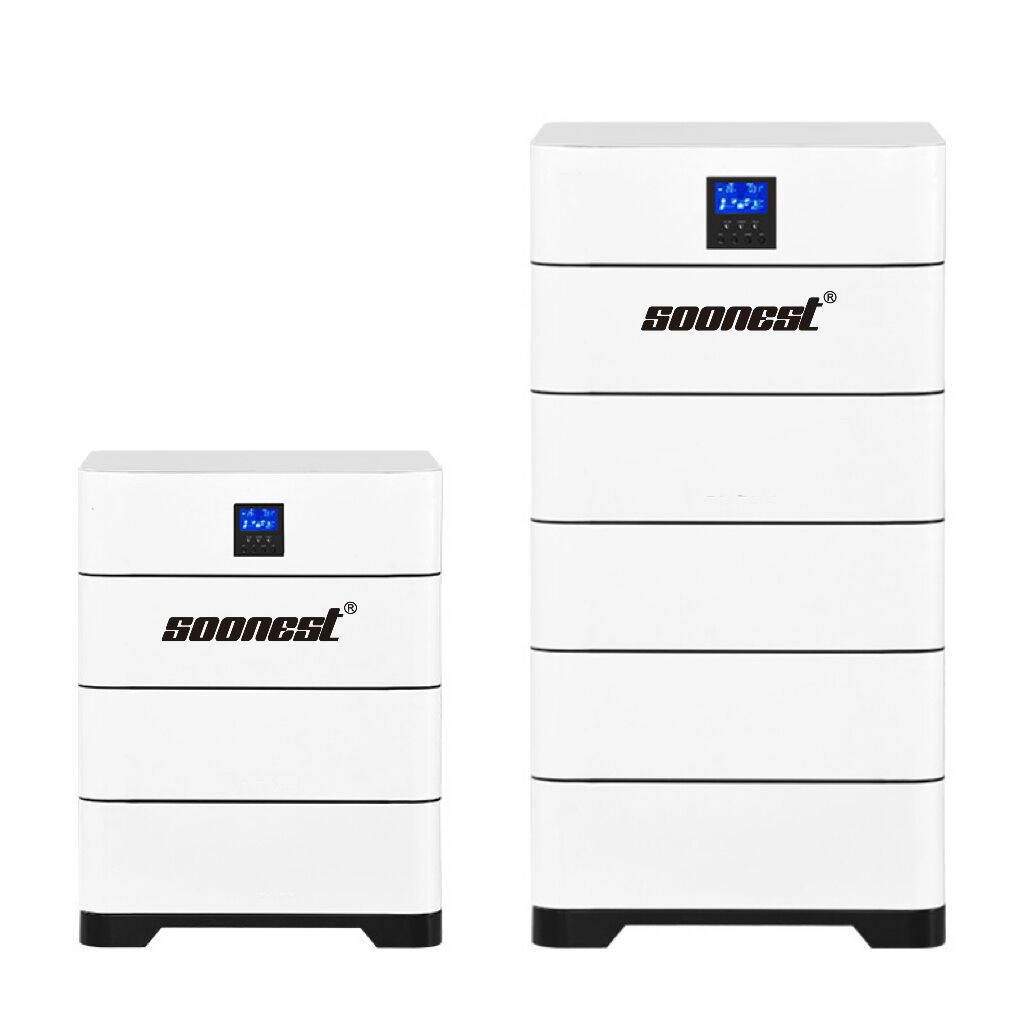
SOONEST develops solar inverters, lithium storage, photovoltaic modules, and integrated energy systems. Its value lies in system matching: the inverter, battery, controls, and monitoring work as one package instead of several unrelated boxes. The AIO Series pairs a 5kW–20kW Hybrid Inverter with modular 48V or 51.2V LiFePO4 batteries, MPPT, BMS protection, monitoring, and backup capability. The compact layout suits homes and light commercial sites. Its company background also covers OEM, ODM, configuration, and after-sales support.
What Separates AC-Coupled from DC-Coupled Solar Storage?
Both systems store daytime solar power for later use. The difference is where the battery joins the circuit and how often electricity changes form.
The AC-Coupled Power Flow
Solar panels produce DC power. A PV inverter changes it to AC. A separate battery inverter then changes surplus AC back to DC for charging. During discharge, battery power returns to AC.
The benefit is retrofit flexibility. You can keep a serviceable solar inverter and add storage with less work on the PV side.
The DC-Coupled Hybrid Inverter Flow
Here, solar power reaches the battery on the DC side before the main conversion to AC. A Hybrid Inverter manages PV input, charging, grid supply, and load output.
This fits new projects because panel voltage, MPPT range, battery voltage, and backup circuits can be matched from the start. The AIO Series offers 5kW, 10kW, 15kW, and 20kW choices.
The Core Architectural Difference
AC coupling favors retrofit flexibility. DC coupling favors a shorter solar-to-battery path and centralized control.
| Item | AC-Coupled Storage | DC-Coupled Storage |
|---|---|---|
| Solar-to-battery path | DC → AC → DC | DC → DC charging stage |
| Inverter arrangement | PV inverter plus battery inverter | Integrated hybrid platform |
| Best fit | Existing PV system | New solar-plus-storage project |
| Main trade-off | More conversions and controls | Existing equipment may need redesign |
| Expansion | PV and storage can change separately | Limited by inverter and battery design |
National laboratory studies report that the added DC-to-AC-to-DC conversion can make AC-coupled battery charging less efficient than DC-coupled charging. The actual difference varies with equipment loading and conversion curves.
How Do the Two Setups Perform in Daily Use?
Daily results still depend on losses, wiring, settings, and outage loads.
Conversion Losses and Solar Use
DC coupling has its clearest advantage when solar power charges the battery. Fewer conversion stages usually mean less energy lost as heat. Supplied AIO data lists 95–98% DC-to-AC conversion efficiency for applicable configurations, while MPPT tracks changing panel output.
That is not whole-system efficiency. Battery losses, cable length, temperature, standby power, and low-load operation also matter.
Installation Work and Retrofit Risk
AC coupling often causes less disruption because the original solar equipment stays. The installer must still coordinate two inverters, protection, metering, communications, and outage behavior.
An all-in-one DC-coupled design reduces external wiring. In the AIO Series, the battery and power electronics share one system, leaving fewer links to commission and troubleshoot.
Backup Output and Load Priorities
A battery does not support every circuit automatically. Check continuous power, motor surge, daily energy use, and the backup board.
A 5kW unit may cover lights, refrigeration, communications, and selected sockets, but not several air conditioners and a pump together. Larger options handle heavier sites. Battery kilowatt-hours, not inverter power, decide runtime.
Which Setup Fits Your Solar Storage Project?
The choice becomes clearer when you start with the site condition rather than a preferred technology.
New Homes and Light Commercial Sites
For a new home, villa, shop, office, restaurant, or farm, DC coupling is usually the direct route. You can size the array, battery, and Hybrid Inverter as one system. Solar serves loads, charges the battery, and draws from the grid only when required.
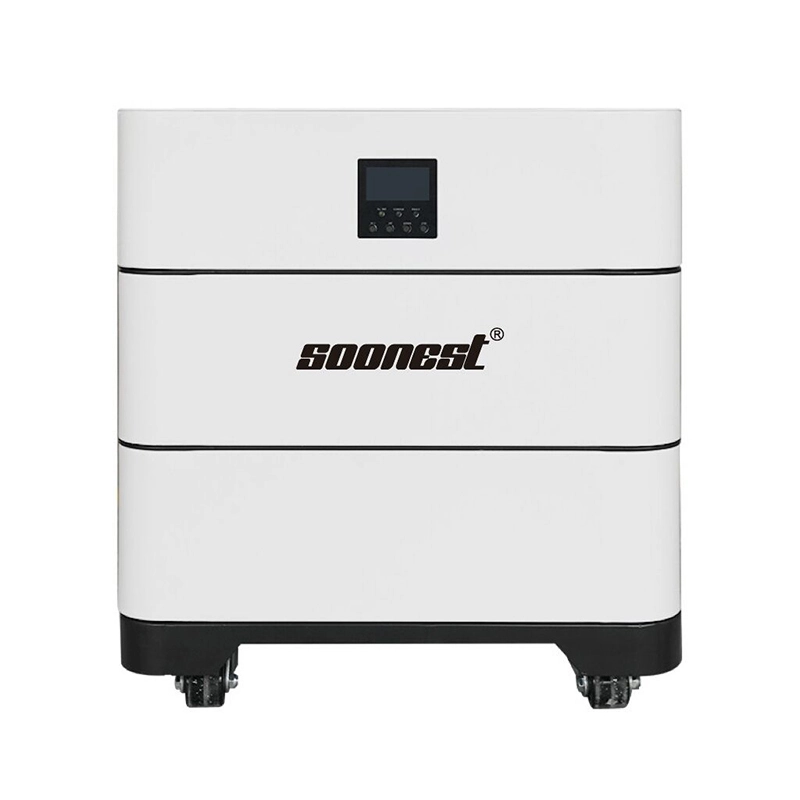
The AIO Series suits this role because its stackable battery layout allows later capacity growth. Its 48V and 51.2V options support different matched configurations.
Existing Grid-Tied Solar Systems
When the current PV inverter works well, AC coupling may protect the earlier investment and reduce downtime.
Check its age, warranty, output history, grid rules, and battery-inverter compatibility. Some retrofit systems stop solar production during an outage unless storage equipment creates a stable local AC supply.
Remote or Unstable-Grid Locations
At rural homes, farms, telecom sites, and small businesses with weak grids, backup behavior matters most. The system must handle cloudy days, motor surge, low state of charge, and possible generator input.
The AIO Series coordinates solar, battery, and grid sources and can feed selected essential loads when configured correctly. More stored midday solar can also reduce generator runtime.
Why Does the AIO Series Suit New Projects?
A neat cabinet is not enough. The inverter rating, battery chemistry, control hardware, and expansion limit must match the load profile.
Integrated LiFePO4 Battery Design
Supplied product information lists more than 6,000 cycles at 80% depth of discharge for applicable LiFePO4 configurations, plus modular expansion and a five-year warranty. Final figures should be checked against the selected datasheet and operating conditions.
LiFePO4 offers good thermal stability, low maintenance, and stable voltage. The built-in BMS monitors voltage, current, temperature, overcharge, and over-discharge. Matching it with the Hybrid Inverter avoids uncertain third-party communication.
Practical Power and Capacity Choices
| AIO Specification | Published or Supplied Value | Buying Meaning |
|---|---|---|
| Inverter options | 5kW, 10kW, 15kW, 20kW | Homes to light commercial loads |
| Battery voltage | 48V or 51.2V | Must match the selected setup |
| Listed conversion efficiency | 95–98% | Configuration and test conditions apply |
| Listed cycle life | 6,000+ at 80% DoD | Confirm model and warranty terms |
| Communications | Wi-Fi/Bluetooth; RS485/RS232 and BMS protocols listed | Monitoring and data exchange |
Choose inverter power from peak demand and surge current. Choose battery capacity from required backup kilowatt-hours. A bakery with a 12kW morning peak needs a different design from a home using 12kWh overnight.
MPPT, Monitoring, and Expansion
MPPT follows sunlight and panel temperature. Monitoring shows PV production, battery state, load, and alarms. Communication options vary, so confirm the interface before ordering.
The company’s solar solution cases show residential, backup, and mixed-source applications. Photos help, but a load list is more useful than a perfect equipment room.
What Should You Confirm Before Ordering?
Accurate site information prevents expensive changes after delivery. “Normal household use” is not enough; that could mean 4kWh or 40kWh per day.
Load and Battery Sizing
List daily energy use, continuous load, motor surge, backup hours, panel quantity, PV voltage, grid voltage, and installation space. Separate essential loads from circuits that can remain off.
Allow for seasonal demand. Cooling or irrigation can quickly expose an undersized system.
Charging and Safety Settings
Set battery type, charge current, voltage limits, minimum state of charge, source priority, and time-of-use periods. Check polarity, cable size, grounding, ventilation, protection, and communications.
The reference charging guide also stresses compatible controllers, secure wiring, monitoring, and avoiding deep discharge. These basics still matter inside an integrated cabinet.
Service, Commissioning, and Contact
Request a configuration sheet naming inverter power, battery capacity, usable energy, operating modes, communications, protection settings, and backup limits.
SOONEST provides troubleshooting, inspection, maintenance, OEM, and ODM support through its service team. Send your load schedule, site voltage, PV plan, and backup target. A project-specific recommendation is safer than choosing from appearance alone.
Conclusion
Choose AC coupling when you want to add storage without replacing a sound PV inverter. Choose DC coupling when a new project needs a shorter charging path, fewer separate devices, and one control platform. For residential and light commercial sites, the AIO Series combines a 5kW–20kW Hybrid Inverter with modular 48V/51.2V LiFePO4 storage, MPPT, BMS protection, monitoring, and backup functions. Final sizing should follow your load data, runtime target, grid rules, and expansion plan.
FAQ
Can a Hybrid Inverter work during a grid outage?
Yes, when it has a correctly wired backup output and enough battery power. Essential circuits must stay within continuous and surge limits.
Is DC coupling always more efficient?
It usually cuts conversion loss during solar charging, but battery losses, temperature, cables, standby use, and equipment loading also affect performance.
Can battery storage be expanded later?
Yes, if added modules remain within the inverter’s voltage, current, communication, and capacity limits.